Buying in Historic Downtown Titusville vs. the Newer South End
Buying in Historic Downtown Titusville vs. the Newer South End
One city, two very different buys: older lagoon-side blocks that ask for renovation and underwriting patience, or newer south-end construction with an HOA and a shorter drive south.
Titusville is one city on the county map and two completely different purchases in practice. South of Garden Street, the older grid runs east to the west bank of the Indian River Lagoon, wood-frame and concrete-block houses on mature lots, a walkable core around Washington Avenue and Hopkins Avenue between Main Street and Julia Street, Space View Park and the Titusville Municipal Marina at the end of the street. Farther south, along US-1, Singleton Avenue and the Cheney Highway corridor out toward Interstate 95, the housing turns newer, flatter and more uniform, and keeps turning newer as you continue south toward Port St. John. Same tax collector, same city hall, same lagoon. Very different inspection reports.
Buyers ask me which side is better. That is the wrong question, and I say so early. Neither block is better; they solve different problems. One asks you to spend money and attention on a building that already exists. The other asks you to accept rules, a bond or an association fee, and less character in exchange for a house that will not surprise your insurance agent. Here is how I take the two apart, in the order the money shows up. If you want the wider frame first, start with my Titusville real estate guide, then come back to this.
Two different Titusvilles, drawn on the map
Get the geography straight before anything else. Titusville sits on the mainland, on the west bank of the Indian River Lagoon, with Kennedy Space Center and the Merritt Island National Wildlife Refuge directly across the water. There is no Atlantic frontage inside the city. That single fact separates Titusville from Cocoa Beach, Satellite Beach and Melbourne Beach, and it is why the Florida Department of Environmental Protection's Coastal Construction Control Line, the permitting line that governs building near the ocean dune system, does not sit over Titusville parcels the way it sits over barrier-island lots.
The historic core runs roughly from the lagoon westward, centered on the blocks around Washington Avenue, Julia Street and Hopkins Avenue, with Sand Point Park and the Max Brewer Memorial Parkway anchoring the north end. Walk it and the age is obvious: narrow lots, live oaks, houses built long before the modern Florida Building Code, and a street pattern that predates the assumption that every trip starts in a car. You can see the footprint yourself on a map of downtown Titusville, and the lagoon edge at Sand Point Park.
The south end is a different animal. Follow US-1 or Singleton Avenue south, or run west on Cheney Highway (State Road 50) toward the I-95 interchange and Grissom Parkway, and the subdivisions get later, the lots get more regular, and the garages face the street. Keep going south past the city line and you reach Port St. John, an unincorporated Brevard County community with its own newer stock and its own utility and service questions, because it is not inside Titusville's city limits at all.
The one-line version
Downtown buys you a building with history and a short walk to the water; the south end buys you a building with a warranty and a shorter drive south. The premium you pay in each case is paid in a different currency, renovation and underwriting on one side, rules and monthly fees on the other.
Historic downtown: what the older stock asks of you
I like these houses. I also tell every buyer exactly what they are signing up for, because the photographs never show it. An older Titusville house near the lagoon is usually asking you for four things: an inspection budget, an insurance strategy, a renovation plan, and patience with paperwork.
The inspection is not a formality. On mid-century Florida stock I want the four-point look, roof, electrical, plumbing, HVAC, before the contract gets far, because that is the same list a carrier will ask for. Cast-iron drain lines were standard in this era and they corrode from the inside. Polybutylene supply piping shows up in houses built between the late 1970s and the mid-1990s and is a known underwriting problem. Single-strand aluminum branch wiring, used in homes built roughly from 1965 into the early 1970s per the U.S. Consumer Product Safety Commission, is another. None of these makes a house unbuyable. All of them are line items, and every one is cheaper to discover during your inspection period than during your first insurance renewal.
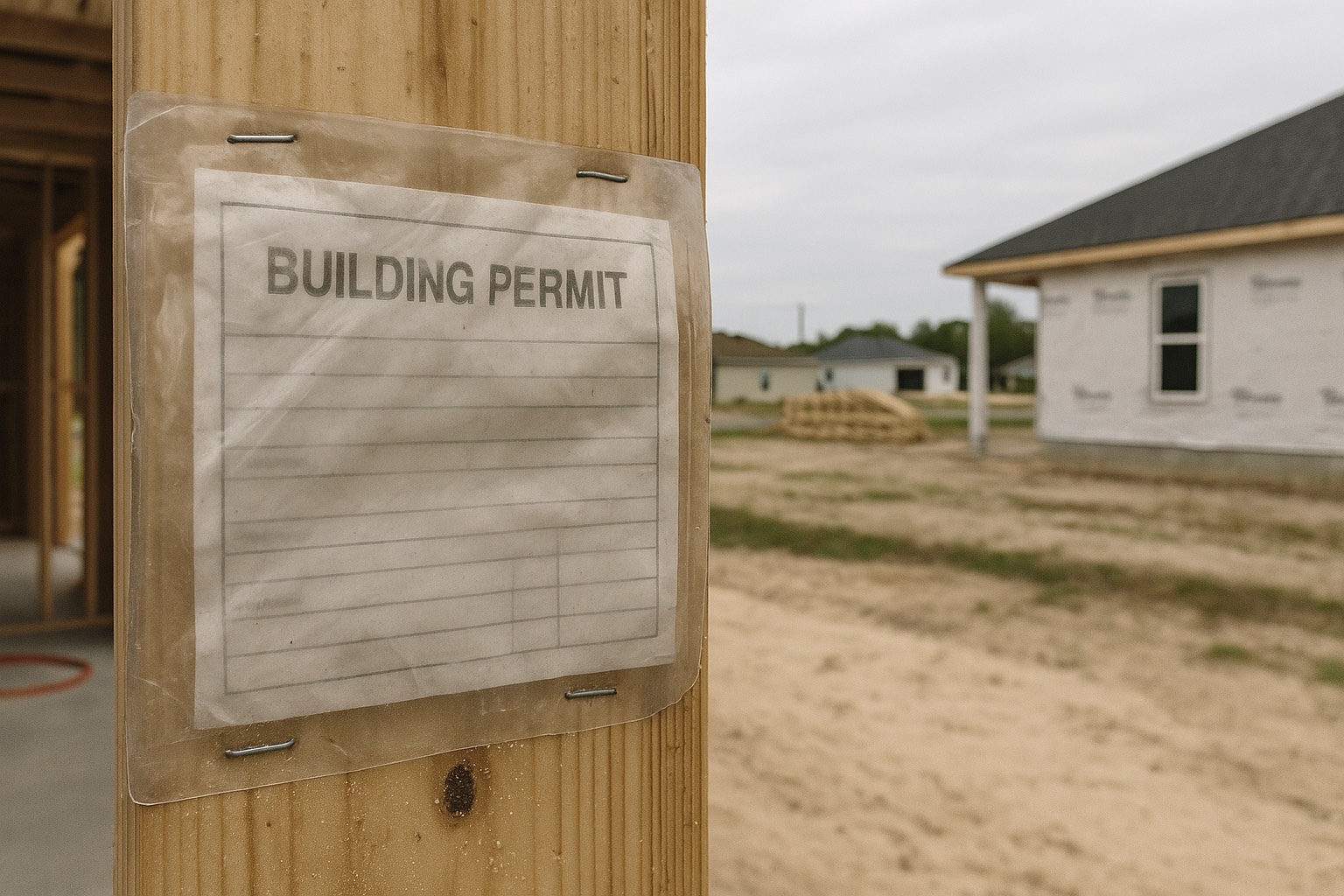
The renovation math is the whole decision. A block house on a deep lot two streets from the lagoon can be a genuinely good buy, if you price the work honestly. Get real contractor numbers on the roof, the panel, the plumbing and the windows before you remove your contingency, and add permitting time. The City of Titusville's building and permitting office is the authority on what a given scope requires; ask them before you budget the work. Ask also whether the parcel falls inside any locally designated historic overlay and what exterior review, if any, applies. The City of Titusville is the only source that can answer that for a specific address.
Flood risk here is set parcel by parcel. The lagoon side of Titusville has parcels in FEMA's higher-risk zones and parcels in the lower-risk X zones a block or two apart, because the land is not flat in the way it looks from a car. Pull the address at the FEMA Flood Map Service Center and read the zone and the Base Flood Elevation before you make any assumption from the street. I go through the whole exercise for this city in Titusville flood zones and the Indian River Lagoon, and the regional version lives in Space Coast flood zones explained.
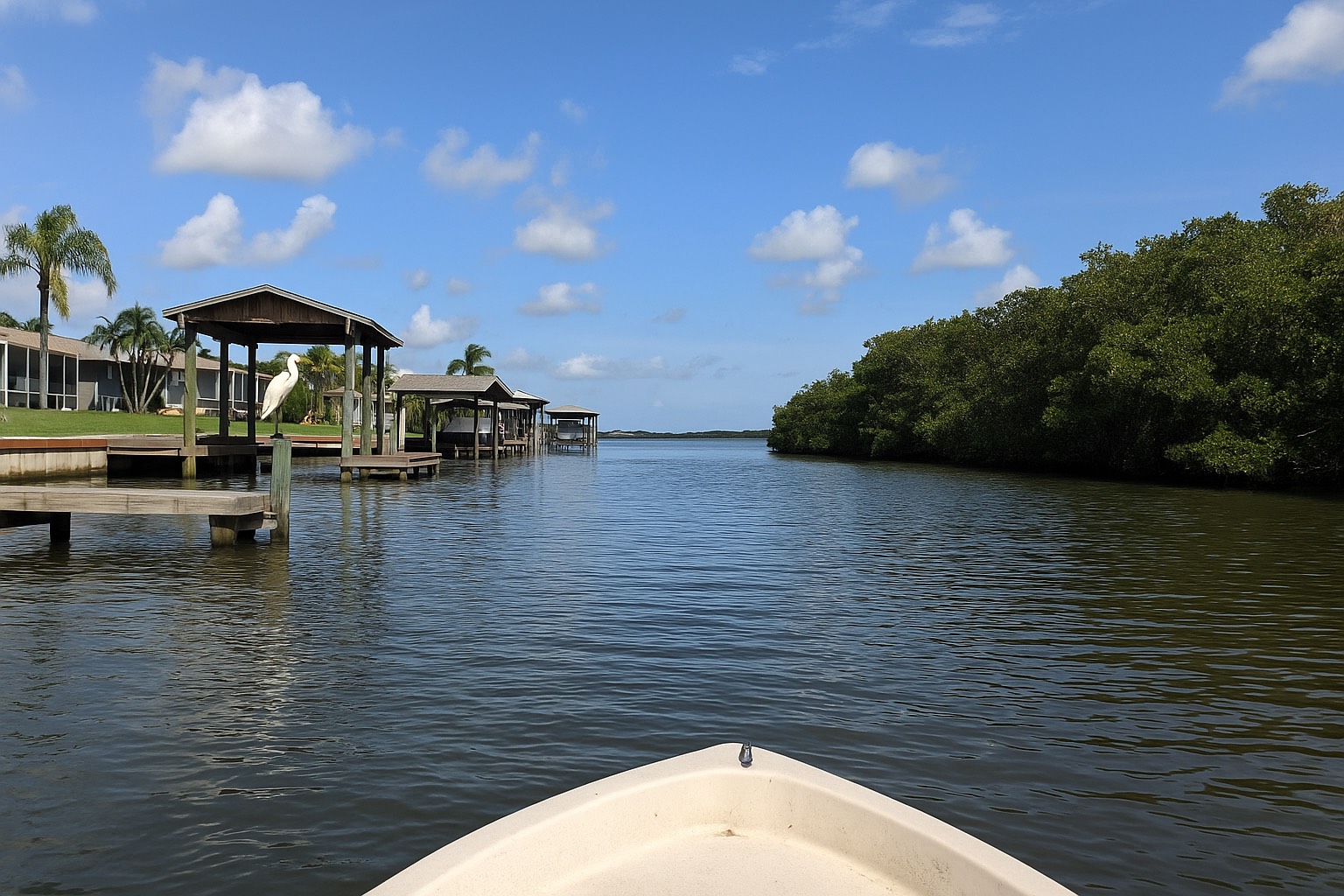
What you get in exchange. Lot size and tree canopy that the newer subdivisions cannot reproduce for decades. A short walk or a few blocks' drive to the lagoon, the Titusville Municipal Marina, Sand Point Park and Space View Park, which is a launch-viewing park, a genuinely local amenity given what sits across the water at Kennedy Space Center. And a street grid where the blocks connect. That changes daily life more than buyers expect.
The south end and the corridor: what newer construction buys
Move south and west and the trade flips. Newer construction in south Titusville and out toward the Cheney Highway and I-95 interchange was built under later editions of the Florida Building Code, which is the single most useful sentence in this entire post for your insurance budget. A house built to modern code has a documented roof-deck attachment, roof-to-wall connections and, frequently, opening protection, the exact features Florida's wind mitigation rules reward. More on that in the next section.
The other differences are structural:
| Question | Historic downtown | South end / corridor |
|---|---|---|
| Governing documents | Usually none. City zoning, plus any local historic overlay that applies to the address. | Often an HOA with recorded covenants. Read them before you write an offer. |
| Recurring fees beyond taxes | Typically none. | HOA dues; possibly a community development district assessment that appears on the tax bill. |
| Utilities | Generally city water and sewer. Confirm per parcel. | Varies. South of the city line, ask whether the parcel is on public sewer or septic, and who the provider is. |
| Lot and canopy | Irregular, often deep, mature trees. | Regular, engineered drainage, young landscaping. |
| What the inspector finds | Age items: roof, panel, cast iron, older windows. | Builder punch-list items and any warranty coverage still in force. |
Comparison of structural characteristics only. HOA existence, utility service and district assessments are set parcel by parcel, verify each with the City of Titusville, Brevard County, or the recorded documents for the specific subdivision.
Two of those rows deserve more than a table cell. The HOA is a real cost and a real rulebook. Ask for the covenants, the current budget, the reserve position and the last twelve months of board minutes during your inspection period, the same way a condo buyer would. Ask what is restricted: boats, trailers, work vehicles, fences, exterior paint, short-term rental. If you own a boat and intend to keep it at the house, that question decides the purchase all by itself.
A community development district is not an HOA. It is a separate special-purpose district that finances infrastructure and bills owners through an assessment on the property tax bill, which means it survives the sale and it is not optional. I wrote up how those work in the guide to Florida CDD fees. Do not assume a Titusville subdivision has one and do not assume it does not, check the tax bill for the specific parcel at the Brevard County Property Appraiser and read what is itemized on it.
Brianna's take on the downside
Here is the part neither side wants stated plainly. Downtown, the inventory is thin and the good older houses often need work that outruns the first estimate, deferred maintenance hides well in listing photos, and if your budget has no renovation cushion, this is not the block for you. On the south end, you are buying a product rather than a place: the houses are similar to each other by design, the trees are young, and you are further from the water and the walkable core than the map suggests once you factor in the corridor traffic. Pick the downside you can live with, then buy accordingly.
Insurance, wind mitigation, and the age of the roof
Insurance is where the two Titusvilles separate most sharply, and it is the part buyers underestimate on both sides. Three mechanics drive it.
Wind mitigation credits are written into Florida law. Under Florida Statutes section 627.0629, a residential property rate filing must include actuarially reasonable discounts, credits or other rate differentials for wind-mitigation construction features, and section 627.711 requires your insurer to notify you of them and prescribes the uniform mitigation verification inspection form that documents them. The inspector looks at roof covering, roof deck attachment, roof-to-wall connection, roof geometry, secondary water resistance and opening protection. A newer south-end house frequently scores well on several of those at once. An older downtown house may score on none of them until you do the work, and after the work, a fresh inspection is how the credit gets applied. I walk through the whole form in the Florida wind mitigation inspection credit guide, and it is the highest-return hour of paperwork in Florida homeownership.
Roof age is its own underwriting question. Florida's SB 2-A, passed in the December 2022 special session, changed how carriers may treat an older roof, generally preventing a refusal based on roof age alone when an inspection shows the roof has meaningful remaining useful life. That statute has been amended since, and carrier appetite changes independently of the law, so confirm the current position with a licensed Florida agent for the specific property. What does not change: on an older downtown house, get the roof's age and condition in writing early, and get an insurance quote before your inspection contingency expires. The Florida Office of Insurance Regulation is the authority on how residential coverage is regulated here, and Citizens Property Insurance is the state-created insurer of last resort when the private market will not write the risk.
Flood is separate from all of it. A homeowners policy does not cover rising water anywhere in Florida, downtown or south end. It is its own policy, through the National Flood Insurance Program or a private flood carrier, and whether a lender requires it depends on the FEMA zone for that exact parcel. Ask whether the jurisdiction participates in FEMA's Community Rating System, which can discount NFIP premiums community-wide; I explain the mechanism in the CRS discount guide. And read the full ownership cost picture in what it really costs to own a home on the Space Coast, which stacks insurance, taxes and maintenance into one number.
Taxes work the same on both sides: the assessment does not
Homestead exemption and the Save Our Homes assessment cap apply identically in downtown and the south end; what differs is the assessed value the cap gets applied to and what the prior owner's history was. A long-held downtown house may carry a low assessed value that resets when you buy it, which is the single most common tax surprise I see. Pull the parcel record from the county's parcel search, read the assessed value against the market value, and look at the TRIM notice for the taxing authorities that apply. Then read the homestead exemption and Save Our Homes guide and how Brevard County property taxes are calculated before you build your monthly budget.
Commuting from each side of the city
I will not give you drive times I cannot source. What I will give you is the road geometry, which is what determines them, run your own drive at the hour you would really be driving, on a weekday, and trust that number over anything on the internet.
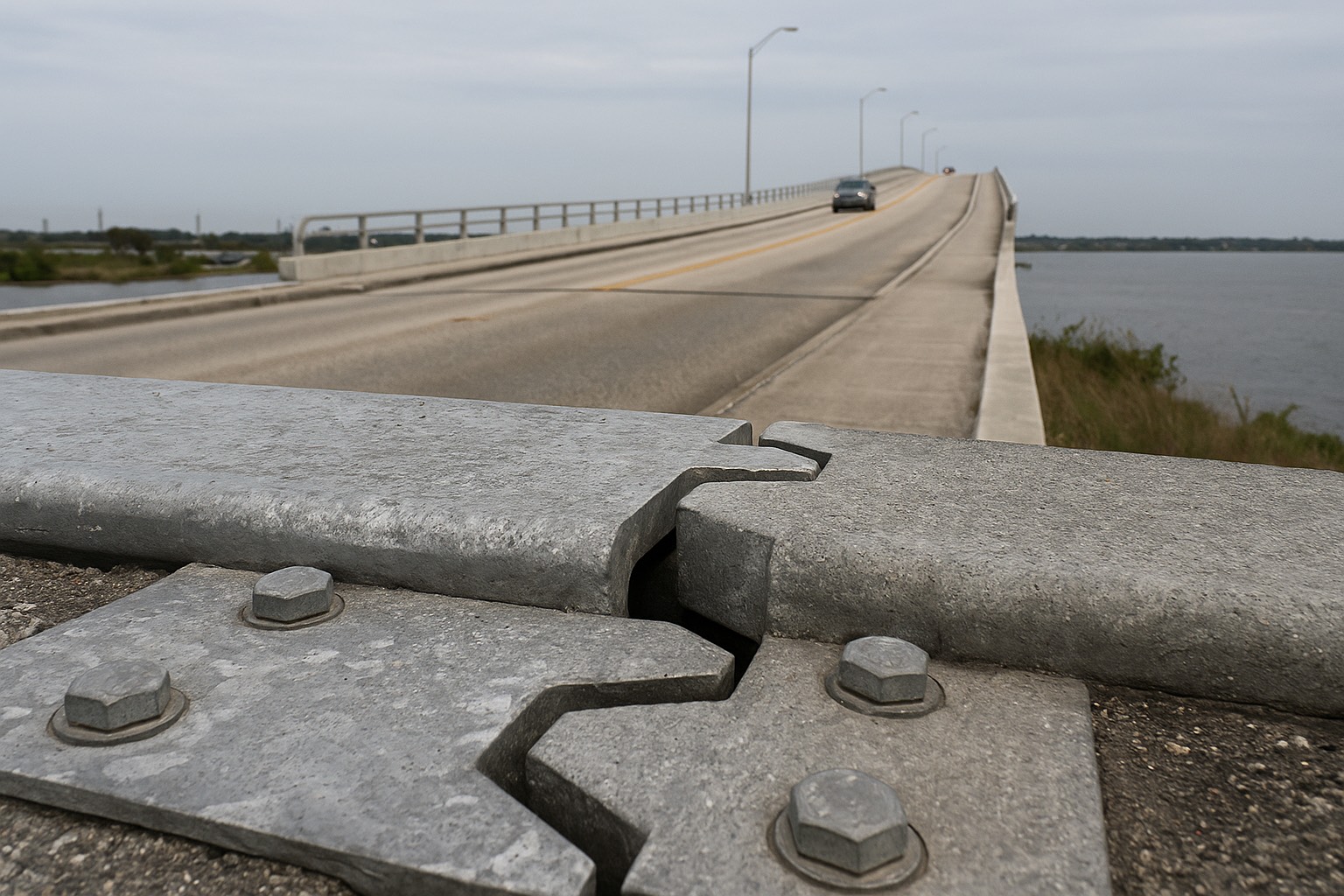
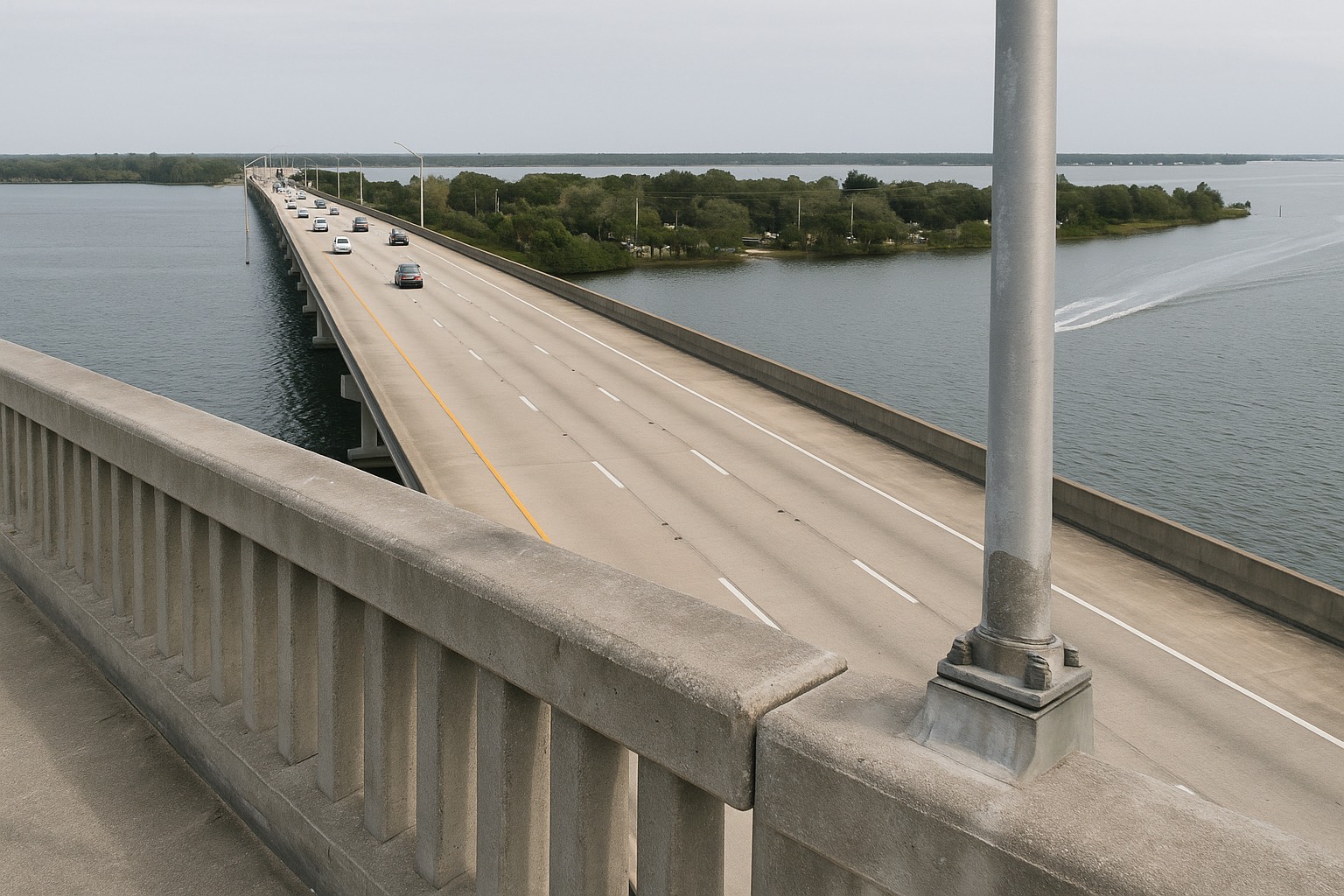
From downtown. You are closest to the northern crossings. State Road 405, Columbia Boulevard, runs east from Titusville over the NASA Causeway toward Kennedy Space Center, the shortest path to the space center's gates from anywhere in the city. State Road 406, Max Brewer Memorial Parkway, crosses the lagoon at the Max Brewer Bridge into the Merritt Island National Wildlife Refuge, with State Road 402 branching east toward Playalinda Beach and Canaveral National Seashore. Downtown is also on US-1, which runs the length of Brevard County as the mainland spine. What downtown is furthest from is the interstate.
From the south end and the corridor. This is the side built around the highway. Cheney Highway (State Road 50) runs west from Titusville toward Orlando and crosses I-95 at the interchange that defines the corridor. Grissom Parkway runs south, State Road 407 connects toward the Beachline Expressway (State Road 528), and I-95 southbound puts Cocoa, Rockledge, Viera and Melbourne within a single uninterrupted run. If your work is in south or central Brevard: or in Orlando, the south end is the geometry that serves you, and no amount of affection for downtown will change that.
Space Coast Regional Airport sits about five miles south of downtown, where Columbia Boulevard (State Road 405) meets US-1, under the Titusville-Cocoa Airport Authority, and the Florida Department of Transportation is the source of record for any corridor project that might change these roads during your ownership. If launch-facility access is the actual driver of your move, I broke that out separately in what your money buys in Titusville, and the mainland-versus-island version of this trade-off is in beachside vs. mainland Brevard.
One more thing about schools, stated carefully because it has to be: attendance zones are assigned by address, and they get redrawn. Look up the specific address on the Brevard Public Schools locator and confirm the current assignment with the district directly. I do not rate schools and I will not, but I will always tell you where to get the official answer.
How I would choose between them
After enough of these tours, the decision usually collapses into four questions. Answer them honestly and the city picks itself.
- Do you have a renovation budget beyond the down payment? If the answer is no, buy newer. An older downtown house with no cushion behind it becomes a stressful purchase within a year. If the answer is yes, downtown is where that money buys the most character per dollar in the city.
- How much do you drive, and in which direction? North and east across the causeways favors downtown. South on I-95 or west on State Road 50 favors the south end. Drive both, at your real hour, before you decide.
- Can you live inside covenants? Some buyers are relieved by an HOA and some are constrained by it. Boats, trailers, home businesses, exterior changes and rental rules are the usual pressure points. Read the recorded documents themselves: the sales office summary is a summary.
- What does the water mean to you? If the lagoon, the marina, the fishing pier and the launch views are why you are moving to Titusville, the older side of town puts you inside walking distance of all of it. If the water is a weekend thing, the south end trades a walk to the lagoon for a drive back up US-1 or Singleton Avenue, run it yourself at the hour you would really go, and keeps the newer house.
What I will not do is tell you one side is the smarter buy. I have watched both work and both go wrong, and the failure mode is always the same: the buyer priced the house and skipped the carrying cost. Price the whole thing: the roof, the wind mitigation credit, the flood zone, the HOA or district assessment, the tax reset, before you decide which Titusville you want. Then browse the current inventory on the Titusville listings page and check where conditions sit on the Titusville market page.
Frequently asked questions
Is historic downtown Titusville or the south end a better place to buy?
Neither is better; they solve different problems. Historic downtown puts you on the older grid near the Indian River Lagoon, the Titusville Municipal Marina, Sand Point Park and Space View Park, with larger irregular lots, mature trees, usually no HOA, and an older building that will ask for renovation money and careful insurance underwriting. The south end and the Cheney Highway corridor offer newer construction built under later editions of the Florida Building Code, easier insurance, and quicker access to Interstate 95, in exchange for HOA covenants, possible district assessments, younger landscaping and more distance from the water. Choose based on your renovation budget, your commute direction, your tolerance for covenants, and how much the lagoon matters to your daily life.
What should I inspect on an older home in downtown Titusville?
Start with the four-point items every Florida carrier asks about: roof, electrical, plumbing and HVAC. On mid-century Space Coast stock, look specifically for cast-iron drain lines that corrode from the inside, polybutylene supply piping common in houses built from the late 1970s through the mid-1990s, single-strand aluminum branch wiring used in homes built roughly from 1965 into the early 1970s per the U.S. Consumer Product Safety Commission, and older electrical panels that some carriers will not insure. Get contractor pricing on the roof, panel, plumbing and windows before your inspection contingency expires, and ask the City of Titusville what permitting your intended scope requires. None of these findings makes a house unbuyable, but every one is cheaper to discover during the inspection period than at your first insurance renewal.
Do homes in south Titusville have HOA fees?
Many newer subdivisions in south Titusville and out along the Cheney Highway and Interstate 95 corridor do have a homeowners association with recorded covenants and monthly or annual dues, while the older downtown grid generally does not. It is set subdivision by subdivision, so verify it for the specific address rather than assuming. During your inspection period, request the covenants, the current budget, the reserve position and the last twelve months of board minutes, and ask what is restricted regarding boats, trailers, work vehicles, fences, exterior paint and rentals. If you own a boat and plan to keep it at the house, that single question can decide the purchase.
What is the difference between an HOA fee and a CDD assessment in Brevard County?
A homeowners association is a private corporation created by recorded covenants that bills members dues to maintain common areas and enforce rules. A community development district is a separate special-purpose district that finances infrastructure such as roads, drainage and utilities, and bills owners through an assessment that appears on the property tax bill rather than as a private invoice. The district assessment is not optional and it passes to you at closing. Check the tax bill for the specific parcel at the Brevard County Property Appraiser and read exactly what is itemized on it, because a Titusville subdivision may have one, both, or neither.
Is insurance more expensive on an older Titusville home than a newer one?
The building's features drive the price more than the address does. Under Florida Statutes section 627.0629, a residential property rate filing in Florida must include actuarially reasonable discounts, credits or other rate differentials for wind-mitigation construction features, and section 627.711 requires your insurer to notify you of them and prescribes the uniform mitigation verification inspection form that documents them, covering roof covering, roof deck attachment, roof-to-wall connection, roof geometry, secondary water resistance and opening protection. Newer south-end homes built under later editions of the Florida Building Code frequently qualify on several of those at once, while an older downtown home may qualify on none until the work is done. After you upgrade, a fresh wind mitigation inspection is how the credit gets applied to your policy.
Does roof age stop me from insuring an older home in Titusville?
Not automatically. Florida's SB 2-A, passed in the December 2022 special session, changed how carriers may treat an older roof, generally preventing a refusal based on roof age alone when an inspection shows the roof has meaningful remaining useful life. That statute has been amended since, and carrier appetite shifts independently of the law, so confirm the current position with a licensed Florida agent for the specific property. Practically, get the roof's age and condition in writing early and obtain a real insurance quote before your inspection contingency expires. The Florida Office of Insurance Regulation is the authority on how residential coverage is regulated in the state, and Citizens Property Insurance is the state-created insurer of last resort when the private market will not write the risk.
Does Titusville have oceanfront property or Coastal Construction Control Line restrictions?
No. Titusville sits on the mainland along the west bank of the Indian River Lagoon, with Kennedy Space Center and the Merritt Island National Wildlife Refuge across the water, and it has no Atlantic frontage inside the city. Because of that, the Florida Department of Environmental Protection's Coastal Construction Control Line, which governs construction seaward of the line near the ocean dune system, does not apply to Titusville parcels the way it applies to barrier-island lots in Cocoa Beach, Satellite Beach or Melbourne Beach. Flood risk still applies and is parcel-specific, so pull the address at the FEMA Flood Map Service Center and read the zone and Base Flood Elevation before making assumptions from the street.
Which side of Titusville is closer to Kennedy Space Center and to Interstate 95?
They are close to different things. Downtown sits nearest the northern lagoon crossings, with State Road 405, Columbia Boulevard, running east over the NASA Causeway toward Kennedy Space Center, and State Road 406, Max Brewer Memorial Parkway, crossing the Max Brewer Bridge into the Merritt Island National Wildlife Refuge with State Road 402 branching toward Playalinda Beach. The south end and the corridor sit nearest the highway, where Cheney Highway, State Road 50, crosses Interstate 95 and runs west toward Orlando, with Grissom Parkway and State Road 407 connecting south toward the Beachline Expressway. Drive both routes yourself on a weekday at the hour you would really travel, and trust that measurement over any published estimate.
Keep reading
Not sure which Titusville fits you?
Send me the two addresses you are torn between and I will price them side by side, flood zone, roof and wind mitigation position, HOA or district assessment, and the tax reset after closing. I have served Space Coast clients since 2015 and I will give you the straight version, including the part that argues against the house you like more.
Data last verified: August 2026. Geographic, permitting, insurance and tax points summarized from the City of Titusville, the Brevard County Property Appraiser, the FEMA Flood Map Service Center, the National Flood Insurance Program, the Florida Office of Insurance Regulation, Citizens Property Insurance Corporation, Brevard Public Schools, the U.S. Consumer Product Safety Commission, the Florida Department of Transportation, the Florida Department of Environmental Protection's Coastal Construction Control Line program, and Florida law including Florida Statutes sections 627.0629 and 627.711 and SB 2-A, as of August 2026. Statutes, carrier appetite, flood zones, attendance zones and subdivision documents change, confirm current specifics with the relevant authority, a licensed Florida insurance agent, and the recorded documents for your parcel.
Categories
- All Blogs (48)
- Cost of Living (3)
- Cost of Ownership (25)
- Decision Guide (9)
- Living in Cape Canaveral (8)
- Living in Cocoa Beach (5)
- Living in Melbourne (4)
- Living in Melbourne Beach (5)
- Living in Palm Bay (4)
- Living in Rockledge (3)
- Living in Satellite Beach (6)
- Living in Titusville (6)
- Living in Viera (4)
- Living on Merritt Island (4)
- When Buying (4)
- When Relocating (7)
Recent Posts