The Real Cost of Owning a Home on Florida's Space Coast
The Real Cost of Owning a Home on Florida's Space Coast
On the Space Coast, the sticker price is only the start of the conversation. The carrying costs — insurance, flood, taxes, association fees, and salt-air upkeep — are what decide whether a home fits your budget.
Here is the part most listings will not tell you: the purchase price you see on a Space Coast home is the cheapest number you will ever deal with. The real cost of ownership lives in the line items that come after closing — a homeowners policy, a separate wind deductible, a separate flood policy, property taxes that reset when you buy, association or community-development fees, condo reserves under Florida's new safety laws, and the steady tax that salt air charges every coastal home. Two houses with the same asking price can carry wildly different monthly costs once those pieces are added up. This guide walks each one so you can build the whole number before you commit.
I have helped Space Coast buyers and sellers work through these costs since 2015, and the pattern is always the same: people fall in love with the price, then meet the carrying costs at the inspection or insurance-binding stage and have to reset their whole budget. The fix is simple. Run the real math first. Below is the framework I use with every client, with the authorities you can check each figure against yourself, because on the coast, trust is built on showing your work.
The price gets you in the door. The carrying costs decide whether you can stay in the house.
1. Insurance: hurricane deductibles and flood coverage are separate from the basics
The single most common surprise for new Space Coast owners is how much a standard homeowners policy leaves to other policies. Along the Florida coast, two of the biggest risks — hurricane wind and flood — are handled differently from ordinary perils, and each carries its own cost structure.
Wind and hurricane damage is typically covered within the homeowners policy but subject to a separate hurricane deductible, often written as a percentage of the home's insured value rather than a flat dollar amount; in higher-risk coastal areas the wind portion may instead require separate windstorm coverage or be written through Citizens Property Insurance, Florida's state-backed insurer for applicants who cannot find coverage in the private market, when private carriers will not write the risk. Flood is the cleanly separate policy — standard homeowners policies generally exclude flood damage, so flood coverage usually must be bought separately through the National Flood Insurance Program (NFIP) or a private flood carrier. Premiums on barrier-island and waterfront homes generally run higher than comparable mainland homes because of wind and flood exposure, though the exact figure depends on the property, its elevation, its roof, and its construction.
The cost fact that catches people
Homeowners coverage, the hurricane deductible you would pay out of pocket after a storm, and a separate flood policy are three distinct pieces of the picture — three separate figures to price. Quote homeowners and wind coverage, understand the hurricane deductible, and quote flood separately before you write an offer, and ask whether a wind-mitigation inspection could lower the wind premium. You can confirm how Florida regulates these policies through the Florida Office of Insurance Regulation (rates and carriers as of June 2026).
Read the full breakdown in our guide to how wind and flood insurance really work on the Space Coast.
2. FEMA flood zones: the map that drives your flood bill
Whether you are required to carry flood insurance — and roughly what it will cost — is driven largely by your FEMA flood zone. The zone is published on FEMA's official maps, and you can look up any Space Coast address yourself.
High-risk zones (those beginning with the letters A or V, such as AE and VE) are designated Special Flood Hazard Areas, where flood insurance is typically required if you have a federally backed mortgage. Zone X is a lower-risk designation where flood insurance is not federally mandated, though it can still be wise to carry it — flooding happens outside high-risk zones too. On the Space Coast the reality splits sharply between the barrier islands and the mainland, so the zone can change dramatically over a short distance.
| FEMA Zone | Risk level | Flood insurance |
|---|---|---|
| AE | High-risk (Special Flood Hazard Area), with a Base Flood Elevation set | Generally required with a federally backed mortgage |
| VE | High-risk coastal, exposed to wave action | Generally required; typically the costliest to insure |
| X | Lower-risk (outside the mapped high-risk area) | Not federally required; often available at lower cost |
Check this for the exact address, every time
Before you fall for a home, pull its flood zone on the FEMA Flood Map Service Center. Two homes on the same street can sit in different zones, and that one designation can materially affect both whether flood insurance is required and what it costs — alongside elevation, construction, and distance to water (FEMA maps current as of June 2026).
For the zone-by-zone detail, read our explainer on Space Coast flood zones AE, VE, and X.
3. Property taxes and the homestead exemption
Florida has no state income tax, which is part of the draw — but property taxes are real, and the number to budget from is your own future bill. When a property sells, its assessed value can reset, so the tax you pay as the new owner may differ from what the prior owner paid. Budgeting off the listing's old tax figure is one of the easiest ways to underestimate your monthly cost.
Florida's homestead exemption can reduce the taxable value of a primary residence, and the Save Our Homes provision limits how fast the assessed value of a homesteaded property can rise year to year. These benefits generally apply only to a primary residence, so a second home, vacation property, or rental is taxed differently. The exact assessment, exemptions, and millage rates vary by property and taxing district.
Where to get the real number
Look up any property's assessment, exemption status, and tax history directly at the Brevard County Property Appraiser (BCPAO), and estimate your own bill rather than inheriting the seller's. Eligibility and value caps are set by Florida law and Brevard County (as of June 2026).
4. HOA, CDD, and the Viera factor
Many Space Coast communities carry a homeowners association (HOA) fee, a community development district (CDD) assessment, or both — and each works differently. An HOA fee funds shared amenities and maintenance and is set by the association. A CDD is a special taxing district that repays the infrastructure (roads, drainage, amenities) that built the community; its assessment often appears on your annual property tax bill and can run for years until the underlying bonds are paid off.
This matters in master-planned communities. Viera, the master-planned community in central Brevard, is the classic example: many Viera homes carry CDD assessments on top of any HOA dues, so two similar homes — one inside a CDD, one outside — can have meaningfully different annual costs even at the same price. These communities are still worth buying into. Just ask for the full fee picture in writing.
Ask before you offer
Request the HOA dues, what they cover, the rules, and any CDD assessment amount and remaining term before you write an offer. In planned communities like Viera and neighboring Rockledge, the CDD line can be the difference-maker between two homes that look identical on price.
5. Condo reserves and special assessments (SB 4-D and SB 154)
If you are looking at a condo — and on the Space Coast that often means oceanfront in Cocoa Beach — the reserve picture changed substantially after the 2021 Surfside collapse. Florida passed building-safety legislation — Senate Bill 4-D in 2022, follow-up Senate Bill 154 in 2023, and further amendments in 2025 (HB 913) — that reshaped how condo associations fund their future repairs.
Under current law, residential condo and cooperative buildings that are three habitable stories or more may be subject to milestone structural inspections, and qualifying associations must complete a Structural Integrity Reserve Study (SIRS) for the statutorily listed structural-integrity and safety components. Critically, for those SIRS items associations can no longer simply vote to waive or underfund reserves, though the law allows funding through regular assessments, special assessments, or loans and includes narrow exceptions. The practical effect for buyers: older oceanfront buildings that historically kept dues low by deferring reserves may now face higher monthly assessments or one-time special assessments to catch up. A low monthly fee deserves a second look — it can signal underfunded reserves.
Read the documents before you buy a condo
Before buying any condo, review the reserve study, recent board meeting minutes, and the special-assessment history — the current monthly fee only tells you part of the story. You can confirm the condo-association rules and disclosure requirements through the Florida Department of Business and Professional Regulation (DBPR) (law as enacted, current as of June 2026).
The full post on this is our guide to Florida condo reserves, SB 4-D, and special assessments.
6. Salt-air maintenance: the cost that never sends a bill
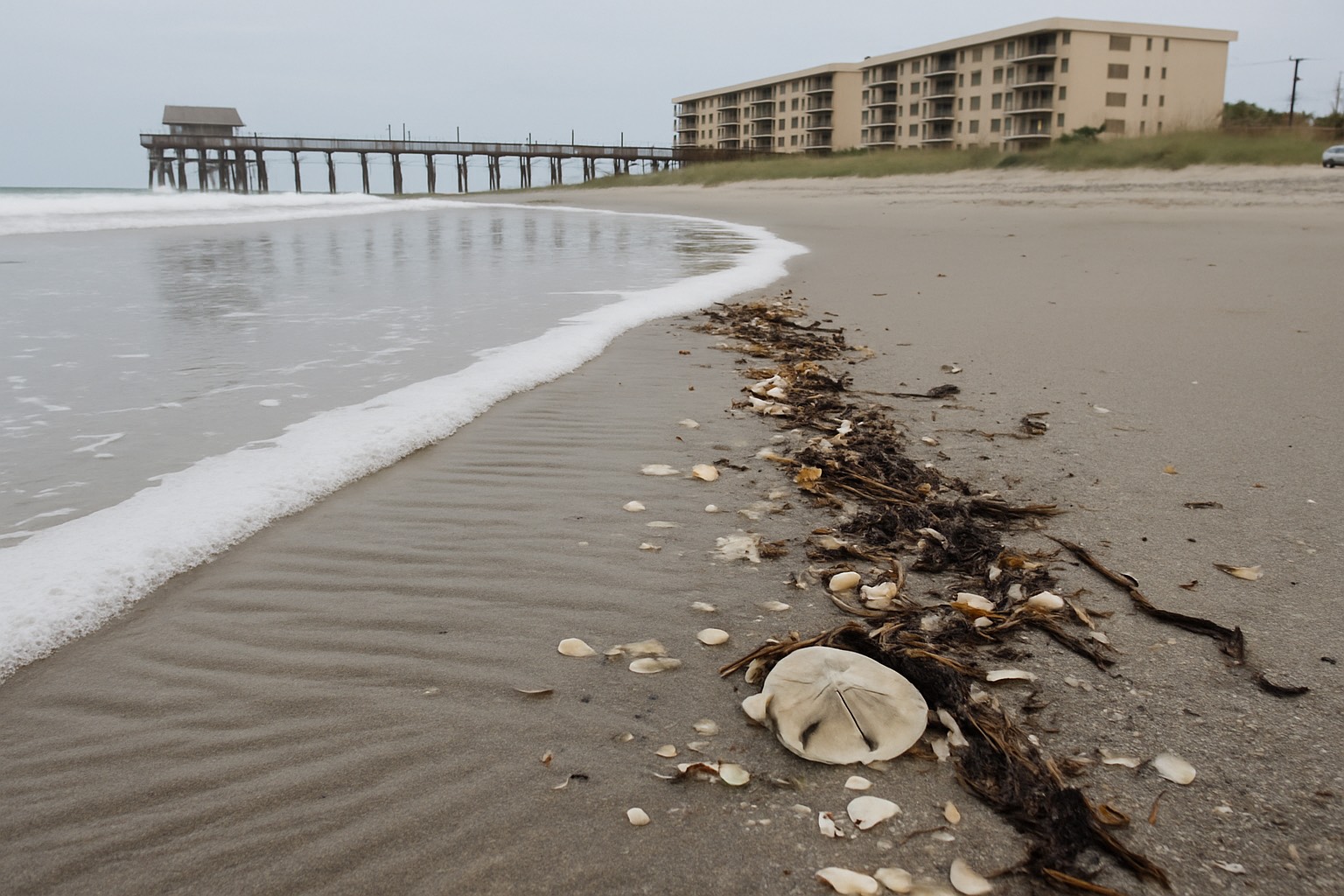
The last cost is the one no lender or insurer itemizes for you: the ocean. Salt air is relentless on a coastal home. It corrodes air-conditioning coils, metal fasteners, garage hardware, light fixtures, and screens faster than the same components inland, and wind-driven sun and storms add roof and exterior wear. None of it shows up as a monthly statement, but it shows up in your repair and replacement budget — and the closer you are to the water, the steeper it runs.
The flip side is that the upgrades that protect a coastal home — impact-rated windows, a wind-rated roof, hurricane straps — can do double duty by lowering your wind insurance premium through a wind-mitigation inspection. Coastal owners typically budget more for maintenance than mainland owners in places like Palm Bay or inland Melbourne, and that line belongs in your math from day one.
Budget for it on purpose
Treat salt-air upkeep as a known annual line in your budget. Barrier-island and direct-waterfront homes in Merritt Island and Cocoa Beach generally carry higher maintenance budgets than comparable mainland homes. Storm-season prep timing tracks the official Atlantic hurricane season tracked by NOAA's National Hurricane Center (June through November).
The deeper how-to is in our guide to maintaining and storm-proofing a coastal Space Coast home.
Put the whole number together before you fall in love
Add it up before you offer: homeowners + wind + flood insurance, the reset property tax, any HOA and CDD fees, condo reserves, and a real salt-air maintenance line. That is the true cost of owning on the Space Coast — and it is the number I help every client build before they commit, community by community.
Frequently asked questions
Is the purchase price the main cost of owning a Space Coast home?
No. On the Space Coast the purchase price is only the start. The carrying costs that follow closing — homeowners insurance, a separate wind deductible, a separate flood policy, property taxes that can reset when you buy, HOA and CDD fees, condo reserves, and salt-air maintenance — often make the difference between two homes at the same price. Always build the full monthly and annual cost before you write an offer.
Do I need flood insurance if my home is not on the water?
Possibly. Flood insurance is generally required if your home sits in a FEMA high-risk flood zone (a Special Flood Hazard Area, such as AE or VE) and you have a federally backed mortgage. In lower-risk Zone X it is not federally required, but flooding does happen outside high-risk zones, so many owners carry it anyway. Look up the exact flood zone for any address at the FEMA Flood Map Service Center before you assume you are clear.
Why are wind and flood insurance separate from my homeowners policy?
Along the Florida coast, hurricane wind and flood are handled differently from ordinary perils. Wind and hurricane damage is typically covered within the homeowners policy but carries its own separate hurricane deductible, and in higher-risk areas may require separate windstorm coverage or be written through Citizens Property Insurance when private carriers will not. Flood is the cleanly separate policy — standard homeowners policies generally exclude flood damage, so flood coverage usually must be bought through the National Flood Insurance Program or a private flood carrier. Price homeowners, wind, and flood together before you buy.
Will my property taxes match the seller's current tax bill?
Not necessarily. When a property sells, its assessed value can reset, so the tax you pay as the new owner may be different from what the prior owner paid — budgeting off the old figure is a common mistake. Florida's homestead exemption and the Save Our Homes cap can lower taxes on a primary residence but generally do not apply to a second home or investment property. Look up the property and estimate your own bill at the Brevard County Property Appraiser.
What is a CDD fee, and why does Viera come up so often?
A community development district (CDD) is a special taxing district that repays the infrastructure — roads, drainage, amenities — that built a community, and its assessment often appears on your annual property tax bill until the underlying bonds are paid off. It is separate from any HOA dues. Master-planned communities like Viera frequently carry CDD assessments, so two similar homes — one in a CDD, one not — can have meaningfully different annual costs at the same price. Ask for the full HOA and CDD picture in writing before you offer.
How did the new Florida condo laws change the cost of owning a condo?
After the 2021 Surfside collapse, Florida passed Senate Bill 4-D (2022) and Senate Bill 154 (2023), with further amendments in 2025 (HB 913). Residential condo and cooperative buildings three habitable stories or more now face milestone structural inspections and must complete a Structural Integrity Reserve Study, and for those SIRS items associations can no longer simply waive or underfund reserves. The practical effect is that older oceanfront buildings that kept dues low by deferring reserves may now face higher assessments or special assessments to catch up. Review the reserve study, board minutes, and assessment history before buying a condo.
How much should I budget for salt-air maintenance on a coastal home?
It varies by how close you are to the water, but treat it as a known annual line rather than a surprise. Salt air corrodes air-conditioning coils, fasteners, hardware, fixtures, and screens faster than inland, and barrier-island and direct-waterfront homes generally carry higher maintenance budgets than comparable mainland homes. Protective upgrades like impact windows, a wind-rated roof, and hurricane straps can lower your wind insurance premium through a wind-mitigation inspection, so some of that spending pays you back.
How do I figure out the true cost of a specific Space Coast home?
Build it line by line before you offer: quote homeowners, wind, and flood insurance together; pull the FEMA flood zone for the exact address; estimate property taxes at the Brevard County Property Appraiser rather than copying the seller's bill; get any HOA and CDD amounts in writing; for a condo, read the reserve study and assessment history; and add a realistic salt-air maintenance line. I help clients work through all of this community by community — reach out and we will run your real number together.
Run your real number with someone who lives here
Before you commit to a Space Coast home, let's build the whole cost together — insurance, flood, taxes, fees, reserves, and upkeep — so there are no surprises after closing. I have done this with Space Coast clients since 2015, and I will show you the math.
Keep reading
Data last verified: June 2026. Insurance, flood-zone, tax, HOA/CDD, condo-reserve, and maintenance details change over time and vary by property; confirm specifics with the cited authority and the appropriate licensed professional for your home.
Categories
- All Blogs (48)
- Cost of Living (3)
- Cost of Ownership (25)
- Decision Guide (9)
- Living in Cape Canaveral (8)
- Living in Cocoa Beach (5)
- Living in Melbourne (4)
- Living in Melbourne Beach (5)
- Living in Palm Bay (4)
- Living in Rockledge (3)
- Living in Satellite Beach (6)
- Living in Titusville (6)
- Living in Viera (4)
- Living on Merritt Island (4)
- When Buying (4)
- When Relocating (7)
Recent Posts