New Construction in Palm Bay: Builder Contracts, Timelines and What to Negotiate
New Construction in Palm Bay: Builder Contracts, Timelines and What to Negotiate
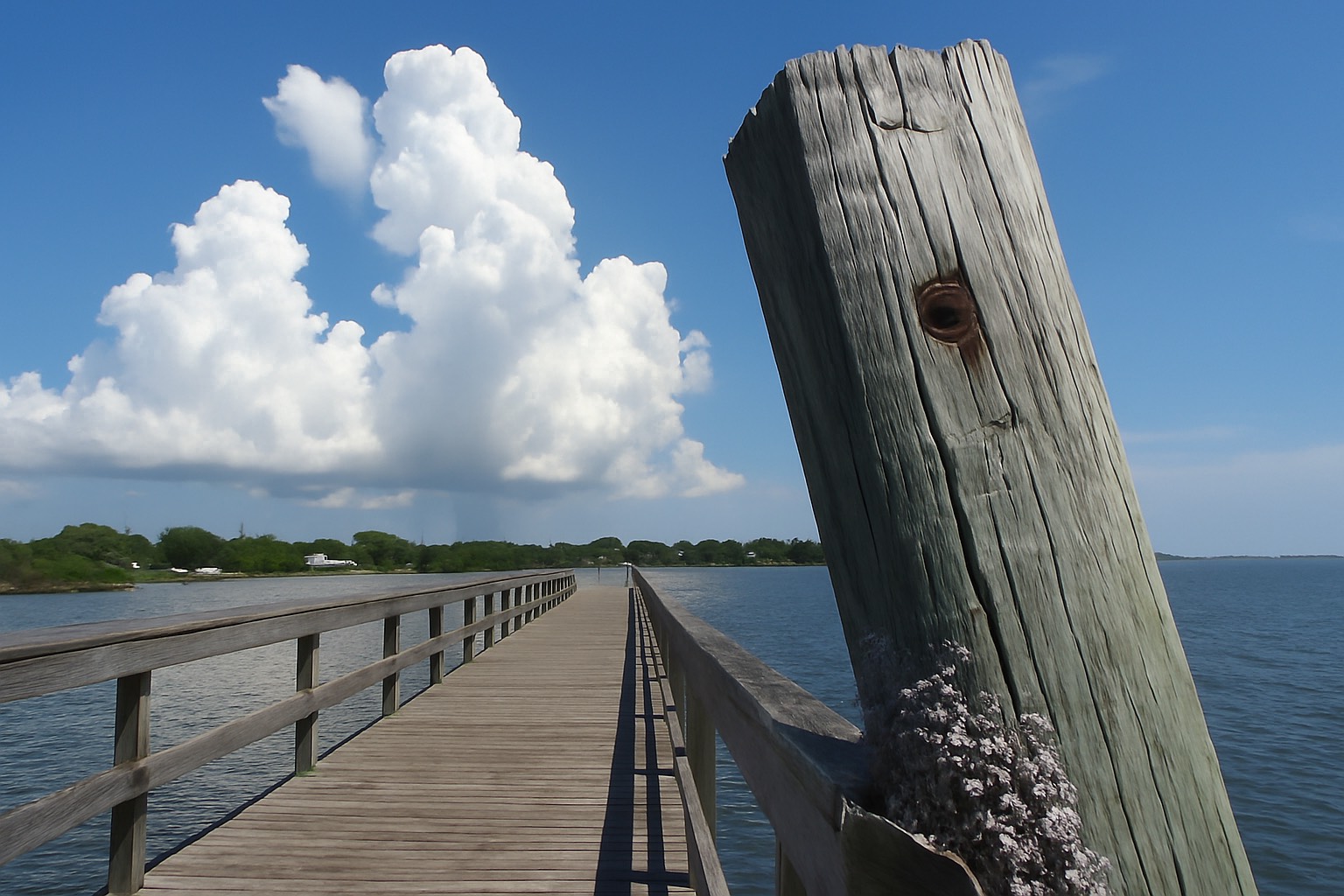
Much of west Palm Bay sits on a grid platted decades ago, which is why builders work lot by lot here — and the contract behind a new house was written by the builder's attorneys for the builder.
A resale purchase in Brevard County starts from a form both sides have seen a hundred times, with an inspection period, a financing contingency and a closing date printed on the front page. A new-construction purchase in Palm Bay starts from something else: a contract drafted by the builder's law firm, presented on a clipboard in a model home, with the sales agent smiling across the table. That agent is paid by the builder. The paper is written to protect the builder. Neither fact makes the house a bad buy — I have put plenty of clients into new Palm Bay homes and watched them be very happy — but both change what your job is at that table. On a resale you negotiate price. On a new build you mostly negotiate language.
This is the post I wish every buyer read before their first Saturday of model homes: what Palm Bay's platted grid means for where the new houses end up, what a builder contract gives up that a resale contract gives you, how deposits and completion dates work, whether the incentive lender is a deal, and why an independent inspection still matters on a house nobody has lived in. Start with the Palm Bay real estate guide for the city itself. This one is about the paperwork.
Why the new houses land where they do in Palm Bay
There is a structural reason the new houses cluster here, and it has nothing to do with fashion. Palm Bay occupies a long stretch of mainland south Brevard, running west from the Indian River Lagoon across Interstate 95 toward the St. Johns River marshes. Much of that western half was subdivided generations ago, in the Port Malabar plats recorded by General Development Corporation, into tens of thousands of individual single-family lots on a grid of named and numbered streets. The City of Palm Bay still administers that grid. The rights-of-way are drawn, the lot lines are recorded, the addresses exist.
That is the whole story. A builder in Viera works inside one master developer's plan. A builder in Palm Bay can buy a scattered handful of already-platted lots off Emerson Drive or San Filippo Drive, pull permits from the City of Palm Bay, and start. So "new construction in Palm Bay" means two genuinely different products sitting in the same search:
- The production subdivision. A national or regional builder controls a block of lots, offers a fixed set of floor plans, runs a design center, and usually attaches a homeowners association. Bayside Lakes in the southwest is the shape most buyers picture when they hear production subdivision.
- The infill spec house. One or two houses at a time on old platted lots, where the neighbors may be 1970s ranches, may be woods, and may be nothing yet. Often no association. Often a different utility answer than the lot next door.
Here is the honest downside, and I say it before we tour: on an infill lot in west Palm Bay you may be buying into a street that will not fill in for years. Vacant parcels, construction traffic and a permanently temporary feeling are real. Some buyers love the elbow room. Others find a nail gun three doors down every morning for two years is more than they signed up for. Drive the street on a weekday before you sign anything.
Utilities are the other lot-by-lot variable — city water and sewer on one street, a well and septic system on the next — and that answer belongs in your due diligence, which I break down in the Palm Bay well, septic and city utilities guide. If you are weighing the city against its master-planned neighbor, Palm Bay vs. Viera compares the two on carrying cost, and what master-planned means day to day covers the other side of that line. For what is on the ground now, use the Palm Bay listings page and the Palm Bay market page.
The builder's contract is the builder's paper
The most useful sentence I can give a new-construction buyer is this: there is no standard form. In a resale, both sides usually work from a contract the Space Coast Association of REALTORS®, Florida Realtors and the Florida Bar have shaped over decades, with familiar blanks and familiar protections. A builder hands you its own document instead. Every builder's differs. The clauses a resale buyer takes for granted are frequently thinner, conditioned, or absent.
Start with who is across the table. The on-site sales agent is a licensee working for the builder, and brokerage relationships in Florida are governed by Chapter 475, Florida Statutes, which sets out how a licensee discloses the relationship being offered. Ask directly whose interest that person represents. The answer will be polite and it will not be yours.
The five clauses I read first
1. Deposit and escrow — how much, when, who holds it, what returns it. 2. Completion and delay — a date certain or an estimate with excusable-delay language, and whether an outside date exists at all. 3. Material and plan substitution — the builder's right to change products, elevations or specifications. 4. Dispute resolution — mandatory arbitration, venue, attorney fees, and how it interacts with Chapter 558, Florida Statutes. 5. Warranty and assignment — what the limited warranty covers, who administers it, how long it runs, whether it transfers if you sell. Read those five before you read the price.
What is genuinely negotiable is narrower than buyers hope and wider than builders admit. Base price is the hardest, because a production builder is protecting the comparable sales that support every other house in the subdivision; discounting yours devalues the next twelve. What moves more readily is everything around the price — a design-center credit, a contribution toward closing costs, a lot premium, an included structural option, a builder-funded rate buydown. Language moves more than people try. I have had builders add an outside completion date, widen a pre-drywall inspection right, and clarify deposit escrow, simply because we asked in writing and nobody else on the street had.
One more thing, and it is not optional in my book: have a Florida real estate attorney read the contract before you sign. This is a construction agreement measured in hundreds of thousands of dollars, on a document you have never seen. Against a purchase that size, an attorney's review fee is the cheapest line in the transaction. Ask two firms what a flat-fee contract review costs before you sign. You can read the statutes yourself at Online Sunshine, the Florida Legislature's statute library — though reading the statute is a different exercise from reading your contract against it.
Deposits, escrow and the clause that governs the timeline
Two things matter here: the deposit and the date. Both behave differently than they do on a resale.
Expect an initial deposit at signing and, in most production subdivisions, a second deposit when you finalize selections at the design center. That second one is commonly described as non-refundable once the builder has ordered materials, and the logic is not unreasonable — your cabinet package is now on a truck. The question is where the money lives in the meantime. Section 501.1375, Florida Statutes is the provision to read: it governs deposits taken by a builder on a residential dwelling unit, sets the conditions under which deposits above a stated share of the purchase price must be held in escrow, and requires the arrangement to be disclosed in the contract. So ask the plain version. Which institution holds my deposit, in what kind of account, who earns the interest, and under exactly which circumstances does it come back to me? Get that from the contract rather than from the sales office.
On the date, understand what you are being given. Many builder contracts do not promise a closing date; they estimate substantial completion, then reserve broad rights to extend for weather, labor, materials and permitting. Some carry an outside date past which you may cancel and recover your deposit. Some do not. That distinction is worth more to you than a free refrigerator.
| Term | A Brevard resale contract typically gives you | A builder contract typically gives you |
|---|---|---|
| Deposit | Escrowed with a title company or broker, released per named contingencies. | Paid to the builder, frequently larger, often non-refundable once selections are ordered. Escrow treatment governed by section 501.1375, Florida Statutes. |
| Closing date | A date certain, with an extension mechanism both sides agree to. | An estimated completion plus excusable-delay language the builder controls. An outside cancellation date only if written in. |
| Inspections | An inspection period with a right to cancel or renegotiate. | Usually a pre-drywall walk and a final orientation, sometimes with limits on who may attend. |
| Financing | A financing contingency with a named deadline. | Varies widely. Incentives are often conditioned on the builder's affiliated lender. |
| Defects | Repairs negotiated before closing, while you still hold the money. | A limited warranty after closing, plus the notice and opportunity-to-repair process in Chapter 558, Florida Statutes. |
Comparison of contract structure only, summarized from Chapter 475, section 501.1375 and Chapter 558, Florida Statutes, as of August 2026. Every builder's form differs and statutes are amended. This is general education and does not replace review of your contract by a Florida real estate or construction attorney.
If the subdivision has a homeowners association, the disclosure matters too. Section 720.401, Florida Statutes requires that a buyer of a parcel in a mandatory homeowners association receive a disclosure summary before executing the contract, and gives a cancellation right where that does not happen. Read the budget, the governing documents and the assessment structure. Where a special taxing district funds the infrastructure instead, the assessment rides on the tax bill rather than the dues statement, which is the mechanic I walk through in the CDD fee explainer.
And the practical piece nobody enjoys hearing: because the completion date belongs to the builder, the risk of being between homes belongs to you. If your lease ends on a fixed day or your current house is under contract, build a bridge into the plan — a month-to-month extension, a short-term rental, a storage unit reserved early. I would rather a client pay for six spare weeks than be homeless on a Friday because a truss package ran late.
Allowances, change orders and the walk-through
The model home you fell in love with off Malabar Road is not the house in the base price. It is the house with the structural options, the upgraded elevation, the extended lanai, the design-center finishes and the professional landscaping. That is a showroom doing its job. But it means the number on the sign and the number on your closing statement are separated by decisions you have not made yet.
Two words govern that gap. An allowance is a budget line the builder has set for a category — flooring, cabinetry, lighting — and anything above it is yours to pay. A change order is a written amendment after signing, and every builder sets cutoff dates by construction phase after which a given change cannot happen. Structural options die first, at or before permit. Finishes die last.
My advice is boring and it works. Before you sign, get the full option list priced in writing, pick your must-haves, and add them to the contract at signing rather than at the design center, where the room is built to make yes feel easy. Then run the finished number, with taxes and insurance, through the mortgage calculator and check the ceiling against the affordability calculator before the design appointment, so you arrive knowing your own limit.
Then there are the two walks. The pre-drywall walk is the only time you will see the inside of your own walls. Photograph every wall, ceiling cavity and mechanical run, systematically, with something in frame for scale, and keep the images forever. The day you chase a leak, that photo library is the most valuable file you own. The final orientation, the blue-tape walk, is where cosmetic items get marked before closing. Bring a bright flashlight, a phone level and patience. Test every window, outlet and faucet, and run the air handler.
You cannot lawfully occupy the house until the City of Palm Bay issues a certificate of occupancy, and your lender will not fund without it — the certificate follows the municipal inspection sequence under the Florida Building Code. You can confirm which edition is in force at the Florida Building Commission's code site. Anything still open on the punch list at closing should be listed in writing with a date beside it. A verbal "we will take care of that" from a superintendent who may be on another subdivision by November is worth nothing.
The incentive lender and what it really costs
Production builders commonly run an affiliated mortgage company, often an affiliated title company, and attach the best incentive to using them. This is legal and common. Under the federal Real Estate Settlement Procedures Act, administered by the Consumer Financial Protection Bureau, a builder referring you to an affiliate it holds an ownership interest in must give you an affiliated business arrangement disclosure describing that relationship and your ability to shop. Read it. It tells you who benefits from which choice.
The incentive is real value, and I never tell clients to refuse it reflexively. I tell them to price it. The comparison is mechanical:
- Get a Loan Estimate from the builder's lender and from two independent lenders on the same day, for the same loan amount and product. The form is standardized for exactly this reason.
- Compare page one and page three. Rate, payment, total loan costs, and the five-year cost and APR on the comparison page. Those last two survive a sales pitch.
- Net the incentive against the difference. If the credit is real money and the affiliated loan prices within a hair of the others, take it. If the credit is smaller than what a higher rate costs over the years you plan to hold the house, it is a discount on paper.
- Read what happens when a buydown expires. A temporary buydown lowers the payment for a defined period, then steps up to the note rate. Underwrite yourself against the note rate.
- Ask about the rate lock. On a build with a moving completion date, who pays for a lock extension is a real dollar question. Settle it before you sign.
Then look past the loan at the whole carrying cost. Insurance on new Florida Building Code construction can look very different from insurance on a 1970s Palm Bay ranch, and much of that difference arrives through the credits described in the wind mitigation inspection guide. The cost of owning a home on the Space Coast lays out the rest of the stack.
Inspections on a brand-new house
I hear the objection every time. It is brand new, it passed city inspection, why pay someone to inspect it? Because those are two different questions. A municipal inspector confirms compliance with the Florida Building Code at defined milestones on behalf of the jurisdiction. Your inspector works for you, looks at workmanship and installation, and writes you a report. Both are useful. Only one is yours.
On a new Palm Bay build I want three looks at the house:
- Pre-drywall. Framing, strapping, plumbing and electrical rough-in, duct runs, window flashing — things cheap to correct now and expensive behind finished walls.
- Before closing. A full inspection while you still hold the money and the bargaining position that comes with it.
- At eleven months. If the builder's limited warranty runs a year on many items, an inspection in month eleven catches the settling cracks, the door that no longer latches and the grading that moved, while the warranty is still open.
Before you sign, check the builder itself
Construction contracting in Florida is licensed under Chapter 489, Florida Statutes, and you can look up license status and discipline at the Florida Department of Business and Professional Regulation. Ask which entity signs your contract, because a national brand often builds through a Florida subsidiary, and ask who administers the warranty. If a defect surfaces later, Chapter 558, Florida Statutes generally requires a written notice of claim and an opportunity to repair before suit, and section 95.11, Florida Statutes sets the deadlines for construction claims, which the legislature has revised in recent years. A Florida construction attorney can tell you which window applies to your closing date. Do not learn that clock exists in month thirteen.
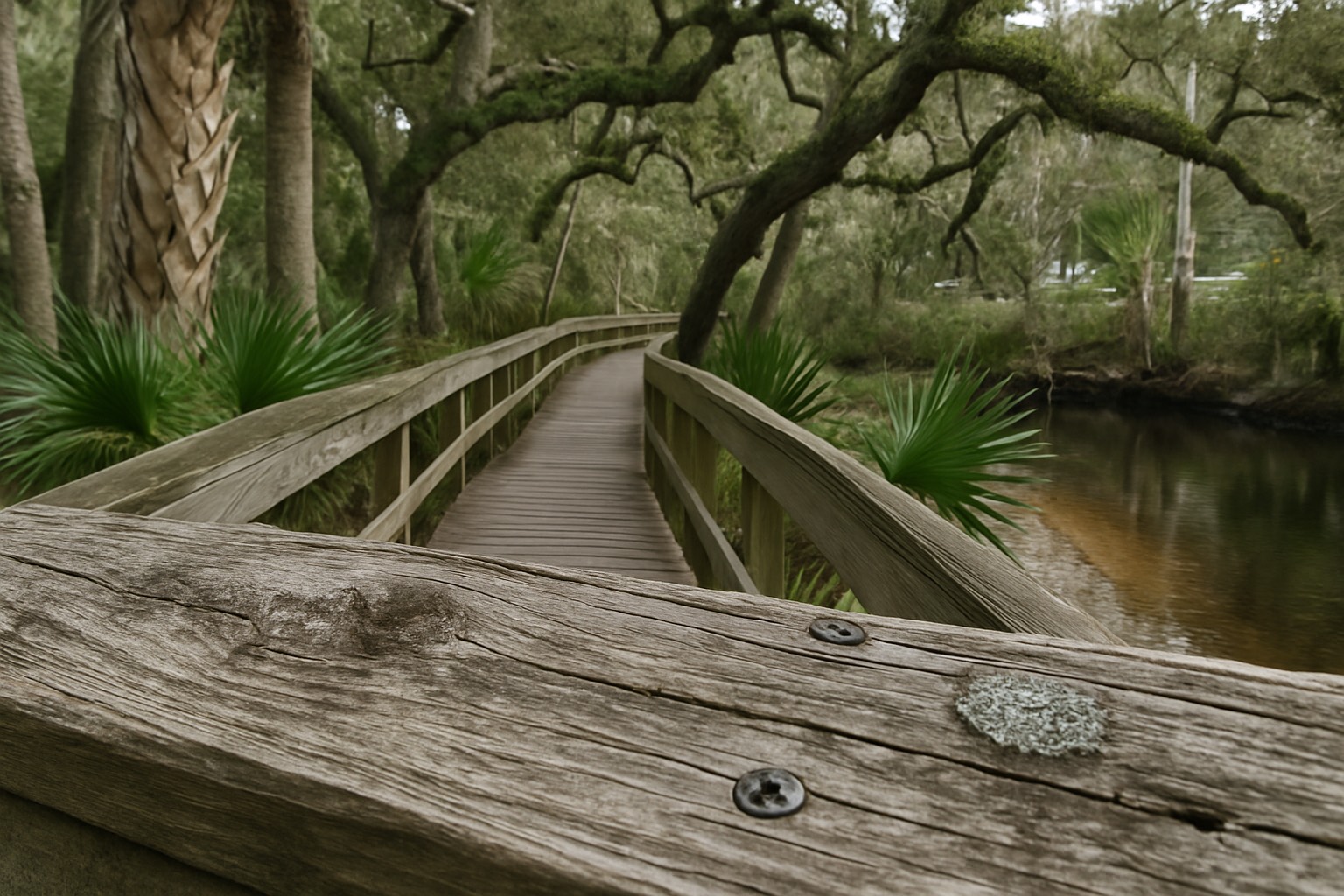
Two site-specific checks belong in the same pass. First, the flood zone. Palm Bay is mainland, which people read as automatically low risk, and that is not how flood mapping works — Turkey Creek, the lagoon shoreline and the western marsh edges all shape the maps. Pull the address at the FEMA Flood Map Service Center, ask whether an elevation certificate exists for the finished house, and read Space Coast flood zones explained for how the designations work. Second, drainage. New subdivision stormwater systems are permitted through the St. Johns River Water Management District, and how your lot sheds water into that system is worth asking while the ground is bare. The Turkey Creek Sanctuary boardwalk shows you, better than any map, how much water this landform moves.
Register your agent on the first visit
This is the operational rule that costs more buyers their representation than anything else, so I will be blunt. Most builders maintain a registration policy: your agent must accompany you or be registered on your first visit for that agent to be recognized in the transaction. Walk into any model-home sales office alone on a Sunday, sign the visitor card, come back three weeks later with me, and the builder may decline to recognize me at all. The policy is printed. It is enforced. It does not care that you did not know.
So take five seconds before you open the door. Text your agent the address, or bring them. That is the whole ask.
Brianna's take
What I am doing on a new build is not opening doors — the builder will happily do that. I am reading the contract before you are emotionally committed to a floor plan, pricing the option list against the base price so you see the real number, asking the deposit and completion questions in writing, comparing the incentive lender against outside Loan Estimates, showing up at the pre-drywall walk with a camera, and holding the punch list after closing when the superintendent has moved to the next street. Almost all of that happens before anyone chooses a countertop.
One last item, because it surprises people every year. Florida assesses property as of January 1, so if your Palm Bay house was a slab or a frame on that date, the first tax bill may reflect the land alone. The following year's bill reflects the finished house, and the jump can be substantial. Pull the parcel at the Brevard County Property Appraiser and read what sits on the roll for your address. File for homestead once the house is your permanent residence — the application deadline is March 1 — and learn how the assessment cap builds from there. The homestead and Save Our Homes guide and Brevard County property taxes explained cover both. If you are selling an existing home to fund the build, start with a home valuation so the two timelines can be planned together.
Frequently asked questions
Do I need my own agent to buy new construction in Palm Bay?
You are not required to have one, but the on-site sales agent is a licensee working for the builder, and brokerage relationships in Florida are governed by Chapter 475, Florida Statutes, which requires disclosure of the relationship being offered. That person is not representing your interest in the contract, the option pricing, the deposit terms or the punch list. If you do want your own representation, register your agent on your first visit to the community, because most builders will not recognize an agent introduced later.
Is the builder's base price negotiable in a Palm Bay subdivision?
Base price is the hardest thing to move, because a production builder is protecting the comparable sales that support every other home in the community. What moves more readily is everything around the price: a design-center credit, a contribution toward closing costs, a lot premium, an included structural option, or a builder-funded rate buydown. Contract language often moves too, so ask in writing for an outside completion date, a wider inspection right, or clearer deposit escrow terms.
How much deposit will a Palm Bay builder ask for, and is it refundable?
Expect an initial deposit at signing and, in most production subdivisions, a second deposit when you finalize selections at the design center, commonly described as non-refundable once materials have been ordered. Section 501.1375, Florida Statutes governs deposits taken by a builder on a residential dwelling unit, sets when deposits above a stated share of the purchase price must be held in escrow, and requires the arrangement to be disclosed in the contract. Ask which institution holds the money, in what account, and under exactly which circumstances it returns to you.
Can the builder move my closing date, and what happens if the house is late?
Many builder contracts do not promise a date certain at all. They estimate substantial completion and reserve broad rights to extend for weather, labor, material availability and permitting. Some include an outside date past which you may cancel and recover your deposit, and some do not, so check whether yours has one before signing. Because the completion date belongs to the builder, the risk of being between homes belongs to you. Build a bridge into the plan, such as a month-to-month lease extension or a short-term rental.
Do I have to use the builder's lender to get the incentive?
Builders commonly attach their best incentive to an affiliated mortgage company, and often an affiliated title company. Under the federal Real Estate Settlement Procedures Act, administered by the Consumer Financial Protection Bureau, a builder referring you to an affiliate it holds an ownership interest in must provide an affiliated business arrangement disclosure. The incentive can be real value, so price it rather than refusing it. Get Loan Estimates from the builder's lender and two independent lenders on the same day, compare total loan costs and the five-year and APR figures, then net the credit against the difference.
Should I still get a home inspection on a brand-new house?
Yes. A municipal inspector confirms compliance with the Florida Building Code at defined milestones on behalf of the jurisdiction, while your own inspector works for you, examines workmanship and installation, and gives you a written report. On a new Palm Bay build I want three looks: a pre-drywall inspection covering framing, strapping, rough-in plumbing and electrical and window flashing, a full inspection before closing while you still hold the money, and, where the builder's limited warranty runs a year on a category of items, an inspection at about month eleven while that window is still open. Read your own warranty for the term that applies.
Why was the first property tax bill on my new Palm Bay home so low?
Florida assesses property as of January 1, so if your house was still a slab or a frame on that date, the first bill may reflect the land alone. The following year's bill reflects the finished home, and the increase can be substantial. Pull the parcel at the Brevard County Property Appraiser and read what sits on the roll for your address rather than budgeting from a number quoted during the sale. File for homestead with the Property Appraiser once the home is your permanent residence, by the March 1 application deadline.
How is buying new in Palm Bay different from buying new in Viera?
Viera is a single master-planned community built to one developer's plan, so the streets, amenities and district structure arrive as a designed whole. Much of west Palm Bay sits on the Port Malabar plats recorded decades ago by General Development Corporation, meaning builders work lot by lot on an existing grid. That produces two products in the same search: production subdivisions with a homeowners association, and one-off infill houses on old platted streets, often without an association and sometimes on a well and septic system rather than city utilities.
Keep reading
Want someone reading the builder's contract before you sign it?
Send me the community and the floor plan you are looking at and I will register you properly, ask the deposit, escrow and completion questions in writing, price the option list against the base price, and put the incentive lender next to two outside Loan Estimates. I have served Space Coast clients since 2015 and I will give you the straight version, including the parts that argue against the house you already like.
Data last verified: August 2026. Statutory points come from Chapters 475, 489 and 558 and sections 95.11, 501.1375 and 720.401, Florida Statutes; licensure from the Florida Department of Business and Professional Regulation; code, inspection and certificate of occupancy from the Florida Building Code and the City of Palm Bay; loan disclosure and affiliated business arrangements from the Real Estate Settlement Procedures Act and the Consumer Financial Protection Bureau; parcel, assessment and homestead information from the Brevard County Property Appraiser; flood zones from the FEMA Flood Map Service Center; and stormwater permitting from the St. Johns River Water Management District. No prices, incentives, deposit amounts, tax rates or premiums are asserted here, because all are property-specific and change. Confirm specifics with the relevant authority, a Florida real estate or construction attorney, and your own inspections.
Categories
- All Blogs (48)
- Cost of Living (3)
- Cost of Ownership (25)
- Decision Guide (9)
- Living in Cape Canaveral (8)
- Living in Cocoa Beach (5)
- Living in Melbourne (4)
- Living in Melbourne Beach (5)
- Living in Palm Bay (4)
- Living in Rockledge (3)
- Living in Satellite Beach (6)
- Living in Titusville (6)
- Living in Viera (4)
- Living on Merritt Island (4)
- When Buying (4)
- When Relocating (7)
Recent Posts