Melbourne's Employment Core: L3Harris, Health First and the Commute Map
Melbourne's Employment Core: L3Harris, Health First and the Commute Map
Most Space Coast towns are explained by their water. Melbourne is explained by its payroll: here is where the work sits, which roads reach it, and how that should shape where you buy.
Ask a buyer why they picked Cocoa Beach and they will tell you about the ocean. Ask why Merritt Island and they will tell you about a dock. Melbourne answers differently. People land here because of a badge, an offer letter, a shift schedule, or a lab. Melbourne is one of Brevard County's largest cities, Palm Bay, immediately to the south, is larger by population, and it is the place where the county's aerospace engineering, defense manufacturing, hospital systems, and a private research university all sit within a short drive of one another, in separate parts of the same city. That concentration is the single most useful fact for anyone relocating here, because it means your house choice and your commute choice are the same choice.
I have watched people get this backwards more than once. They fall for the barrier island on a Saturday, sign for a place across the water, then discover on the first Monday that their badge reader sits on the far side of a two-lane causeway. The house was fine. The map was the problem. So before you shortlist a single address in Melbourne, let's put the employment core on paper: where each cluster physically is, which roads serve it, and which parts of the mainland and the beachside reach it without a bridge in the middle.
Why Melbourne is the county's job center
Brevard County is long and thin. Its towns are strung out north to south along the Indian River Lagoon like beads. Titusville anchors the north, near Kennedy Space Center. Cocoa, Rockledge and Merritt Island hold the middle. Melbourne sits in the south half, and it holds four institutional employment clusters inside one city, engineering offices and manufacturing floors, two hospital campuses, a private research university, and the county's commercial airport with an aviation-industrial ring around it.
Two boundary facts matter before you read a listing address. First, West Melbourne is its own incorporated city. People read it as a district of Melbourne and it is not one. It holds much of the newer construction along US 192 and out toward Interstate 95. Second, the built-up area does not stop at any city line, Palm Bay begins immediately to the south, Suntree and the Pineda corridor run north toward Viera, and the beachside towns sit across the lagoon. A commute that reads as "Melbourne" on paper may start in three different municipalities. The City of Melbourne publishes its own boundary and zoning maps, and the Brevard County Property Appraiser will tell you the taxing authority for any parcel you are considering. Pull the parcel before you assume the city.
The road grid is simple once you see it. US 1 runs north to south along the lagoon and carries the older waterfront-adjacent stock. Interstate 95 runs parallel several miles inland and is the fast north-south spine. Between them, Wickham Road is the main mid-county connector heading north toward Suntree and Viera, and Babcock Street (SR 507) is the main southbound connector toward Palm Bay. Crossing east to west you have US 192 / New Haven Avenue through downtown, Eau Gallie Boulevard (SR 518) through the north end of the city, NASA Boulevard and Ellis Road serving the airport district, and the Pineda Causeway (SR 404) up at the northern edge.
The one-line version
In Melbourne, the question is not which view you want, it is which side of which bridge your badge is on, and whether your household needs to reach one employment node or two. Settle that first and the shortlist writes itself.
Here is the downside, and I say it to every relocating client: this job core is concentrated. A large share of the professional employment here traces back to a small number of very large institutions in aerospace, defense and healthcare. That concentration is exactly what makes the area work, it is also what makes a program decision two thousand miles away something you can feel locally. It is not a reason to stay away. It is a reason to buy a house you could carry through a job change, and to think about whether your household has one income tied to that core or two.
The aerospace and defense corridor
The aerospace and defense work in Melbourne is not spread evenly around town. It clusters in a band on the west and north-west side of the city, near the airport and along the NASA Boulevard, Apollo Boulevard and Ellis Road corridor, with additional sites reaching into West Melbourne and Palm Bay.
L3Harris Technologies has its corporate headquarters in Melbourne and runs several facilities across the area. That detail matters more than it sounds. When someone tells me "I got an offer at L3Harris," my first question is which site, because two employees of the same company can have entirely different commutes depending on which building they badge into. Get the physical address in writing before you shortlist neighborhoods.
Northrop Grumman operates a Melbourne campus at the airport, and Embraer runs an aircraft assembly and engineering operation on the airport grounds as well. Those two, plus the L3Harris footprint and the supplier and subcontractor firms that grow up around them, are why the blocks west of US 1 and north of US 192 read as an industrial-engineering district on the map.
Then there is the northern pull. Melbourne is far enough south that Patrick Space Force Base on the barrier island, Cape Canaveral Space Force Station, and Kennedy Space Center are all realistic commutes from here: realistic, but long, and all three run north. If your role is at one of those, Melbourne is the southern edge of sensible, and the towns between here and there deserve a look. I compare the whole county on that basis in the city-by-city commute breakdown, and the broader relocation picture is in the Space Coast relocation guide.
One more structural point that buyers from other industries underestimate. A meaningful share of the work in this corridor is on-site by nature, cleared programs, secure facilities, manufacturing floors, test equipment. That is not a company policy you can negotiate around; it is the nature of the job. Before you buy on the strength of "I can work from home two days a week," get that confirmed by the hiring manager in writing. I have seen a promised hybrid schedule evaporate inside a quarter, and the house does not move.
Health systems and Florida Tech
The second employment pillar is healthcare, and it sits in a different part of town from the aerospace corridor, which is genuinely useful for two-income households, because it means one partner can work west near the airport and the other can work central near US 1 without either of them crossing water.
Health First is a Brevard-based integrated health system, and Holmes Regional Medical Center is its Melbourne hospital campus, sitting close to downtown on the mainland side. The system operates additional hospital campuses elsewhere in Brevard County, check Health First's own site for the current list. Melbourne Regional Medical Center is a separate hospital campus further north, on North Wickham Road. Around all of them sits the usual dense ring of medical offices, imaging, surgical centers, labs and clinics that a hospital anchors, which is why so much of the office stock along US 1, Hibiscus Boulevard and Sarno Road is medical.
Healthcare changes the commute question in a way office jobs do not. Shift work means you may be driving at hours when the roads behave completely differently, before dawn, at shift change, on weekends. If that is your schedule, drive your candidate commute at your real hours. Ten in the morning on a house-hunting Saturday tells you nothing. A route that looks impossible at five in the afternoon can be quiet at five in the morning, and the reverse is also true.
Florida Institute of Technology is the third piece, and it is south of downtown on West University Boulevard, between Babcock Street and US 1. Florida Tech is a private research university with engineering, aerospace, marine science and computing programs, and it functions in this city two ways at once: as a direct employer with faculty, research and administrative staff, and as the pipeline that feeds engineers into the corridor described above. Its campus is walkable and compact, which makes the blocks around it a different kind of housing market from the rest of the mainland, smaller lots, older stock, more rental turnover.
Put Florida Tech on the map and you can see the geometry immediately: the university sits south, the hospitals sit central, the aerospace corridor sits west and north-west, and the airport sits between them. That triangle is Melbourne's employment core, and almost every question about where to buy here is really a question about your position inside it.
The airport and what it changes
Melbourne Orlando International Airport (airport code MLB) sits inside the city limits, west of US 1 and north of NASA Boulevard, close enough to downtown that you can be at the terminal without touching the interstate. For a relocating household it does three separate things, and they are worth separating.
It is an employer district in its own right. The aviation manufacturing and engineering operations on and around the airfield are much of why the western side of the city looks the way it does. Airfield-adjacent land is industrial and commercial, so the residential stock nearby is mostly older mainland housing on streets platted around it.
It changes what a relocation can look like. Commercial passenger service out of MLB means a household can keep a role headquartered somewhere else and travel to it, which is a real option for the spouse who is not the one taking the Melbourne job. The airport's own site is the place to check current airlines and destinations before you build a plan around it, routes change, and I will not quote you a schedule that may be stale by the time you read this.
And it makes noise. This is the part nobody in a listing description will raise. An active airport has approach and departure corridors, and homes underneath them hear aircraft. The volume and the frequency depend entirely on where the property sits relative to the runways and which way the wind is blowing that week. There is no substitute for standing in the yard of the specific house at more than one time of day. I will do that with a client, and I will tell them what I hear.
Road work is a moving target here
The corridors serving the airport district and the I-95 interchanges in south Brevard have been the subject of ongoing state road projects. Rather than repeat a construction timeline that will age badly, check the current project list for this corridor directly with the Florida Department of Transportation before you commit to a route. If a widening or a new interchange is coming near your street, that is both a construction-noise question for the next few years and a value question after.
Which neighborhoods commute to which
Now the practical part. Below is how I sort the areas around Melbourne when a client tells me where they will be badging in. Read the middle column as housing stock and geography, and the right column as the answer to “can I get there without a bridge.”
| Area | Housing stock & geography | Reaches which employment node |
|---|---|---|
| Downtown Melbourne & the US 1 corridor | Older mainland stock on smaller platted lots, close to New Haven Avenue and the lagoon front. Mixed residential and commercial blocks. | Central: the hospital campuses, the medical office ring, and the downtown business district on foot or a short drive. The airport district is a straightforward westward run. |
| Eau Gallie & north Melbourne mainland | Mid-century mainland stock north of Eau Gallie Boulevard, near the arts district and the lagoon front. Covered in more depth in the neighborhood breakdown below. | North and west: Wickham Road for the Suntree and Viera direction, SR 518 west for I-95, SR 518 east for the Eau Gallie Causeway to the beachside. |
| West Melbourne & the I-95 side | Newer subdivision construction west of the older city, along the US 192 and Minton Road corridors out toward the interstate. | The airport and aerospace corridor without going through downtown, plus the fastest access to I-95 for anyone commuting north to the Cape or south past Palm Bay. |
| Suntree & the Pineda corridor | Unincorporated Brevard north of the city along Wickham Road, planned-community layouts, golf-course frontage in places. | Both directions: south into Melbourne on Wickham, north to Viera, and east across the Pineda Causeway toward Patrick Space Force Base and the barrier island. |
| Barrier island: Indialantic, Melbourne Beach, Satellite Beach | Beachside stock between the Atlantic and the lagoon, in FEMA flood zones that are parcel-specific and generally carry different insurance economics from the mainland. | Melbourne employment only by crossing: the Melbourne Causeway (US 192), the Eau Gallie Causeway (SR 518), or the Pineda Causeway. Patrick Space Force Base is on-island and needs no bridge. |
| South toward Palm Bay | Large mainland area south of Melbourne with substantial newer construction and a mix of utility situations by street. | North into Melbourne on Babcock Street or US 1, or west to I-95. Longer to the airport district than West Melbourne, shorter to the Palm Bay hospital campus. |
Road names, municipal boundaries and jurisdictions above are structural and checkable: confirm city limits and zoning with the City of Melbourne, parcel-level taxing authority with the Brevard County Property Appraiser, road corridors and projects with the Florida Department of Transportation, and flood zone with the FEMA Flood Map Service Center. Verified August 2026.
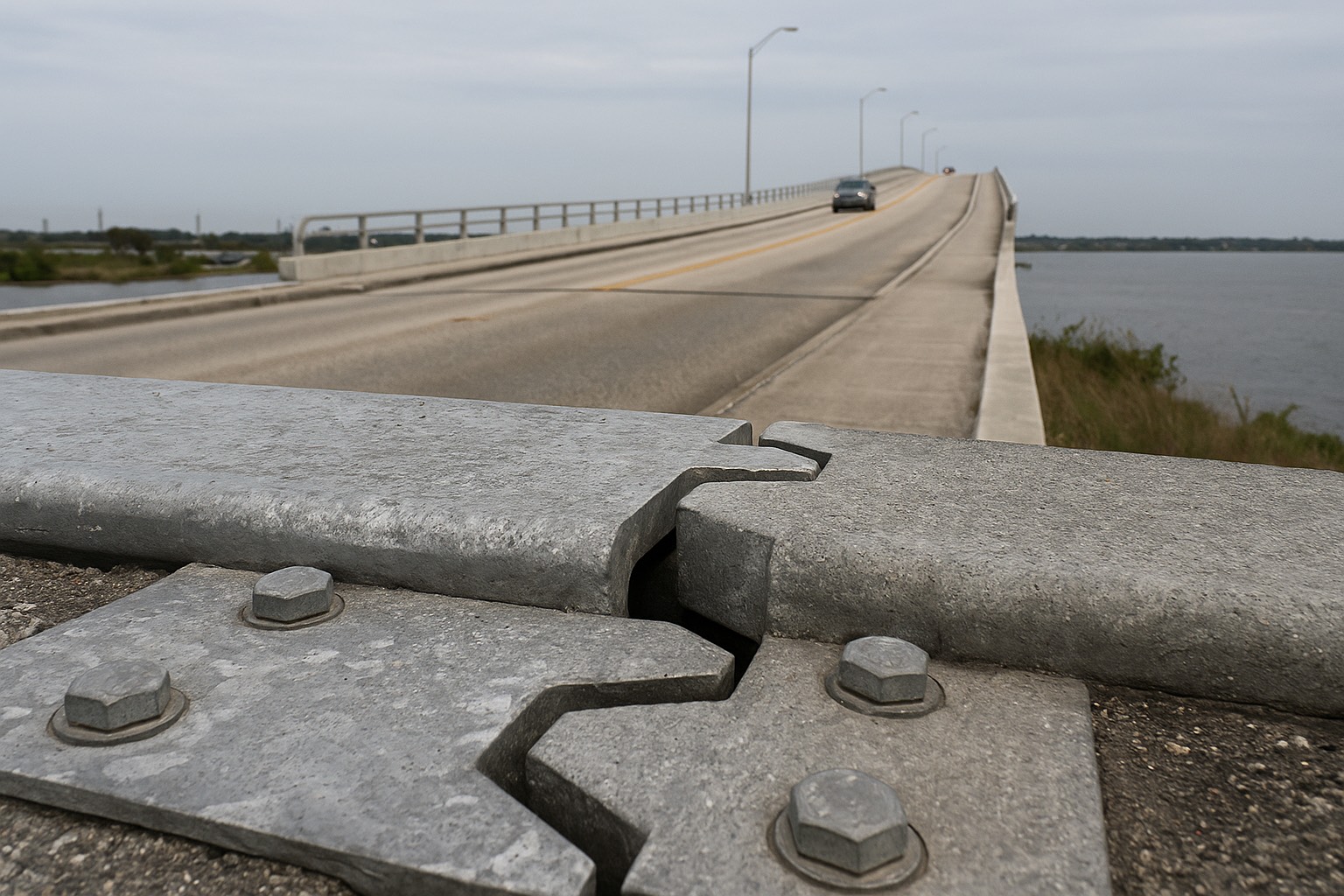
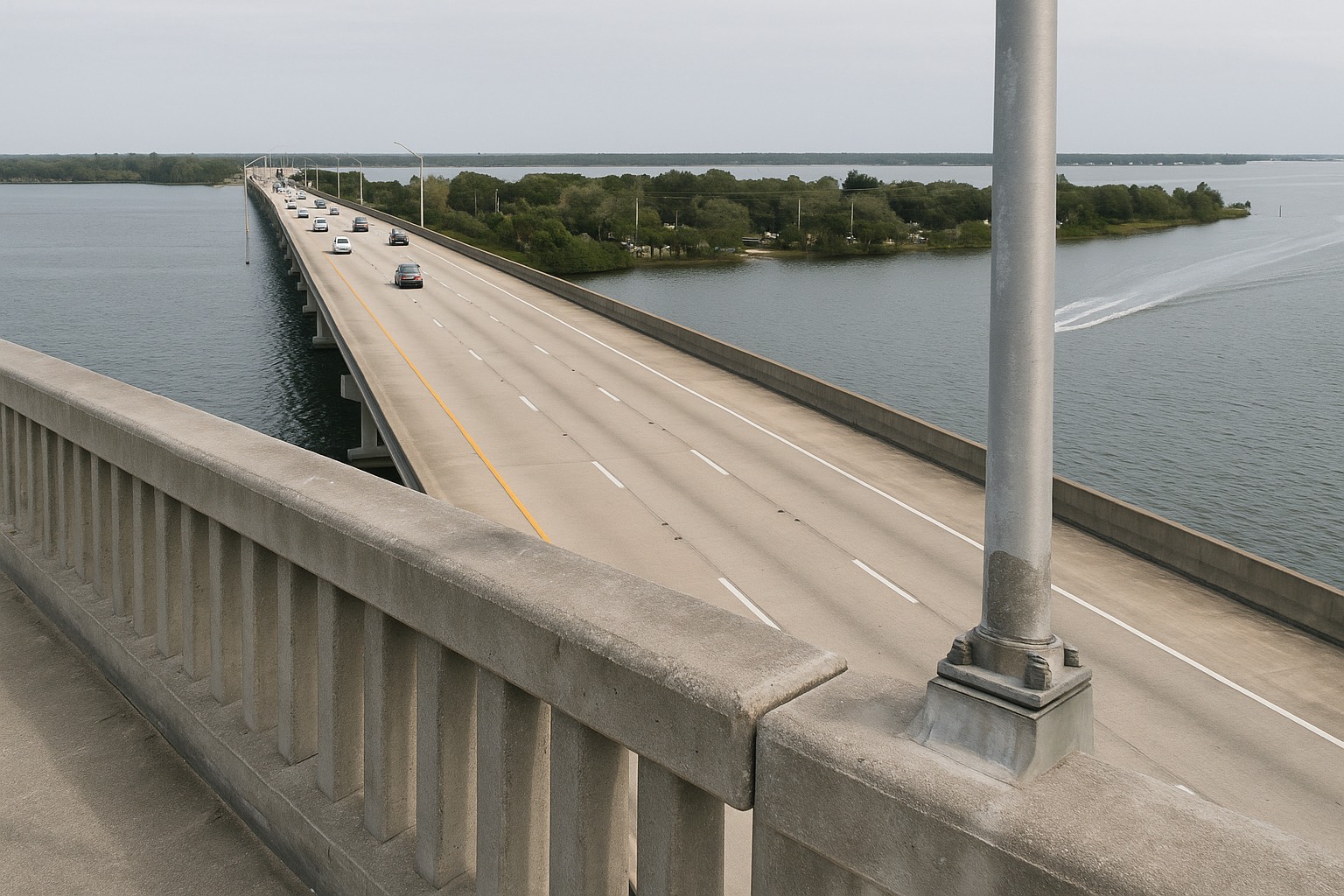
The barrier-island row is where the trade-off is sharpest, and I want to be blunt about it. There are three crossings in this stretch of the lagoon: the Pineda Causeway at the north, the Eau Gallie Causeway in the middle, and the Melbourne Causeway at the south. Three. When one of them is closed for an incident or a marine opening, everyone who was using it is redistributed onto the other two, and there is no fourth option to absorb it. If both adults in a household badge in on the mainland, a beachside address means two people are exposed to that every working day.
People accept that cost knowingly all the time, because the beachside offers something the mainland cannot. I am not talking anyone out of it. I am asking that it be a decision rather than a discovery. The county-wide version of this trade-off is worked through in the beachside and mainland comparison, and the insurance and carrying-cost difference shows up in the Space Coast cost-of-living breakdown.
For a closer read on the mainland areas specifically, what the housing stock is like in Eau Gallie, around downtown, and out to the west side, see the Melbourne neighborhood guide. To see what is currently for sale across the city, the Melbourne listings page updates continuously, and the Melbourne market snapshot is where I track how the local numbers are moving.
Buying around a commute you have not started yet
Almost every relocation buyer I work with in Melbourne is buying ahead of the commute. They have not driven it yet. They are working from a map, an offer letter, and a week of house-hunting. Here is the sequence I use to make that guess as good as it can be.
- Get the building address. The employer name is not enough. Ask the hiring manager or HR for the physical site you will report to. Large employers here run several facilities, and the difference between two of them can be the difference between a mainland purchase and a beachside one.
- Get the on-site requirement in writing. How many days, which days, and whether that is a policy or a program requirement. Buy for the on-site version of the answer, because that is the one that will not soften.
- Drive it at your hours, both directions. If your shift starts before dawn, drive it before dawn. If you cannot be here, at least look at the route on a live traffic map at your real start and end times on a weekday, more than once. Do not evaluate a commute on a Sunday.
- Count the bridges. Zero, one, or one-with-no-alternate are three genuinely different answers. Write down which crossing you would use and what your backup is if it closes.
- Price the parcel itself. Pull the property record at the county's parcel search and read the assessed value against the market value, then look at the flood zone at the FEMA Flood Map Service Center. Mainland and beachside can carry very different insurance economics on otherwise similar houses.
- Check attendance zones as a fact, at the source. If school assignment is part of your decision, look the address up directly with Brevard Public Schools instead of a third-party map on a listing portal. Zones get redrawn.
- Assume the car is the plan. Brevard County operates Space Coast Area Transit, and the county publishes its current routes and schedules. But this is a county built around driving, and I would not have anyone buy here on the assumption that a bus will carry a daily work commute. Budget for the vehicles.
Brianna's take
When a client is relocating for a Melbourne job, I ask for three things before we look at a single house: the badge address, the shift pattern, and whether there is a second commute in the household. With those three answers I can usually cut a county-wide search down to two or three areas in an afternoon, and we spend the rest of the time on the houses instead of the map. If the second income is remote or portable, the search opens right back up, and that changes which trade-offs are worth making. I have served Space Coast clients since 2015, and the commute is the variable people most often get wrong on the first pass.
One last thought on hedging. If your role is new or the site could change, there is an argument for buying central rather than optimal, somewhere on the mainland with reasonable access in several directions, instead of a property that only makes sense for one specific badge. That costs a little convenience today and buys flexibility if anything shifts. How portable your work is decides it, and that is one of the things I work through with clients in the town-fit comparison.
Frequently asked questions
What kinds of employers make up Melbourne, Florida's job core?
Melbourne's daytime employment concentrates in four institutional clusters. Aerospace and defense engineering and manufacturing sits on the west and north-west side of the city near the airport, where L3Harris Technologies is headquartered and Northrop Grumman and Embraer operate campuses. Healthcare centers on Health First's Holmes Regional Medical Center and on the separately operated Melbourne Regional Medical Center, both near the city's core, with a dense ring of medical offices around them. Florida Institute of Technology is a private research university south of downtown that is both an employer and an engineering pipeline. And Melbourne Orlando International Airport anchors an aviation-industrial district of its own. Confirm current employer information with each institution directly.
Where exactly is the aerospace work located around Melbourne?
The aerospace and defense cluster sits mainly west and north-west of the older city, in the corridor around the airport along NASA Boulevard, Apollo Boulevard and Ellis Road, with additional facilities reaching into West Melbourne and Palm Bay. L3Harris Technologies is headquartered in Melbourne and runs several facilities across the area, so two employees of the same company can have very different commutes. Ask the hiring manager for the physical building address in writing before you shortlist neighborhoods, because that address is what determines which side of the lagoon makes sense.
Can I live in Melbourne and commute to Kennedy Space Center or Patrick Space Force Base?
Yes, and people do. Patrick Space Force Base is on the barrier island north of Satellite Beach, reachable from the Melbourne area across the Pineda Causeway or up A1A from the beachside. Cape Canaveral Space Force Station and Kennedy Space Center are considerably further north, generally reached by Interstate 95 or US 1. Melbourne is the southern edge of a sensible commute to those northern sites, so if your role is at the Cape or KSC, look at the towns between Melbourne and Titusville as well. Drive the route at your actual shift hours before committing, because road conditions vary sharply by time of day.
Which Melbourne areas commute best to the airport employment district?
West Melbourne and the areas along the US 192 and Minton Road corridors reach the airport and aerospace district without passing through downtown, and they also give the quickest access to Interstate 95. Downtown Melbourne and the US 1 corridor run west to the airport district on a straightforward route while staying close to the hospital campuses. Eau Gallie and north Melbourne reach it via Eau Gallie Boulevard and Wickham Road. Any barrier-island address requires crossing one of the three causeways first, which adds a bridge to every trip.
Do homes near Melbourne Orlando International Airport hear aircraft noise?
Some do. An active airport has approach and departure corridors, and homes underneath them hear aircraft. How loud and how often depends entirely on where the property sits relative to the runways and on which direction aircraft are operating that day, which changes with the wind. No listing description will raise this, so there is no substitute for standing in the yard of the specific house at more than one time of day before you write an offer. Check the airport's own site for current operations, and walk the property yourself.
Should I buy on the mainland or the barrier island if I work in Melbourne?
It depends on how many commutes your household has and where they end. Almost all of Melbourne's employment core sits on the mainland, so a barrier-island address means crossing one of three causeways every working day: the Pineda, the Eau Gallie, or the Melbourne Causeway. When one closes, its traffic redistributes onto the other two and there is no fourth option. If both adults badge in on the mainland, both are exposed to that daily. The beachside offers things the mainland cannot, so plenty of people accept the trade knowingly. Make it a decision rather than a discovery.
Is there public transit in Melbourne, Florida?
Brevard County operates Space Coast Area Transit, and you can check current routes, schedules and fares with Brevard County directly. That said, this is a county built around driving, with employment spread across a long, thin geography and three lagoon crossings in the Melbourne stretch. I would not have anyone buy here on the assumption that a bus route will carry a daily work commute. Budget for the vehicles you will need, and treat transit as a supplement.
What should I check before buying around a Melbourne commute I have not started yet?
Get the physical building address from your employer, and not just the company name, and get the on-site day requirement in writing, then buy for the on-site version of that answer. Drive the route at your real start and end hours in both directions, on a weekday, more than once. Count the bridges between home and work and identify your backup crossing. Pull the parcel at the Brevard County Property Appraiser and read the assessed value against the market value, check the flood zone at the FEMA Flood Map Service Center, and confirm any school attendance zone directly with Brevard Public Schools instead of a listing portal.
Keep reading
Relocating for a Melbourne job and unsure which side of the lagoon to buy on?
Send me the badge address, the shift pattern, and whether there is a second commute in the household, and I will cut the county down to the two or three areas that genuinely work for you. I have served Space Coast clients since 2015 and I will tell you the trade-off before I tell you the listing.
Data last verified: August 2026. Employer, institution and geography points above are structural and were confirmed against the City of Melbourne, the Brevard County Property Appraiser, Brevard County, the Florida Department of Transportation, Melbourne Orlando International Airport, Florida Institute of Technology, Brevard Public Schools, and the FEMA Flood Map Service Center as of August 2026. Employer and health-system facility locations were read from L3Harris, Northrop Grumman, Embraer and Health First directly and should be re-confirmed with each; corporate footprints change. Population comparisons should be read at the U.S. Census Bureau's QuickFacts. Employers, facility locations, flight routes, road projects, attendance zones and flood designations change, confirm current specifics with each institution and the relevant authority for your property before you rely on them.
Categories
- All Blogs (48)
- Cost of Living (3)
- Cost of Ownership (25)
- Decision Guide (9)
- Living in Cape Canaveral (8)
- Living in Cocoa Beach (5)
- Living in Melbourne (4)
- Living in Melbourne Beach (5)
- Living in Palm Bay (4)
- Living in Rockledge (3)
- Living in Satellite Beach (6)
- Living in Titusville (6)
- Living in Viera (4)
- Living on Merritt Island (4)
- When Buying (4)
- When Relocating (7)
Recent Posts