The Real Cost of Living on Florida's Space Coast
The Real Cost of Living on Florida's Space Coast
The Space Coast reads as affordable Florida on the cost-of-living charts — until you add the coastal carrying costs those charts never measure. Here's the whole number.
Type "cost of living Melbourne, Florida" into any calculator and the Space Coast looks like a bargain — reasonable home prices, no state income tax, an index that lands below a lot of the country. That number is real, and it's part of why people move here. But it's only the start of the math. The cost-of-living indexes are built on groceries, gas, and a generic mortgage. What they do not capture are the coastal carrying costs that decide whether a Space Coast home fits your budget: homeowners insurance priced for hurricanes, a separate flood policy, property taxes that reset when you buy, condo reserves rebuilt under new Florida law, and community fees that don't show up until you read the fine print. Price the index and skip those, and you've priced half the life.
This is not a reason to look elsewhere. It's a reason to look at the full number before you fall for a view. I've helped people buy and sell on the Space Coast since 2015, and the move that goes smoothly is almost always the one where we put the real carrying cost on the table early — before the insurance quote gets a chance to contradict the index. Below is the why behind each piece, what changes by area, and how to check it for a specific home, with the authorities you can verify it against yourself.
A cost-of-living index can compare a basket of everyday expenses, but it rarely models an address's hurricane premium, a separate flood policy, or a condo reserve study. On the coast, those carrying costs are much of the budget.
What "affordable" means here
The Space Coast's reputation for affordability isn't a myth. Compared with South Florida, the Gulf metros, or most of the coastal Northeast and West, the everyday cost of living — and the price of entry on a home — tends to run gentler, and Florida's lack of a state income tax is a genuine factor in the household budget. That's the version the indexes show, and it's why "cost of living Melbourne FL" is a question so many relocating buyers ask.
The gap is between cost of living and cost of owning. A cost-of-living index is built to compare the price of a basket — food, transportation, healthcare, utilities, a typical housing payment — across cities. It is not built to price the catastrophe exposure of a specific address three miles from the Atlantic. So the index can be accurate and still leave out one of the biggest swing variables in a coastal budget: what it costs to insure, protect, and carry the home once you own it. The rest of this guide is that missing column.
The number that matters is the whole carrying cost
When you're comparing the Space Coast to anywhere else, compare the full monthly carrying cost — mortgage plus insurance plus flood plus taxes plus any community fees plus realistic upkeep — place against place. The index is a fair starting point; the carrying cost is what you live with. I walk through that full stack in the companion guide to the real cost of owning a home on the Space Coast.
Housing: where you buy changes the entry price
The first thing the index flattens is that "the Space Coast" is not one market. The price of entry shifts meaningfully depending on which part of Brevard County you're looking at, and the direction is consistent even though the exact dollars change with the market and the property.
On the more affordable end, mainland communities like Palm Bay have long been where buyers find the most home for the money on the Space Coast — a large, spread-out market with a deep supply of single-family homes. Move toward the established mainland communities — Melbourne, Rockledge, and the newer master-planned side of Viera — and the entry price generally steps up with the amenities, schools-adjacent demand, and newer construction.
The barrier island is where it climbs the most. Beachside Cocoa Beach and the oceanfront strip carry the premium that direct beach access always commands, and the lagoon- and river-front edges of Merritt Island — which sit on the Banana and Indian Rivers, a causeway back from the ocean — carry a waterfront premium of their own. Whether that premium is worth it depends entirely on your priorities: the island buys you water and access, the mainland buys you more square footage and, often, lower carrying costs. Neither is the "right" answer — they're different trades.
None of this is a price chart, and I won't pretend to give you one in a blog post, because the real number depends on the specific home, the month, and the inventory. What's reliable is the direction — mainland lower, barrier island higher — and that direction is enough to budget realistically before you tour. For current asking prices, the live Space Coast listings are the only source worth quoting.
Insurance and flood: the costs the index never sees
Here is the line item that turns an "affordable" home into a budget question: insurance. Florida concentrates several of the most expensive risks in the country — it sees more landfalling hurricanes than any other state — and carriers price for that. On the Space Coast, homeowners insurance isn't a rounding error on top of the mortgage; it can be one of the largest fixed costs of owning the home, large enough to reshape which house you can comfortably afford.
And it's frequently two separate premiums. Standard homeowners coverage in Florida includes your wind and hurricane protection (usually with a separate, percentage-based hurricane deductible), but flood damage is excluded from virtually every standard homeowners policy in Florida. Rising water and storm surge — exactly what a coastal buyer worries about — require a completely separate flood policy, written through the federal National Flood Insurance Program (NFIP / FloodSmart) or a private flood insurer. The property's FEMA flood zone shapes the risk picture and whether a lender requires a policy, but the actual price is property-specific, so confirm the zone and then quote the policy — don't infer the premium from the zone alone. You can pull any address's zone yourself at the FEMA Flood Map Service Center.
Because the market shifts year to year — which carriers are writing, how rates move, where the state-backed Citizens Property Insurance backstop fits — the right way to understand the cost is to get a current quote, since a figure a neighbor mentioned two years ago has already gone stale. The Florida Office of Insurance Regulation (FLOIR) oversees insurers and rates and is the authority for the current landscape.
Quote insurance before you waive the contingency
The most common way a coastal budget gets blown is quoting insurance after you're under contract instead of before. Ask a licensed Florida agent for a homeowners quote with the hurricane deductible spelled out in dollars and a separate flood quote, and pull the FEMA flood zone, while your contingency window is still open. I break the whole picture down in the guides to what homeowners insurance really costs on the Space Coast and how wind and flood coverage divide up.
Property taxes and the homestead exemption
Property tax is the carrying cost most relocating buyers misjudge, and it cuts two ways. The first surprise: in Florida, a change in ownership triggers a reassessment to the home's just (market) value, which generally takes effect the January 1 after you buy. The long-time seller's lower capped amount ends there — though their exemption and Save Our Homes benefit can carry through the rest of that purchase tax year. A home that had been capped for years can reset to a noticeably higher assessment for the new owner, so the seller's old tax line is not a reliable preview of yours.
The second part works in your favor. If the home becomes your permanent Florida residence, the homestead exemption can reduce your taxable value, and Florida's Save Our Homes provision then caps how much your assessed value can rise each year going forward — a meaningful long-term protection against runaway tax growth once you're established. The actual millage rates and assessed values are set locally and verified through the Brevard County Property Appraiser (BCPAO), which is also where you confirm any individual home's current assessment and tax history rather than guessing from the listing.
I keep the homestead mechanics in their own deep-dive, because the rules around qualifying, the deadline, and how Save Our Homes works over time deserve more room than a paragraph: see the Florida homestead exemption and Save Our Homes guide.
HOA, CDD, and condo reserves: the fees in the fine print
Two homes at the same price can carry very different monthly costs once community fees enter the picture, and on the Space Coast there are three flavors worth knowing.
HOA dues fund the shared amenities and upkeep in a planned community, and they range from modest to substantial depending on what the association maintains. CDD assessments are different and easy to miss: a Community Development District is a financing mechanism that pays back the infrastructure — roads, drainage, amenities — in many newer master-planned neighborhoods, and it shows up as a separate line on the tax bill that can run for years. Newer planned areas on the Space Coast, including parts of Viera, are where you're most likely to encounter a CDD, so it belongs in your math before you assume a newer community is "just" the HOA.
Condo reserves and assessments are the third, and they've changed since the Surfside collapse. Florida law — through SB 4-D and its follow-up SB 154 — now requires milestone structural inspections for many condo buildings three habitable stories or taller and a Structural Integrity Reserve Study, and associations can no longer waive funding the reserves those studies identify. The practical effect for buyers: older oceanfront and waterfront condo buildings, in particular, may carry higher reserve contributions or face special assessments to fund overdue structural work. Condos are still worth buying here — the move is to read the reserve study, board minutes, and assessment history before you do. The Florida DBPR oversees condominium regulation, and the guide to Florida condo reserves, SB 4-D, and special assessments walks through exactly what to review.
Day-to-day costs: utilities, commute, and the geography
The everyday line items are where the Space Coast is genuinely friendlier to a budget, with a couple of coastal asterisks.
Utilities here are shaped by the climate more than the cost of the power itself — the long warm season means cooling is the dominant household energy cost, and a well-insulated home with an efficient HVAC system carries very differently than a leaky older one. On the barrier island and along the water, salt air also shortens the life of HVAC equipment, fixtures, and fasteners, so coastal owners tend to budget more for maintenance and replacement over time than mainland owners do.
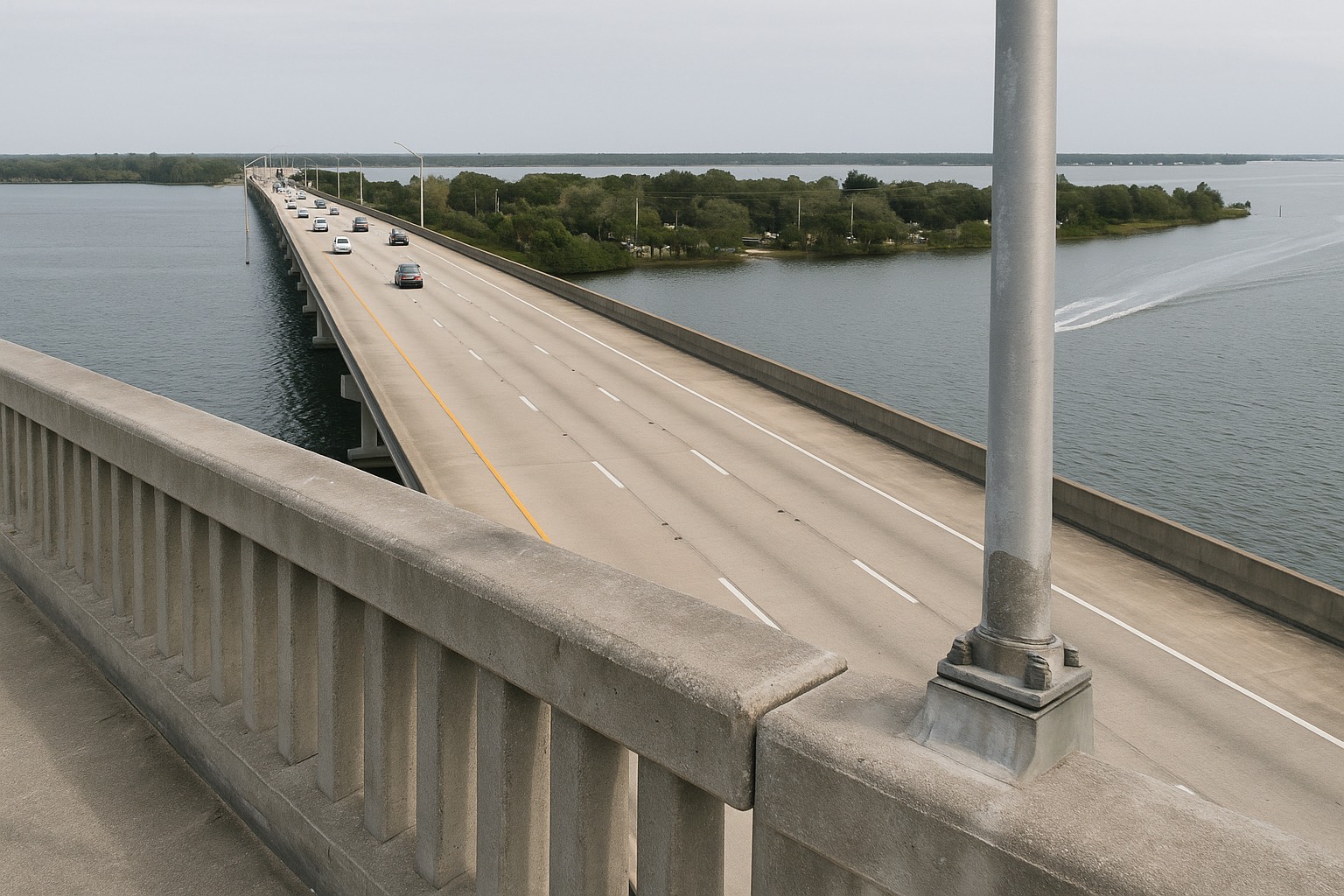
Commute and gas come down to the county's shape. Brevard is long and narrow, strung north-to-south along the coast, and the barrier island connects to the mainland only at the causeways. If you live beachside and work on the mainland — or vice versa — your daily drive runs across a bridge, and that geography is worth driving at your actual rush hour before you commit. The trade is familiar: the island buys you the water, while for many mainland jobs and services a mainland address can mean a shorter, simpler commute — though Brevard's employment is spread across the mainland, the Merritt Island/Kennedy Space Center area, Cape Canaveral, and beachside too, so the right answer depends on your actual workplace and daily route. Which matters more depends on your priorities.
Groceries, healthcare, and the rest of the basket are roughly where the cost-of-living indexes place them — the part of the picture the charts do capture well. The reason this guide spends most of its words on insurance, taxes, and fees is simply that those are the parts the charts leave out.
How to check the real number for your specific home
Carrying cost changes house by house here — two homes on the same street can differ by roof age, flood zone, and whether there's a CDD. Here's the order I walk buyers through so the whole number is on the table before the offer:
- Quote homeowners and flood insurance early. Ask a licensed Florida agent for both, with the hurricane deductible spelled out in dollars, before you waive your insurance contingency.
- Pull the FEMA flood zone. Use the FEMA Flood Map Service Center to confirm the zone and whether a lender will require a policy — then get an actual flood quote, because the premium is set on the property itself.
- Check the tax history and homestead status. Confirm the current assessment at the Brevard County Property Appraiser, and remember the bill can reset when you buy rather than matching the seller's.
- Ask about HOA dues, any CDD assessment, and — for condos — the reserve study, board minutes, and assessment history. These are the fees that hide in the fine print.
- Add it all into one carrying-cost number. Mortgage plus insurance plus flood plus taxes plus fees plus realistic upkeep — that total is the real cost of living here. The full stack lives in the cost-of-owning guide.
Let's price the whole number
When we tour homes together, I flag the full carrying cost on each one early — likely insurance, flood zone, how the taxes reset, and any HOA or CDD or condo reserve in play — so the real cost of living in that specific home is on the table while you're still deciding. If you're getting ready to sell instead, those same costs shape your pricing and your buyer's financing, and I work through them on the sell your Space Coast home side too. That's a Space Coast move made with the whole number in view.
Frequently asked questions
Is the Space Coast affordable to live in?
In many ways, yes. Compared with South Florida, the Gulf metros, and much of the coastal Northeast and West, the everyday cost of living and the price of entry on a home on the Space Coast tend to run gentler, and Florida's lack of a state income tax is a genuine factor in the household budget. That is the version the cost-of-living indexes show. The catch is the gap between cost of living and cost of owning: the indexes are built on groceries, gas, and a generic housing payment, and they do not capture the coastal carrying costs like hurricane-priced insurance, a separate flood policy, taxes that reset when you buy, and community fees that decide whether a specific home fits your budget.
Why is the real cost higher than the cost-of-living index suggests?
A cost-of-living index is built to compare the price of a basket of everyday expenses across cities, so it measures food, transportation, healthcare, utilities, and a typical housing payment well. It is not built to price the catastrophe exposure of a specific address near the coast. The largest variable in a coastal budget is what it costs to insure, protect, and carry the home once you own it, and that is exactly the part an index leaves out. So the index can be accurate and still understate your true monthly cost, because the missing column is insurance, flood, taxes, and fees on your particular home.
How much does housing cost across the Space Coast?
The Space Coast is not one market, so the price of entry shifts by area. Mainland Palm Bay has long been where buyers find the most home for the money, with a deep supply of single-family homes, while established communities like Melbourne, Rockledge, and the newer master-planned side of Viera generally step up with amenities and newer construction. The barrier island climbs the most, with beachside Cocoa Beach carrying the oceanfront premium and the lagoon- and river-front edges of Merritt Island carrying a waterfront premium of their own. Exact prices depend on the specific home, the month, and inventory, so current listings are the only reliable source to quote.
Do I need flood insurance if the cost-of-living calculator didn't mention it?
Possibly, and the calculator would never tell you. Flood damage is excluded from virtually every standard homeowners policy in Florida, so rising water and storm surge require a completely separate flood policy written through the federal National Flood Insurance Program or a private flood insurer. The property's FEMA flood zone shapes the risk and whether a lender requires a policy, and you can look up any address at the FEMA Flood Map Service Center, but the actual premium is property-specific, so confirm the zone and then get a real quote. High-risk zones generally trigger a mandatory policy on a federally backed mortgage, while lower-risk zones often do not require it, though water can still reach them.
Will my property taxes match what the seller was paying?
Usually not. In Florida, a change in ownership triggers a reassessment to the home's just (market) value that generally takes effect the January 1 after you buy, rather than the lower capped amount a long-time seller had been paying, so a home that was capped for years can reset to a noticeably higher assessment for the new owner. The seller's old tax line is therefore not a reliable preview of yours. If the home becomes your permanent residence, the homestead exemption can reduce your taxable value and the Save Our Homes provision then caps how much your assessed value can rise each year going forward. You can confirm any home's current assessment and tax history at the Brevard County Property Appraiser.
What are HOA, CDD, and condo reserve fees, and why do they matter?
They are the community costs that hide in the fine print and can make two same-priced homes carry very differently. HOA dues fund shared amenities and upkeep in a planned community. A CDD assessment is a separate line on the tax bill that pays back the infrastructure in many newer master-planned neighborhoods, including parts of Viera, and can run for years. Condo reserves and special assessments fund a building's structural upkeep, and Florida law through SB 4-D and SB 154 now requires milestone inspections for many buildings three habitable stories or taller and a reserve study, with reserves that can no longer be waived. That means older oceanfront and waterfront condo buildings in particular may carry higher reserve contributions or face special assessments, so reviewing the reserve study, board minutes, and assessment history before buying matters.
Does the commute really affect the cost of living on the Space Coast?
It can, because of the county's shape. Brevard is long and narrow, strung north-to-south along the coast, and the barrier island connects to the mainland only at the causeways. If you live beachside and work on the mainland, or the reverse, your daily drive runs across a bridge, which adds time and gas to the everyday budget. The trade is the island buys you the water while a mainland address can mean a shorter, simpler commute for many mainland jobs and services, though Brevard's employment is spread across the mainland, the Merritt Island and Kennedy Space Center area, Cape Canaveral, and beachside, so the right answer depends on your actual workplace. Which matters more depends on your priorities, so it is worth testing your actual route at rush hour before you commit rather than measuring the distance in a straight line.
How do I figure out the true monthly cost of a specific home?
Build one carrying-cost number instead of trusting the index. Quote homeowners and flood insurance early with a licensed Florida agent, with the hurricane deductible spelled out in dollars, before you waive your insurance contingency. Pull the FEMA flood zone at the FEMA Flood Map Service Center. Check the assessment and tax history at the Brevard County Property Appraiser and remember the bill can reset when you buy. Ask about HOA dues, any CDD assessment, and for condos the reserve study, board minutes, and assessment history. Then add mortgage plus insurance plus flood plus taxes plus fees plus realistic upkeep into one total, because that figure is the real cost of living in that home.
Keep reading
Want the real cost of living in a specific home?
Before you trust an affordability calculator, let's build the whole carrying cost on the homes you're considering — insurance, flood, how the taxes reset, and any community fees in play. I have served Space Coast clients since 2015 and I'll give you the straight number, the one you'll pay every month.
Data last verified: June 2026. Cost-of-living context is general and qualitative; no specific index value, price, median, or appreciation figure is asserted here. Insurance, flood, tax, condo-reserve, and community-fee points summarized from FLOIR, Citizens Property Insurance, the NFIP / FloodSmart, the FEMA Flood Map Service Center, the Brevard County Property Appraiser, and the Florida DBPR as of June 2026. Rates, assessments, fees, and requirements change frequently — confirm current specifics for any property with the relevant authority and a licensed professional.
Categories
- All Blogs (48)
- Cost of Living (3)
- Cost of Ownership (25)
- Decision Guide (9)
- Living in Cape Canaveral (8)
- Living in Cocoa Beach (5)
- Living in Melbourne (4)
- Living in Melbourne Beach (5)
- Living in Palm Bay (4)
- Living in Rockledge (3)
- Living in Satellite Beach (6)
- Living in Titusville (6)
- Living in Viera (4)
- Living on Merritt Island (4)
- When Buying (4)
- When Relocating (7)
Recent Posts