The Best Space Coast Town for You
The Best Space Coast Town for You: Boating, Value, New Construction, the Commute & More
There is no single "best" Space Coast town — only the one whose trade-offs match your life and your budget. Walk-to-the-beach, dock-on-a-canal, most-house-for-the-money, and master-planned-amenities all point to different places, and the right answer is the one that fits your priorities.
Here is the thing that trips up almost everyone shopping the Space Coast for the first time: there is no town that simply wins. People want me to name "the best place to live in Brevard County," and I can’t — the question is missing a word. The best place for what? If you want to walk to the surf in the morning, that is one town. If you want to drop a boat in the water from your own backyard, that is a different town. If you want the most square footage and new construction for your dollar, that is a third. Each of these places is trading something away to be good at the thing it’s good at. Pick the trade-off that matches your life, and the "best town" chooses itself.
I’ve helped people buy and sell across the Space Coast since 2015, and the conversation that moves someone toward the right home turns on one question — "what do you need this house to do for you?" So that’s how this guide is built. Below, I route the six towns most buyers compare — Cocoa Beach, Merritt Island, Palm Bay, Viera, Rockledge, and Melbourne — by priority. Find the one that sounds most like you, start there, then read the trade-off, because every town asks for something in exchange for what it gives.
The Space Coast doesn’t have a best town. It has a best-fit town — and which one that is depends entirely on what you’re optimizing for.
"Best" is the wrong question
When you read a ranked list that crowns one Space Coast town the "#1 place to live," what you’re really reading is one writer’s priorities dressed up as a universal answer. Two buyers with opposite priorities — one optimizing for a quiet, low-maintenance community, another chasing the most bedrooms per dollar — should not end up in the same town, and if a single list sends them both to the same place, it’s wrong for at least one of them. Each town is a bundle of trade-offs, and the smart move is to match the bundle to your life rather than chase a label.
So the most useful thing I can do is make the trade-offs visible — then you can choose with your eyes open. A barrier-island beach town gives you the ocean and asks for a higher cost of ownership and an older, smaller housing stock. A master-planned community gives you amenities and newer homes and asks for HOA and special-district fees. Mainland value gives you more house and a longer drive to the sand. None of that is hidden once you know to look, and looking before you commit beats discovering it after you’ve moved.
How to use this guide
Each section below starts with a priority — what you most want a home to do — and routes you to the town that tends to fit it, plus the trade-off that comes with it. None of these are objective rankings; they’re fit-to-priority. Most buyers care about two or three of these at once, which is exactly where a side-by-side helps. Read the priority that sounds like you, then read the one next to it, because the right answer is often a blend (as of June 2026).
If you want to walk to the beach or own an oceanfront condo → Cocoa Beach
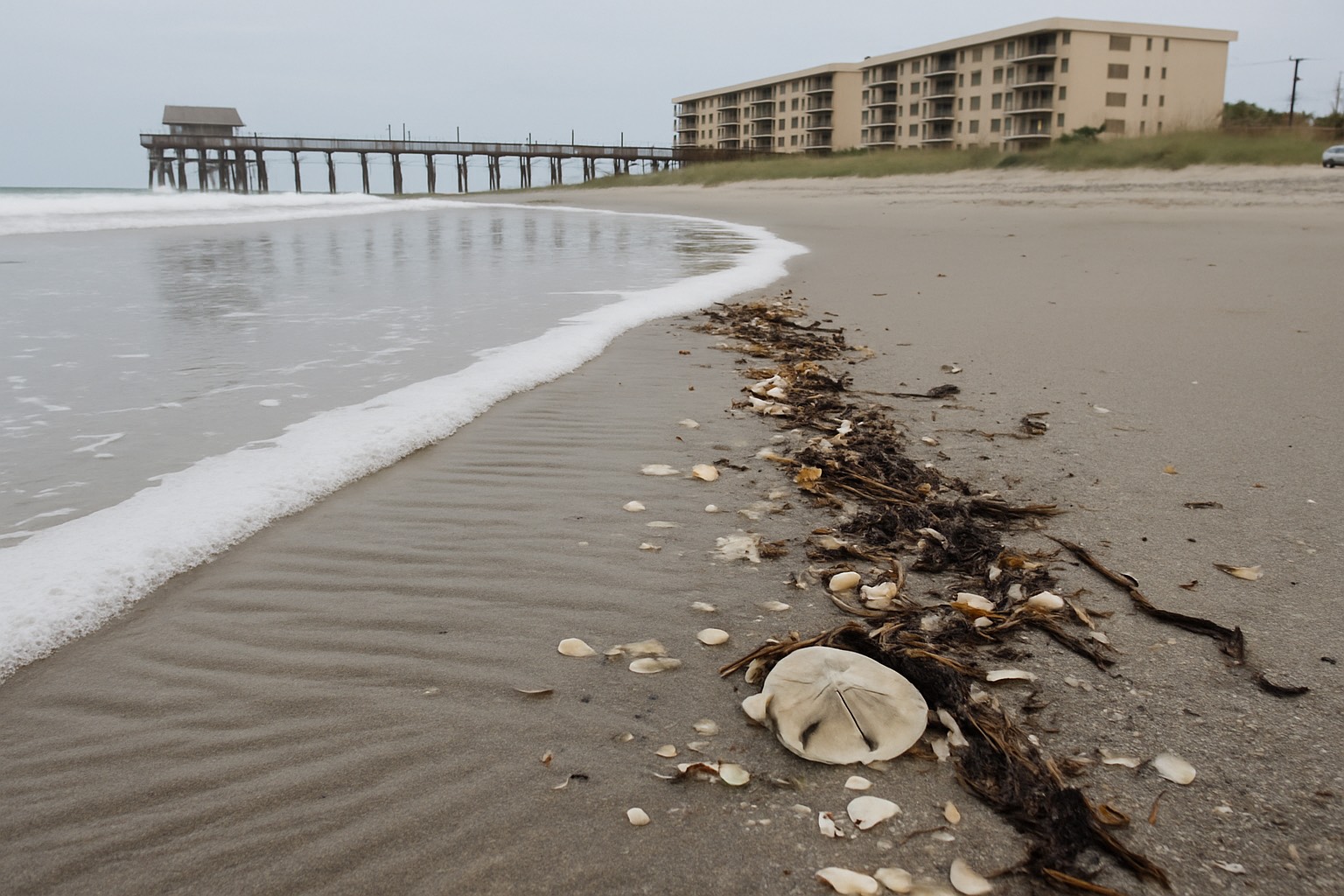
Among the six towns in this guide, Cocoa Beach is the barrier-island oceanfront option — the one where the Atlantic is the whole point. This is where you walk to the surf, where the oceanfront condo with a balcony over the dunes exists, and where a beach-town pace runs through daily life. If your non-negotiable is being able to put your feet in the ocean without getting in the car, this is the answer, and the other five towns simply aren’t substitutes for it.
The trade-off is the cost and character of barrier-island ownership. An oceanfront location generally carries a higher cost of ownership — insurance considerations along the coast, wind exposure, and salt-air maintenance are all part of the picture — and a lot of the inventory is condominiums, which brings association fees, reserves, and Florida’s post-Surfside condo rules into your decision. The housing stock also skews older and more established than the new-construction suburbs inland. None of that is a knock; it’s the price of the ocean at your doorstep. Start with the Cocoa Beach real estate guide, and if you’re weighing the beach against waterfront-but-not-oceanfront, my Cocoa Beach vs. Merritt Island comparison lays the two side by side.
If you want a dock, a boat, and a canal home → Merritt Island
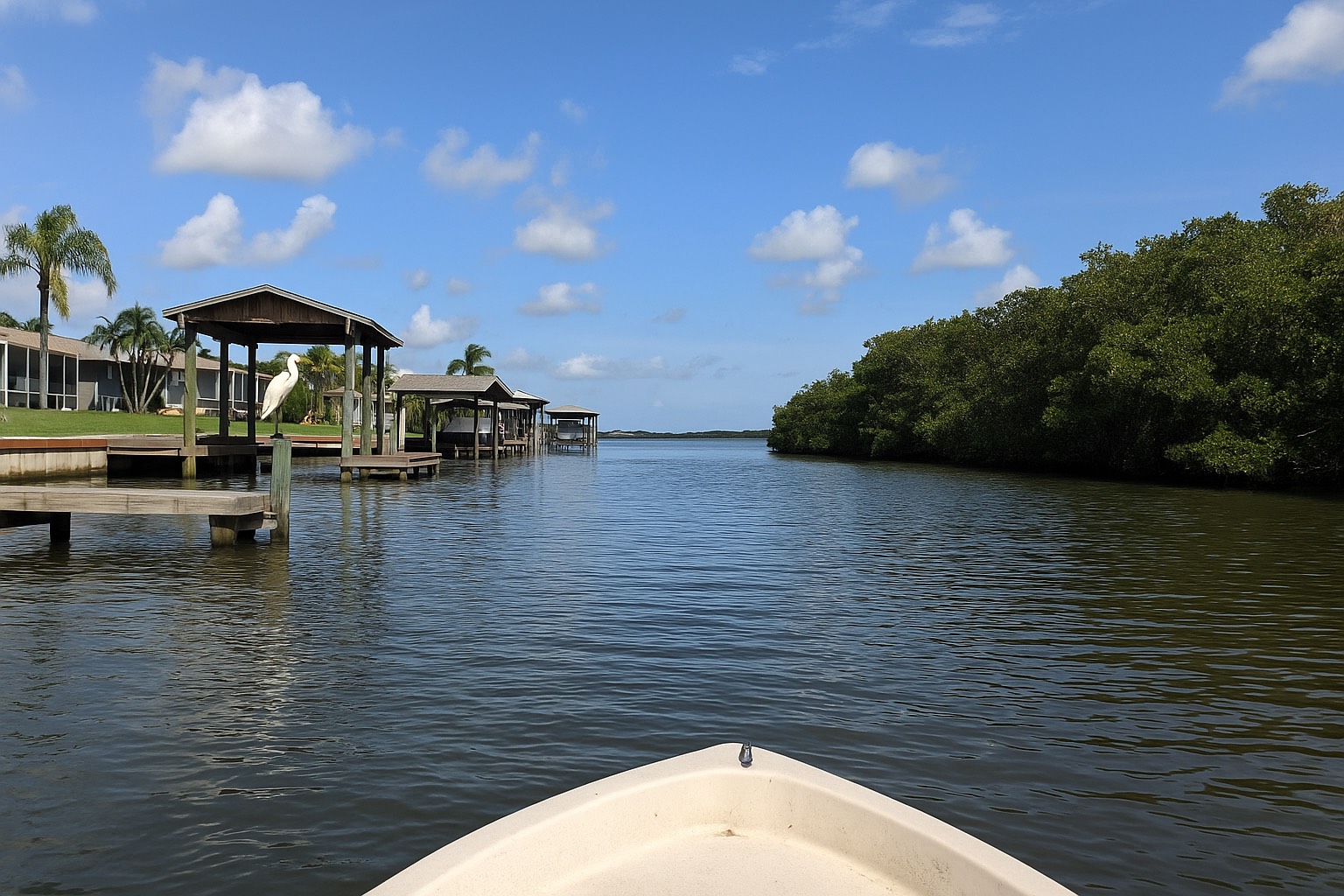
Here’s a distinction that matters and gets blurred constantly: Merritt Island is lagoon- and river-front. It sits on the Banana River and the Indian River — the Intracoastal lagoon system — one causeway back from the Atlantic surf. That is precisely why it’s the boater’s town. Merritt Island is known for canal-front and waterfront homes with private docks and direct or near-direct access to the protected lagoon waters, which is a different and, for many boaters, more practical kind of waterfront than the open ocean. If your dream is stepping off your back patio into your own boat, this is where that picture lives.
The trade-off is that you’re trading beach walkability for water access. You’re not walking to the surf here the way you would in Cocoa Beach — you cross the causeway for that — and waterfront homes carry their own cost-of-ownership realities, from flood-zone considerations to seawall and dock maintenance to insurance along the water. Canal frontage, water depth, fixed-bridge clearances, and lagoon access all vary lot by lot, so the specific property matters as much as the town. Dig into the Merritt Island real estate guide for the waterfront picture, and the Cocoa Beach vs. Merritt Island comparison if you’re torn between the surf and the dock.
Oceanfront vs. lagoon-front: don’t mix them up
Cocoa Beach, in this comparison, is the barrier-island oceanfront option — Atlantic surf, beach access, oceanfront condos. Merritt Island is lagoon- and river-front on the Banana and Indian Rivers — protected water, canal homes, private docks, and boating. They’re both "waterfront," but they’re completely different lifestyles and different cost structures. Knowing which water you want is the first fork in the road for most Space Coast buyers.
If you want the most house, new construction, and a lower entry point → Palm Bay
Palm Bay anchors the south end of Brevard County and is the town most associated with relative value and new construction. It’s a large, growing community where buyers often find more square footage and newer homes for a given budget than they would on the barrier island or in the more established central towns, and where new-build inventory keeps coming to market. If your priority is maximizing the house — bedrooms, lot, a newer build — and keeping your entry point lower, Palm Bay is the town that tends to deliver that math.
The trade-off is distance and a longer drive to the things that draw people to the coast. Palm Bay is mainland and spread out, so you’re generally farther from the beaches and from the central-county job centers and amenities, which means a longer commute depending on where you work. As a fast-growing area, infrastructure and services are still catching up in places, and that’s worth factoring in. Explore the Palm Bay real estate guide for the value-and-new-construction picture, and if you’re comparing more-house-for-the-money against master-planned amenities, my Palm Bay vs. Viera comparison walks through exactly that decision.
If you want master-planned amenities, newer homes, and golf → Viera
Viera is the Space Coast’s signature master-planned community, in the central part of the county. It’s built around the idea of newer homes, organized amenities, golf, parks, trails, and shopping and dining woven into the plan, with everything laid out intentionally rather than grown piecemeal. If you want a newer home in a community designed around amenities — and a central location with quick access across the county — Viera is the town built for that priority.
The trade-off is the cost structure that funds all of it. Master-planned living in Viera commonly comes with HOA dues and, in many areas, a Community Development District (CDD) assessment — a separate special-district charge that funds the infrastructure and appears on your property tax bill, distinct from HOA dues; you can confirm what a specific home carries with the Brevard County Property Appraiser. Those recurring costs are the price of the amenities and the newness, and they belong in your monthly math from day one. You’re also buying into a more suburban, planned feel rather than old-Florida or beach-town character. Start with the Viera real estate guide, and weigh it against Palm Bay’s more-house-for-the-money approach in my Palm Bay vs. Viera comparison.
If you want established character, a central location, and riverfront charm → Rockledge
Rockledge is one of the oldest communities in Brevard County, and that history is the draw. It sits along the Indian River in the central part of the county and is known for established, tree-lined neighborhoods, riverfront character, and mature charm rather than brand-new subdivisions. Its central location puts you within easy reach of much of the Space Coast. If you want a settled, characterful place with riverfront atmosphere and you’re not chasing new construction, Rockledge fits that priority well.
The trade-off is that an established town means an older, more limited housing stock and fewer new-build options than a Palm Bay or a Viera. Homes in the most desirable established and riverfront pockets can carry that desirability in their pricing, and a true riverfront property brings the same waterfront cost-of-ownership and flood-zone considerations as anywhere on the water. You’re trading newness and a wide menu of fresh inventory for character and location. The Rockledge real estate guide has the established-neighborhood picture, and because central towns sit between the beaches and the value markets, it pairs naturally with the mainland options below.
If you want mainland value, jobs, and a downtown with arts → Melbourne
Melbourne is one of the largest cities on the Space Coast and a central mainland hub for jobs, dining, and culture. It carries a walkable historic downtown with restaurants, shops, and an arts scene, sits near major employers, and offers a wide range of neighborhoods and price points across the city. If your priorities are being close to work and amenities, having a real downtown, and finding mainland value with options across a broad range, Melbourne is the town that brings those together in one place.
The trade-off is that a large mainland city means more size, more traffic in the busier corridors, and more variety to sort through — Melbourne is big enough that neighborhoods differ a great deal from one another, so the specific area matters as much as the city name. It’s mainland, so you’re a drive from the barrier-island beaches, and waterfront pockets along the Indian River carry their own cost considerations. The range is the strength and the homework at once. Start with the Melbourne real estate guide, and if you’re weighing a job-and-downtown move against beach or boating priorities, that’s exactly the side-by-side I build with clients.
The trade-offs at a glance
Here’s the same routing in one view. Read it as "if this is my priority, here’s the town that tends to fit — and here’s what it asks in return." It’s a starting map. The right town for you usually blends two or three of these, which is what a real conversation sorts out.
| If your priority is… | Town that tends to fit | The trade-off it asks for |
|---|---|---|
| Walk to the beach / oceanfront condo | Cocoa Beach | Higher cost of ownership, older and more condo-heavy stock, barrier-island coastal exposure |
| A dock, a boat, a canal home | Merritt Island | Lagoon and river-front water; you cross the causeway for the surf; waterfront upkeep and flood considerations |
| Most house, new construction, lower entry | Palm Bay | Mainland and spread out; farther from beaches and central job centers; longer commute depending on work |
| Master-planned amenities, newer homes, golf | Viera | HOA dues plus, in many areas, CDD assessments; a planned suburban feel over beach-town character |
| Established character, central, riverfront charm | Rockledge | Older, more limited housing stock; fewer new-build options; desirable riverfront pockets priced for it |
| Mainland value, jobs, downtown and arts | Melbourne | A drive from the barrier-island beaches; large city with neighborhoods that vary widely |
The blend is usually the real answer
Almost nobody has exactly one priority. You want a dock and a reasonable commute, or new construction and proximity to the beach, or value and a downtown. That’s where the routing above turns into a real conversation — weighing your top two or three priorities against your budget and your daily drive, town by town. That weighing is the side-by-side I build with every client, and it’s how the "best town" stops being a slogan and starts being a place you’ll be happy.
How to choose your Space Coast town, step by step
You don’t pick a town off a list. You pick it by stacking your real constraints in order and seeing which place survives all of them. Here’s the way I work through it with buyers.
Start by ranking your priorities with yourself — all the way down to what you would trade away. Be specific about the things that drive cost on the Space Coast, because they vary a lot by town and by property: insurance and wind exposure near the coast, flood zones on and near the water (you can check any address at the FEMA Flood Map Service Center), HOA and CDD fees in master-planned areas, and condo reserves and assessments in older buildings — the full real cost of owning on the Space Coast is the picture you want. Map your commute against where you’ll drive most days. Then compare a short list of real listings across two or three towns by feature rather than by reputation, and lean on a local professional bound by the standards of the Space Coast Association of REALTORS® to pull current MLS detail and confirm the costs for any specific home. If you’re also selling to make the move, line that up early on the selling your Space Coast home side so the two transactions work together rather than against each other.
Frequently asked questions
What is the best town to live in on the Space Coast?
There isn’t a single best town — the right one depends entirely on what you’re optimizing for, and each town here trades something away to be good at what it’s good at. If you want to walk to the beach or own an oceanfront condo, Cocoa Beach fits. If you want a dock, a boat, and a canal home, Merritt Island fits. If you want the most house, new construction, and a lower entry point, Palm Bay fits. If you want master-planned amenities, newer homes, and golf, Viera fits. If you want established character, a central location, and riverfront charm, Rockledge fits. If you want mainland value, jobs, and a downtown with arts, Melbourne fits. The smart move is to rank your priorities and your budget, then match the town to the bundle of trade-offs you can live with, rather than chasing a one-size-fits-all label.
Is Merritt Island oceanfront?
No. Merritt Island is lagoon- and river-front, sitting on the Banana River and the Indian River, which are part of the protected Intracoastal lagoon system — one causeway back from the Atlantic surf. Cocoa Beach is the barrier-island oceanfront town with the actual ocean beaches and oceanfront condos. This distinction matters a lot for buyers: Merritt Island is the boater’s town known for canal-front homes and private docks with access to protected lagoon waters, while Cocoa Beach is the place to be if walking to the surf is your priority. They’re both waterfront, but they’re different waters and different lifestyles, so knowing which one you want is the first fork in the road.
Which Space Coast town is best for boating?
Merritt Island is the town most associated with boating, because it sits on the Banana and Indian Rivers and is known for canal-front and waterfront homes with private docks and direct or near-direct access to the protected lagoon waters. That protected-water access is a different and, for many boaters, more practical kind of waterfront than the open ocean. That said, waterfront homes carry their own cost-of-ownership realities, and details like canal frontage, water depth, fixed-bridge clearances, and lagoon access vary lot by lot, so the specific property matters as much as the town. If boating is your priority, the right move is to compare actual waterfront listings on their access and their costs.
Where do you get the most house for the money on the Space Coast?
Palm Bay is the town most associated with relative value and new construction, where buyers often find more square footage and newer homes for a given budget than they would on the barrier island or in the more established central towns. The trade-off is distance: Palm Bay is mainland and spread out, so you’re generally farther from the beaches and from central-county job centers and amenities, which can mean a longer commute depending on where you work. As a fast-growing area, infrastructure and services are still catching up in places. So if maximizing the house and keeping a lower entry point is the priority, Palm Bay tends to deliver that math, with the longer drive as the trade.
What’s the difference between Viera and Palm Bay?
They appeal to different priorities. Viera is a central, master-planned community built around newer homes, organized amenities, golf, parks, trails, and planned shopping and dining — with the trade-off that it commonly carries HOA dues and, in many areas, a Community Development District (CDD) assessment that funds infrastructure and appears on your property tax bill. Palm Bay, on the south end of the county, is most associated with relative value and new construction, where a given budget often buys more square footage, with the trade-off of being mainland, spread out, and farther from beaches and central job centers. Which one fits depends on whether you value amenities and a planned community enough to pay the recurring fees, or you’d rather put your budget into more house and accept the distance.
Which Space Coast town has the best new construction?
Palm Bay and Viera are the two towns most associated with new construction, and they offer it in different forms. Palm Bay is a large, growing community where new-build inventory keeps coming to market and where buyers often find newer homes for a lower entry point, with the trade-off of distance from the beaches and central job centers. Viera offers newer homes inside a master-planned community with organized amenities and golf, with the trade-off of HOA dues and, in many areas, CDD assessments. The more established and beach towns — Rockledge, Cocoa Beach, and parts of Melbourne — tend to have older, more limited housing stock by comparison. So the right choice depends on whether you want new construction with value and space, or new construction inside a planned, amenity-rich community.
Which town is best if I want to be close to the beach but not pay oceanfront prices?
That’s a common priority, and it usually points toward the mainland and central towns rather than the barrier island. Cocoa Beach is the oceanfront town, and an oceanfront location generally carries a higher cost of ownership along with a condo-heavy, more established housing stock. If you want beach access without oceanfront ownership, towns like Merritt Island put you a causeway away from the beaches while offering lagoon and canal living, and mainland options like Melbourne and Rockledge keep you within driving range of the coast while typically offering more value and variety. The right balance depends on exactly how close to the sand you need to be versus how much you want to spend, which is a trade-off worth mapping against real listings before you decide.
How do I decide which Space Coast town is right for me?
Start by ranking your priorities with yourself — all the way down to what you would trade away — across things like beach access, boating and a dock, new construction, amenities, commute, value, and character. Be specific about the costs that vary by town and property: insurance and wind exposure near the coast, flood zones on and near the water, HOA and CDD fees in master-planned areas, and condo reserves and assessments in older buildings. Map your real daily commute against where you’ll drive most. Then compare a short list of actual listings across two or three towns by feature rather than reputation, and lean on a local professional to pull current MLS detail and confirm the costs for any specific home. Most buyers care about two or three priorities at once, so the right town is usually the blend that survives all your constraints — which is exactly the side-by-side worth doing before you commit.
Find your best-fit town with someone who lives here
Tell me your top two or three priorities — beach, boat, budget, commute, new build, amenities — and I’ll build the real side-by-side across Cocoa Beach, Merritt Island, Palm Bay, Viera, Rockledge, and Melbourne, with the cost trade-offs that matter for each. I’ve done this with Space Coast clients since 2015, and I’ll show you the math.
Keep reading
Data last verified: June 2026. Town characteristics described here are general and qualitative; housing stock, costs, fees, flood and insurance considerations, and inventory vary by neighborhood and by individual property and change over time. Confirm specifics for any property and town against the current MLS, the appropriate authority, and a licensed professional for your situation.
Categories
- All Blogs (48)
- Cost of Living (3)
- Cost of Ownership (25)
- Decision Guide (9)
- Living in Cape Canaveral (8)
- Living in Cocoa Beach (5)
- Living in Melbourne (4)
- Living in Melbourne Beach (5)
- Living in Palm Bay (4)
- Living in Rockledge (3)
- Living in Satellite Beach (6)
- Living in Titusville (6)
- Living in Viera (4)
- Living on Merritt Island (4)
- When Buying (4)
- When Relocating (7)
Recent Posts