Melbourne Beach: What Barrier-Island Ownership Really Costs Per Year
Melbourne Beach: What Barrier-Island Ownership Really Costs Per Year
A line-by-line anatomy of the annual carrying cost on Brevard County's south barrier island, insurance, taxes, salt-air maintenance, dune rules, and the price of living south of the causeways.
The listing shows you a price and a monthly payment. Neither one is what Melbourne Beach costs. This is a narrow strip of barrier island with the Atlantic on the east side and the Indian River Lagoon on the west, and both bodies of water send you a bill every year, one through your insurance premiums, one through the corrosion working on every piece of metal you own. Add Brevard County's tax roll, the maintenance cadence a coastal structure demands, the permitting authority that shows up if your lot sits seaward of the state's coastal construction control line, and the plain arithmetic of driving north to reach almost everything, and you get a carrying cost that has very little to do with the mortgage. I would rather you build that number before you write an offer than discover it in year two.
None of that is an argument against buying here. The owners who stay happy are the ones who priced the whole year up front. So this post is a checklist. Every item is verifiable yourself, at a named authority, before your inspection period closes. Where a real number exists, I will tell you where to pull it. Where it does not, I will tell you what to ask and who to ask.
The line items nobody puts on the listing
Start with the shape of the thing. A Melbourne Beach carrying cost has six moving parts, and only one of them is fixed on the day you close. The mortgage is the fixed one. The other five move: some annually, some the moment the seller's homestead protection falls away from the parcel and the property is reassessed at market value under Florida law.
That last point catches more buyers than anything else on this list. Florida's Save Our Homes assessment cap, in Article VII of the state constitution and implemented at Florida Statutes section 193.155, limits how fast a homesteaded property's assessed value can rise. It follows the owner rather than the address. When the home sells, the cap resets, and the assessed value the seller enjoyed after fifteen or twenty years of ownership is not the assessed value you will inherit. I walk through that reset and how portability works in the homestead exemption and Save Our Homes explainer. The seller's bill tells you what the last owner paid and nothing about what you will.
| Annual line item | What sets it | Where to verify it |
|---|---|---|
| Ad valorem property tax | Your taxable value after the reset and any exemptions you qualify for, multiplied by the combined millage of every taxing authority the parcel sits inside. | Pull the parcel at the Brevard County Property Appraiser and read the current millage sheet against your own expected taxable value. |
| Non-ad valorem assessments | Flat charges that ride on the same November bill: solid waste, stormwater, and any district-specific line the parcel carries. | The Brevard County Tax Collector's non-ad valorem pages, plus the parcel's own prior bill. |
| Homeowners / wind coverage | Construction type, roof age and shape, distance to open water, and the wind-mitigation features documented on the inspection form. | A licensed Florida agent, quoting the specific address while your insurance contingency is still open. |
| Flood insurance | The parcel's FEMA flood zone, the structure's lowest floor elevation, and whether the community participates in the NFIP Community Rating System. | The FEMA Flood Map Service Center, an elevation certificate if one exists, and FEMA's Community Status Book. |
| Salt-air maintenance reserve | Exposure. How close the structure sits to the Atlantic, how much exterior metal it carries, and what the last owner deferred. | Your inspector, plus the age and service records for the HVAC, roof, openings, and any dock hardware. |
| Association or condo fees | Whether the property is fee simple, in a small HOA, or in a condominium, and for buildings three or more habitable stories, the reserve obligations Florida law now imposes. | The governing documents, the current budget with reserve balances, and the last twelve months of board minutes. |
Line-item structure assembled from how Brevard County assesses and bills property, how Florida property insurance and the National Flood Insurance Program are structured, and Florida condominium law, as of August 2026. Every figure is parcel-specific: none of these can be estimated from a neighbor's bill.
Notice what the table does not contain: a single dollar amount. That is deliberate. Two houses on the same Melbourne Beach street can sit in different flood zones and carry roofs a decade apart in age. The regional averages in the Space Coast cost-of-ownership overview are useful for orientation and useless for an offer. The parcel is the unit of truth.
The order I work in
Flood zone first, then insurance quotes, then the tax reset, then the maintenance reserve. Flood zone comes first because it is free, it takes a few minutes at the FEMA Flood Map Service Center, and it changes what every other quote looks like. If the zone kills the deal, you want to know that on day one of the inspection period rather than day nine.
Wind, flood and the hurricane deductible
On the barrier island these are three separate conversations that buyers routinely compress into one. Your homeowners policy handles wind, subject to a hurricane deductible. Flood is excluded from that policy entirely and insured separately through the federal National Flood Insurance Program or a private flood carrier. And the hurricane deductible is not a flat dollar figure the way your auto deductible is, Florida property policies typically express it as a percentage of the dwelling coverage limit, which means the number scales with your Coverage A and can be a great deal larger than the deductible you are picturing. I break the wind-versus-flood split apart in the Space Coast wind and flood insurance guide. Read that before you read a quote.
Two levers move the wind side, and both are worth real money on a coastal structure. The first is the roof: its age, its shape, its deck attachment, and how it is secured to the walls. The second is documentation. Florida Statutes section 627.0629 requires insurers to give discounts for construction features that reduce windstorm losses, and the way those features get proven is a wind mitigation inspection recorded on the state's uniform verification form. On an older Melbourne Beach house with a newer roof, that one inspection is often the highest-return few hundred dollars in the whole transaction. The wind mitigation credit walkthrough covers what the inspector is looking for.
The flood side runs on different machinery. FEMA's Risk Rating 2.0 methodology prices a policy on the specific structure, its elevation, its distance to a flooding source, its foundation type, rather than on the zone alone. The zone still governs whether a lender requires coverage at all: in the high-risk A and V families, a federally backed mortgage generally triggers a mandatory policy. Confirm the designation at the FEMA portal, then ask the seller whether an elevation certificate exists. If one does, it is one of the more valuable pieces of paper attached to a barrier-island house. If not, price the cost of commissioning one.
There is a community-level discount too. Under FEMA's Community Rating System, a local government that goes beyond the minimum floodplain-management standard earns its NFIP policyholders a premium discount, scaled to the class the community holds. Whether a given Brevard community participates, and at what class, changes over time and is published in FEMA's Community Status Book rather than guessable from the map. My companion post on CRS discounts across the Space Coast explains how to read the book, and the Satellite Beach CRS breakdown shows what the same exercise looks like one town north. Do not assume Melbourne Beach and Satellite Beach carry the same standing. Look each one up.
One more thing about the market here. If the private carriers decline the risk, Citizens Property Insurance is Florida's insurer of last resort, and on older coastal stock that is a realistic outcome. The Florida Office of Insurance Regulation is where you check who is writing coverage. Ask your agent early whether the address is likely a Citizens property, the answer shapes the whole annual figure.
Salt air: the maintenance cadence out here
This is the section mainland buyers skip and island owners never do. Salt aerosol carries inland from the Atlantic on the prevailing easterly breeze, and on an island this narrow, effectively every structure sits in the exposure envelope. Salt air works quietly. The cost shows up as shortened service life across a long list of components rather than as one repair bill.
Here is the cadence I tell island owners to hold to. None of it is exotic. All of it is the difference between replacing an air handler on schedule and replacing it early.
- Rinse the condenser and exposed hardware on a schedule. Fresh water on the coil fins, the disconnect box, the fasteners, the garage door track. Cheapest habit in coastal ownership, and the most skipped.
- Service the HVAC on a coastal interval. Coil corrosion and refrigerant-line degradation run faster in salt air. Ask each bidding contractor what interval they recommend for beachside work, and compare the answers.
- Inspect openings annually. Window seals, slider tracks and rollers, door thresholds, and sealant around every penetration. Sliders are a wear item on the beach and a genuine expense to replace.
- Treat every non-stainless fastener as a consumable. Hinges, shutter hardware, screen enclosure screws, railings, exterior electrical covers. Marine-grade stainless costs more and lasts long enough to be the cheaper choice.
- Walk the roof after every named storm, and photograph it. Lifted edges are far cheaper than the water intrusion they become, and your insurer will want the documentation.
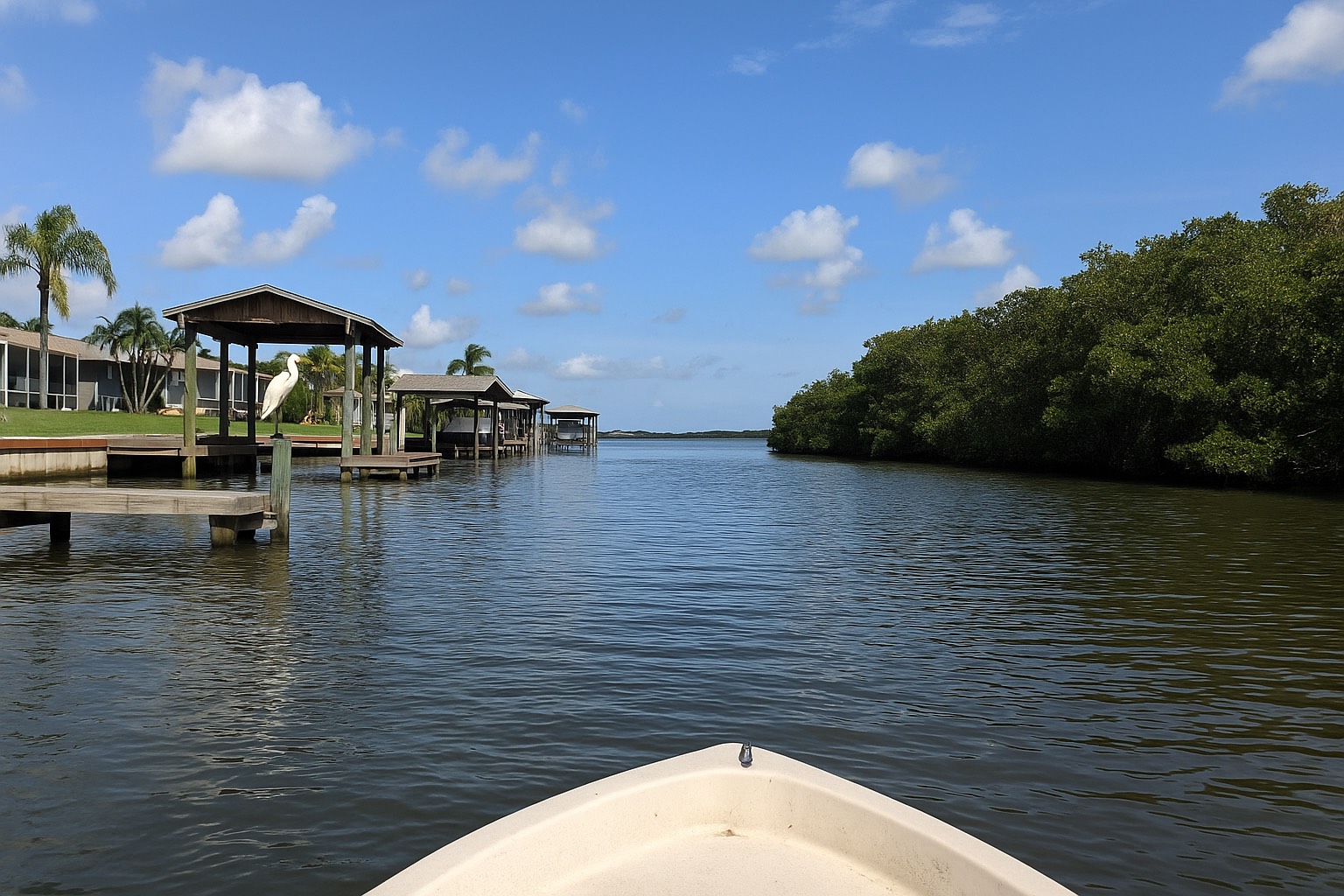
- On the lagoon side, add the dock. Pilings, lift motor and cables, bunk hardware, electrical at the water. Lift equipment on the Indian River Lagoon lives a hard life.
The full seasonal version, including the storm-prep sequence, is in the coastal home maintenance and storm prep guide. Budget the reserve as a real annual line, and set it higher for an oceanfront structure than for a lagoon-side one several rows back. If you are still weighing island against mainland, beachside versus mainland Brevard makes the comparison directly.
Oceanfront, the dune and the CCCL
If any part of the parcel you are looking at sits seaward of the state's coastal construction control line, common on the ocean side of A1A, though the line is set segment by segment by the state and does not follow the road, one more authority joins the conversation. Florida's Department of Environmental Protection administers the Coastal Construction Control Line program under Florida Statutes section 161.053. The line is a state-established boundary marking the area subject to fluctuations from a one-hundred-year storm surge, and construction seaward of it generally requires a permit from the state in addition to whatever the Town of Melbourne Beach and Brevard County require. Pools, seawalls, dune walkovers, additions, and in many cases substantial exterior work all fall inside that jurisdiction.
For annual cost, that is less about the permit fee than about time and scope. A project that would be a straightforward local permit on the mainland becomes a longer, more documented process on a CCCL parcel, and the contractors who work seaward of the line price that in. There is a disclosure component too: Florida Statutes section 161.57 addresses coastal-property disclosure at contract seaward of the line. The whole mechanism is in the Coastal Construction Control Line explainer.
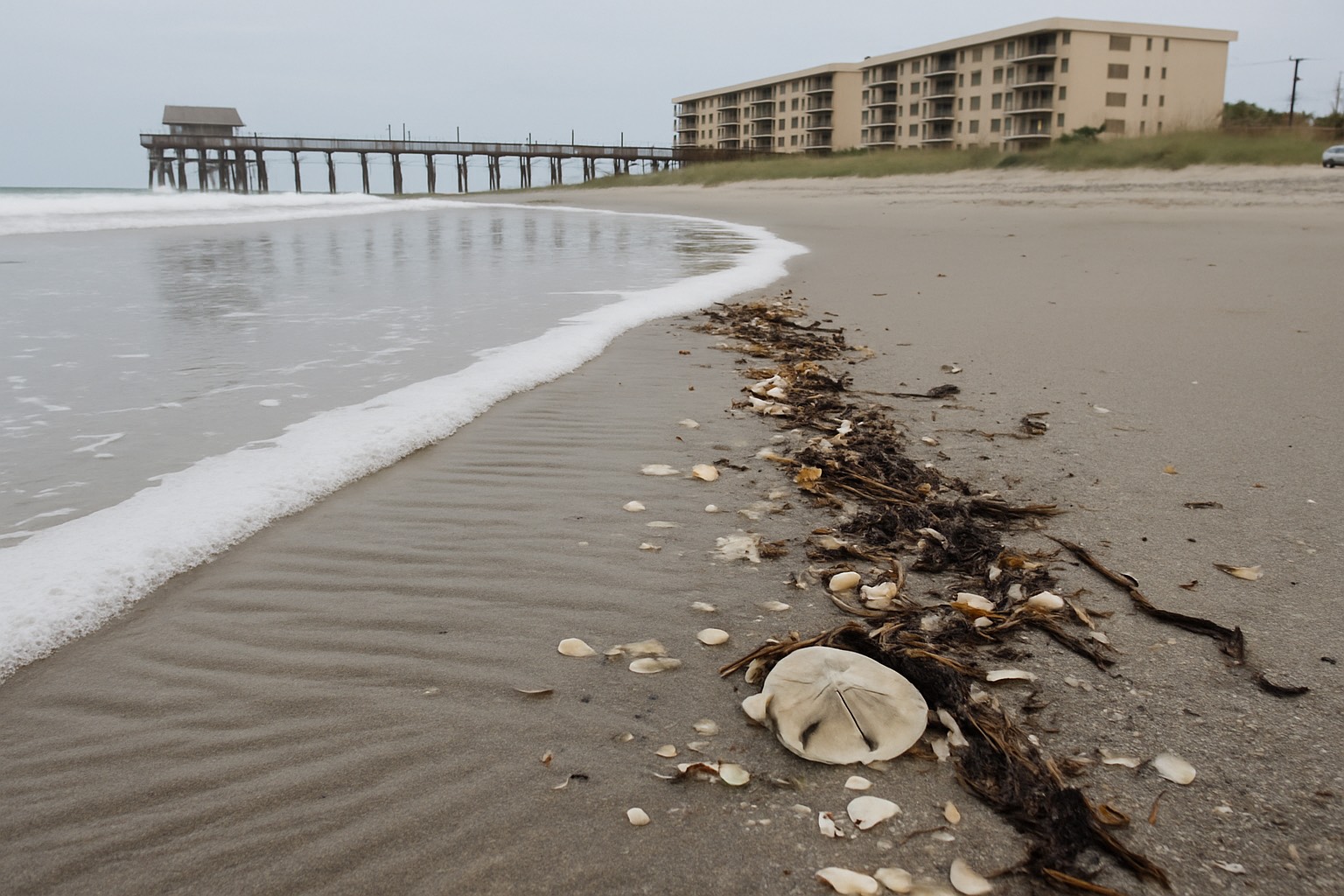
The dune itself is part of the deal. The U.S. Fish and Wildlife Service established the Archie Carr National Wildlife Refuge along this stretch of barrier island south of town to protect sea turtle nesting habitat. Coastal lighting rules follow. The Florida Fish and Wildlife Conservation Commission maintains a model lighting ordinance and a list of adopted local ordinances; check the Town of Melbourne Beach and Brevard County codes for what applies to your address. On a beachfront property that means specific fixtures, specific shielding, and window treatment on ocean-facing glass during nesting season. Compliant fixtures are a modest line item. A retrofit on a house never brought into compliance is a larger one.
Brianna's take
I have watched buyers fall for an oceanfront lot and never once ask which agency governs it. Then they want a pool. The permitting reality on a CCCL parcel is a reason to know, before you sign, what you will and will not be able to build. When we tour out here I will tell you which side of the line the house sits on.
Being south of the causeway
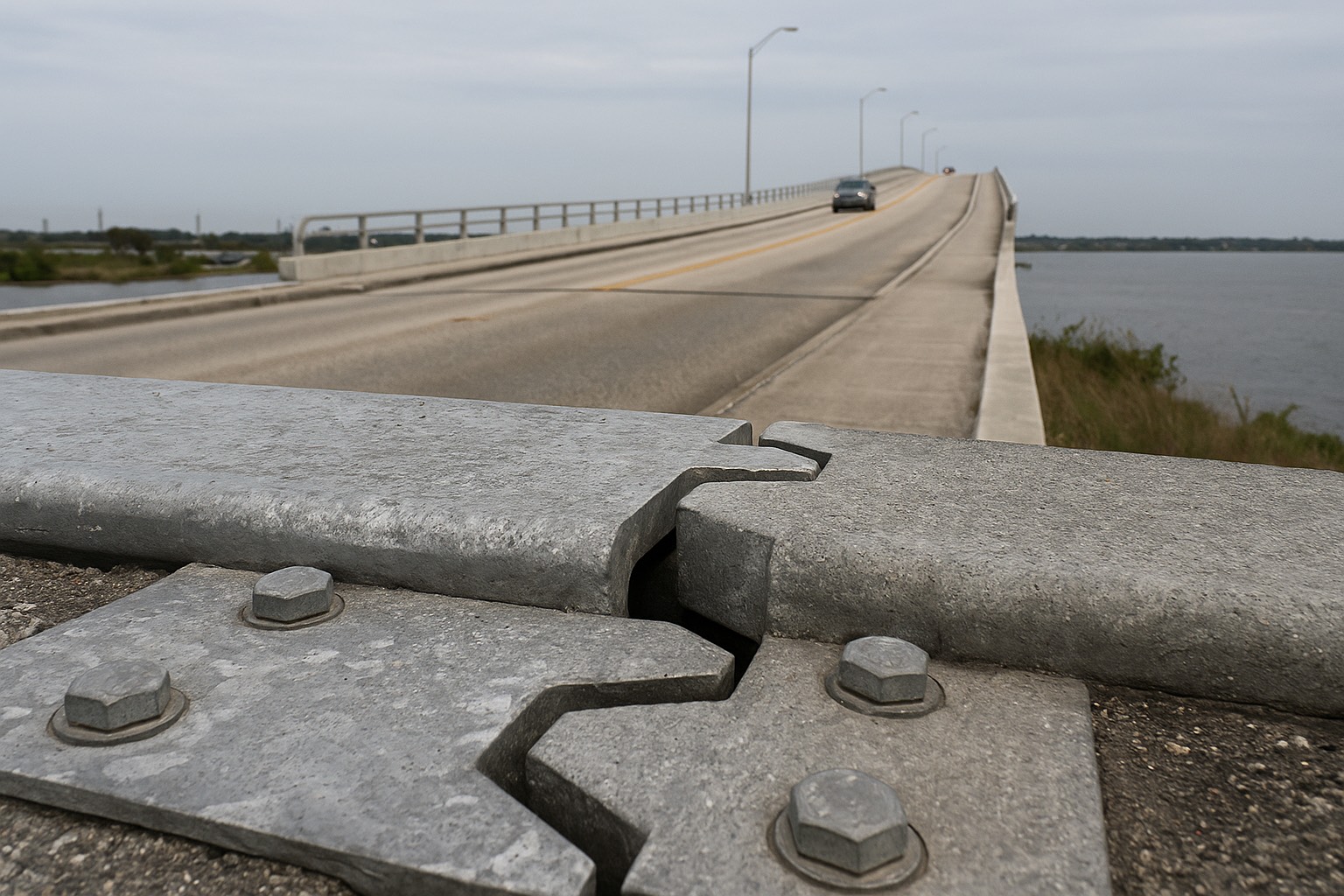
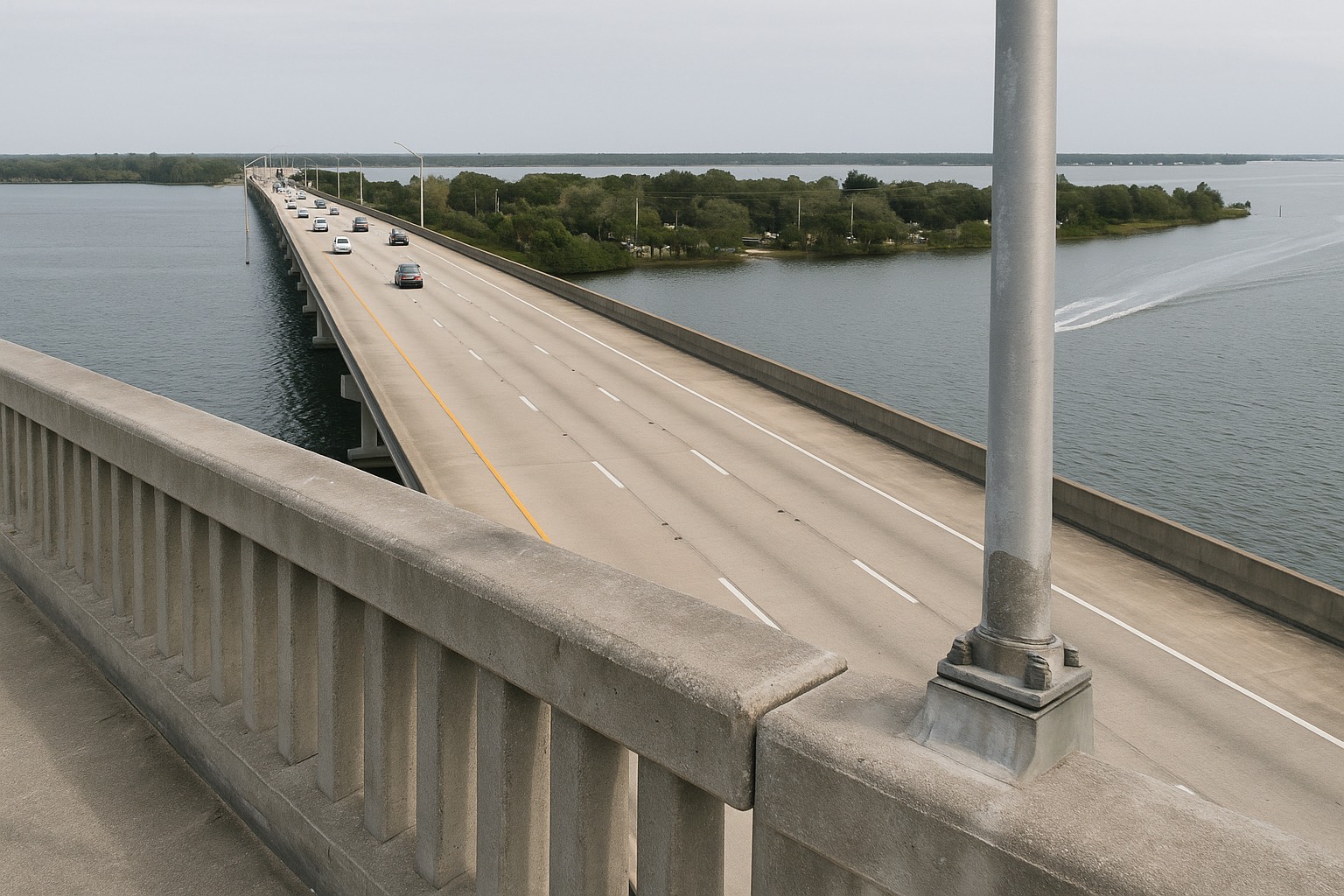
Here is the part that decides it for most people. Melbourne Beach is a drive. Look at the geography. The town sits on the barrier island south of Indialantic, and the mainland crossings are all north of you, nearest are the Melbourne Causeway carrying US-192 and the Eau Gallie Causeway carrying State Road 518, with the Pineda Causeway on State Road 404 further north again. Head south on A1A instead and the pavement runs through unincorporated south Brevard past the refuge parcels toward Sebastian Inlet State Park and the county line, and the next bridge to the mainland is the Wabasso Causeway in Indian River County.
That shows up in four places. Fuel and vehicle wear, because most errands run north. Service calls, because some trades price beachside work with a travel component and fewer will drive down for a small job. Delivery and installation windows, which narrow the further south you sit. And time. I will not quote you a commute figure: the answer depends on which causeway you use, where you are going, and whether a bridge is up. Drive it yourself, at the hour you would really drive it. Then drive it again on a Friday.
The evacuation question deserves its own sentence. Everyone on the south barrier island leaves through those same crossings, and Brevard County Emergency Management publishes the evacuation zone map that governs when that happens. Look up the specific address on it. Then look at the shelter locations and the route, and decide with clear eyes whether that arrangement works for your household and your animals.
What you get in exchange is the thing people buy here for. A town a few blocks wide with the ocean on one side and the lagoon on the other, Ryckman Park and the Ocean Avenue corridor at the center, and a beach that stays quiet because the road does not lead anywhere in a hurry. The Town of Melbourne Beach publishes its ordinances, permitting requirements, and utility information, read that site while you are still deciding. Against the town directly north, the Satellite Beach and Melbourne Beach comparison lays the two side by side, and the current Melbourne Beach listings show what the trade-off costs in inventory. It is thin. I wrote about why in the low-inventory buyer strategy piece.
Pricing the whole year before you offer
Put it together as a single annual number. Not a monthly payment and not a mortgage estimate: a year of ownership with everything in it. This is the sequence I run on every Melbourne Beach property, and you can run most of it yourself in an afternoon.
- Pull the parcel. At the Brevard County Property Appraiser, read the assessed value against market value, note the exemptions on it, and check year built, roof year, and square footage under air. That page answers half your questions for free.
- Build the tax estimate from your own taxable value. Apply the current millage sheet to the taxable value you expect after the reset, then add the non-ad valorem side from the Brevard County Tax Collector. Full mechanics in the Brevard County property tax explainer.
- Pull the flood zone and hunt for an elevation certificate. FEMA's map portal for the designation, the seller and the town for the certificate.
- Get three real quotes. Homeowners with the hurricane deductible spelled out in dollars, flood, and, if there is a boat or a dock, whatever that requires. Quote on the specific address, during the inspection period.
- Order the wind mitigation inspection early. If the roof supports credits, you want them in the quote you are budgeting from, well before closing.
- Set the maintenance reserve as a funded budget line. Age the HVAC, roof, openings, and dock hardware, then fund the replacement curve you can already see coming.
- If it is a condo or an association, read the documents. Budget, reserve balances, twelve months of minutes, assessment history, and for buildings three or more habitable stories, the milestone inspection and Structural Integrity Reserve Study Florida law requires.
- Add the drive. Fuel, wear, and the service-call premium. It is small per month and real per year.
Then test it against your own tolerance. The mortgage calculator handles the financing half; the affordability tool puts the whole carrying cost against your income. If you already own here, a current home valuation is the other half of the picture. For local context, the area guide covers the housing stock and geography out here, and the local market data page tracks what is happening now.
The one habit that separates the happy owners
They wrote the annual number down before they wrote the offer. Every element above is verifiable at a named public authority in a single afternoon, and every one of them is harder to change after closing than before. An hour with the parcel record, the flood map, and an insurance agent is the cheapest hour in the entire purchase.
Frequently asked questions
What does it really cost to own a home in Melbourne Beach each year?
There is no single figure, because every element is parcel-specific. The annual carrying cost is built from six parts: ad valorem property tax based on your taxable value after the assessment cap resets at sale, non-ad valorem assessments on the same bill, homeowners and wind coverage, a separate flood policy, a salt-air maintenance reserve, and any association or condominium fees. Build the number by pulling the parcel at the Brevard County Property Appraiser, confirming the flood zone at the FEMA Flood Map Service Center, and getting real insurance quotes on the specific address while your inspection period is still open. Two houses on the same street can produce very different totals.
Why will my property tax bill be higher than the seller's?
Because Florida's Save Our Homes assessment cap, in Article VII of the state constitution and implemented at Florida Statutes section 193.155, follows the owner rather than the property. It limits how fast a homesteaded property's assessed value can rise, so a long-time owner may be paying tax on an assessed value well below market. When the home sells, that cap resets and the property is reassessed. The seller's tax bill is history. Build your own estimate from the taxable value you expect and the current millage sheet at the Brevard County Property Appraiser.
Do I need flood insurance in Melbourne Beach?
Very likely, and you should confirm rather than assume. Flood is excluded from every standard homeowners policy and is insured separately through the National Flood Insurance Program or a private flood carrier. In FEMA's high-risk A and V flood zones, a federally backed mortgage generally triggers mandatory flood coverage, and much of the barrier island falls in those families, though the zone is always parcel-specific. Enter the exact address at the FEMA Flood Map Service Center to see the designation, and ask the seller whether an elevation certificate exists, because FEMA's Risk Rating 2.0 methodology prices the policy on the structure itself rather than on the zone alone.
How does the hurricane deductible work on a Florida coastal policy?
It is not a flat dollar amount like an auto deductible. Florida property policies typically express the hurricane deductible as a percentage of the dwelling coverage limit, which means the figure scales with your Coverage A and can be considerably larger than the standard deductible you are picturing. Ask your agent to state it in dollars rather than percent on every quote you compare, and confirm what event triggers it. That single number is the difference between a manageable claim and one you effectively self-insure, so it belongs in the budget conversation from the first quote onward.
What is the Coastal Construction Control Line and does it affect my property?
The Coastal Construction Control Line is a state-established boundary administered by the Florida Department of Environmental Protection under Florida Statutes section 161.053, marking the area subject to fluctuations from a one-hundred-year storm surge. Construction seaward of the line generally requires a state permit in addition to town and county approvals, and that includes pools, seawalls, dune walkovers, additions, and much substantial exterior work. On an oceanfront Melbourne Beach parcel it means longer timelines and a smaller pool of contractors who work seaward of the line. Florida Statutes section 161.57 also addresses coastal-property disclosure at contract. Find out which side of the line the buildable area falls on before planning any improvement.
How much extra maintenance does salt air really cause?
Salt air rarely produces one dramatic repair. It shortens the service life of a long list of components, which shows up as a higher annual maintenance reserve rather than as a single bill. The items that go first are exterior metal and mechanical equipment: HVAC condenser coils, non-stainless fasteners, hinges, hurricane shutter hardware, garage door tracks, railings, exterior electrical covers, slider rollers and window seals, and on the lagoon side, boat lift motors and cables. Rinsing exposed hardware with fresh water on a regular schedule, servicing the HVAC on a coastal interval, and specifying marine-grade stainless on replacements are the habits that keep the number down.
What is the real drawback of living south of the causeways?
Access. The mainland crossings are all north of Melbourne Beach. The nearest are the Melbourne Causeway carrying US-192 and the Eau Gallie Causeway carrying State Road 518, with the Pineda Causeway on State Road 404 further north again. Head south on A1A and the next bridge to the mainland is the Wabasso Causeway in Indian River County. Most errands are a drive north. That shows up as fuel and vehicle wear, a travel component on some service calls, narrower delivery windows, and time. It also matters in an evacuation, since everyone on the south barrier island uses the same crossings. Look up the address on the Brevard County Emergency Management evacuation zone map, and drive the route yourself at the hour you would really drive it before you buy.
Can I get a flood insurance discount in Melbourne Beach through the CRS?
Possibly, and it depends on the community rather than on your house. Under FEMA's Community Rating System, a local government that exceeds the minimum floodplain-management standard earns its National Flood Insurance Program policyholders a premium discount scaled to the class the community holds. Participation and class change over time and are published in FEMA's Community Status Book, so look the community up rather than assuming it matches a neighboring town. Ask your insurance agent to confirm whether the discount is already reflected in the quote you are reading, because it is applied at the policy level and is easy to overlook.
Keep reading
Want the real annual number on a specific Melbourne Beach address?
Send me the listing and I will pull the parcel record, read the assessed value against market, check the flood zone and hunt for an elevation certificate, and tell you which side of the control line the buildable area sits on, before you write anything. I have served Space Coast clients since 2015, and I would rather hand you the year-one number than let you find it in year two.
Data last verified: August 2026. Tax, insurance, flood, and coastal-construction points summarized from the Brevard County Property Appraiser, the Brevard County Tax Collector, the FEMA Flood Map Service Center, the National Flood Insurance Program (NFIP / FloodSmart) and its Community Rating System, the Florida Office of Insurance Regulation, Citizens Property Insurance Corporation, the Florida Department of Environmental Protection's Coastal Construction Control Line program, the Florida Fish and Wildlife Conservation Commission's coastal lighting resources, the U.S. Fish and Wildlife Service (Archie Carr National Wildlife Refuge), the Town of Melbourne Beach, and Florida Statutes sections 193.155, 161.053, 161.57 and 627.0629, as of August 2026. Millage, flood zones, carrier availability, ordinances, and statutory requirements change, confirm current specifics with a licensed Florida insurance agent, the relevant county or municipal office, and a Florida attorney or CPA where the question is legal or tax.
Categories
- All Blogs (48)
- Cost of Living (3)
- Cost of Ownership (25)
- Decision Guide (9)
- Living in Cape Canaveral (8)
- Living in Cocoa Beach (5)
- Living in Melbourne (4)
- Living in Melbourne Beach (5)
- Living in Palm Bay (4)
- Living in Rockledge (3)
- Living in Satellite Beach (6)
- Living in Titusville (6)
- Living in Viera (4)
- Living on Merritt Island (4)
- When Buying (4)
- When Relocating (7)
Recent Posts