Buying a Condo in Cape Canaveral: Fees, Reserves and What to Read First
Buying a Condo in Cape Canaveral: Fees, Reserves and What to Read First
In a city built mostly of condominium buildings, what you are really buying sits inside six documents, and you get a short window to read them.
Cape Canaveral is a condominium city, and that one fact changes the shape of the whole transaction. On a single-family purchase you hire an inspector, he climbs into the attic, and four hours later you know most of what you need to know. Here you are buying a share of a building, a budget, a reserve schedule and a board, and you learn about all four the same way: on paper, secondhand, inside a deadline somebody else set. The unit is the easy part. In this city, it is almost never what the deal turns on.
What follows is the reading list I hand buyers before we write an offer on anything between the Cape Canaveral city limits and the Cocoa Beach line, in the order I read it, with the deadline attached to each piece. If you want the wider picture of the city itself first, start with the Cape Canaveral real estate guide and come back here when you have a building in mind.
Why Cape Canaveral is a condo market in the first place
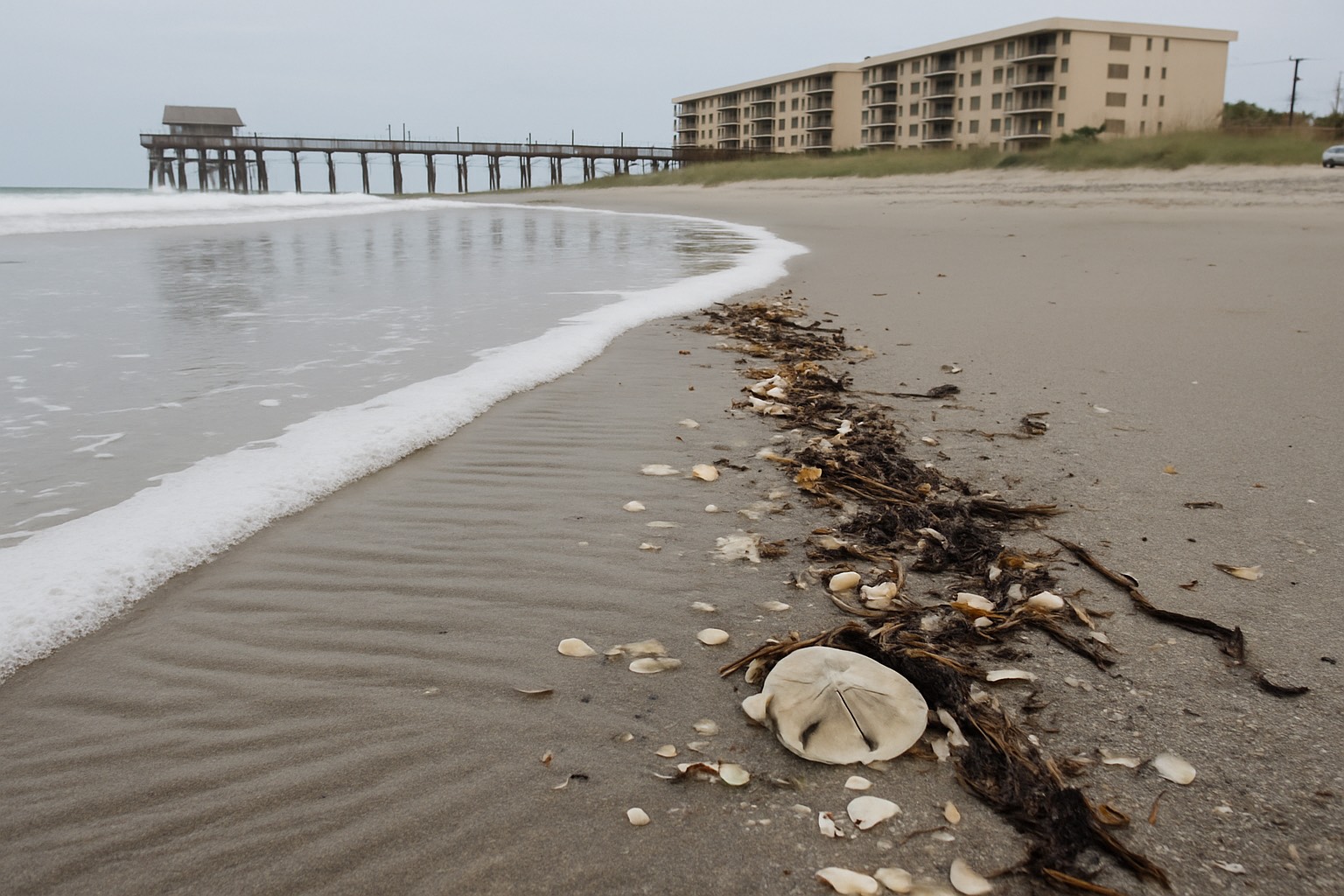
Look at the geography and the housing stock stops being a surprise. Cape Canaveral occupies a narrow stretch of the barrier island with the Atlantic on its east side and the Banana River on its west, Port Canaveral and the Cape Canaveral Space Force Station closing it off to the north, and the Cocoa Beach line to the south. State Road A1A, called Astronaut Boulevard through town, runs the length of it. That is the entire canvas. There is no room for the city to spread outward the way Palm Bay or Viera can, so when Brevard County needed housing near the space program, the answer here went vertical and multi-family.
Drive North Atlantic Avenue or the ocean side of A1A and you pass block after block of low- and mid-rise buildings, oceanfront and riverfront, plus townhome and villa associations filling in behind them. The individual houses exist. They are a minority of the inventory, and they move fast. You can see the current mix for yourself in the Cape Canaveral listings, and the trend behind the mix in the Cape Canaveral market snapshot.
The other thing the geography did was fix the age of the stock. A large share of these buildings went up during the decades when the space program was hiring hardest, which means the question that governs your purchase is not "how does the unit show" but "how old is the structure and who has been paying to maintain it." You do not have to guess at the first half of that. Pull the parcel record at the Brevard County Property Appraiser and read the year built, the total building square footage, and the sales history right off the card, free, before you ever ask the listing agent a question. That single field: year built, decides whether the rest of this article applies to your building at full strength or barely at all.
The one-line version
In Cape Canaveral the thing you are underwriting is the building itself. Get the year built from the Property Appraiser, get the six documents below in writing during your inspection period, and read the reserve study before you read the listing description a second time.
The six documents I ask for first
Every one of these is a real, existing document that the association already has. None of it needs to be created for you. When a seller or a management company tells me a document will "take a few weeks," that is itself information, and I write it down. Here is the set, and what each one answers.
| Document | The question it answers | Where it comes from |
|---|---|---|
| 1. Declaration of condominium (with articles, bylaws, rules and any amendments) | What you own, where the association's responsibility stops and yours starts, what you may rent or park or renovate, and how assessments are levied. | The seller, the management company, or the recorded copy in the Brevard County Clerk's official records. |
| 2. The current adopted budget with the reserve schedule and current reserve balances | What the monthly fee is buying this year, how much is going into reserves, and how much is sitting in them right now. | The association or its manager. It was adopted at a noticed board meeting, so it exists. |
| 3. The Structural Integrity Reserve Study (SIRS) | Which structural components the building has, what condition they are in, what they will cost, and how far the association is from funding them. | The association, for buildings the requirement applies to. |
| 4. The milestone inspection report, plus any phase-two report and the repair status | Whether an engineer or architect has looked at the structure, what was found, and what the local enforcement agency required afterward. | The association, and often the building department that received it. |
| 5. Board meeting minutes, twelve months minimum, plus recent meeting notices | What is being discussed but not yet voted on. This is where a coming assessment lives before it becomes official. | The association's official records. |
| 6. The estoppel certificate and the assessment and dues history | What this specific unit owes today, what the fee has done over the past several years, and whether an assessment has already been levied against it. | Ordered from the association, usually by the closing agent, under the estoppel provisions of section 718.116, Florida Statutes. |
Document set assembled from Florida condominium practice as of August 2026; the official-records and estoppel obligations sit in Chapter 718, Florida Statutes. Individual associations differ in what they publish and how quickly, confirm your building's specifics with a Florida community-association attorney.
Notice what is missing from that list. There is no appraisal, no home inspection report, no listing history. Those matter, and I order them too. But they describe the unit, and in this city the unit is rarely what costs you money three years after closing. I would rather see one honest reserve study than five perfect inspection reports.
What the reserve study tells you that the fee does not
Here is the trap that catches people who compare Cape Canaveral buildings by monthly fee alone: a low fee and a healthy building are not the same thing, and for years Florida law let them look identical from the outside. An association could vote to waive or reduce its reserve funding, keep the monthly number attractive, and defer the roof, the concrete and the painting into somebody else's future. The buyer saw a fee. The buyer did not see the hole.
The Structural Integrity Reserve Study, the SIRS, is what closes that gap. It is a visual inspection-based study that identifies the building's structural components, roof, load-bearing walls, floor, foundation, fireproofing and fire protection, plumbing, electrical, waterproofing and exterior painting, windows and exterior doors, and puts a remaining useful life and a replacement cost against each one. Then it compares that to what the association has set aside to date. The arithmetic in that comparison is your assessment risk, expressed as a number instead of a feeling.
The legal frame matters here and I am not going to re-explain it end to end, because it has its own article. Short version: SB 4-D, signed in a May 2022 special session after the 2021 Surfside collapse, created both the milestone inspection and the SIRS obligation for condominium and cooperative buildings of three or more habitable stories. SB 154, signed in June 2023, and the legislative sessions that followed have kept refining the framework, so confirm the current version of the statute for the budget year you are buying into. As the framework stands today, for the structural items the SIRS identifies, associations subject to the requirement generally may no longer vote to waive or reduce those reserves for budgets adopted on or after December 31, 2024, subject to the statute's exceptions. The reserve and budget mechanics live in section 718.112, Florida Statutes; the 2024 text published by the Florida Senate is a point-in-time version, so read the year that governs your budget. For the full walkthrough, read Florida condo reserves and SB 4-D explained.
What that means on the ground in Cape Canaveral is simple and a little uncomfortable. Buildings that kept fees low by waiving reserves have run out of road. The catch-up shows up as a higher fee, a special assessment, a loan taken by the association, or some combination, and it is landing now rather than in a decade. So when I read a SIRS I am looking at three things: how large the gap is between required and funded, how near-term the biggest-ticket component is, and whether the board has already published a plan for closing it. A building with a real gap and a written plan is often a better buy than a building with a vague gap and a cheerful newsletter.
Brianna's take
I would rather buy into a building that just took its medicine than one that has not been to the doctor. An association that completed its milestone inspection, commissioned the SIRS, levied the assessment and got the concrete work bid out has converted an unknown into a known cost, and the seller's price usually reflects it. The building that shows a low fee, no study on hand and a board that "is looking into it" is the one where you are guessing with your own money. Ask me to price both. The comparison is almost never what buyers expect.
Milestone inspection and the age question
The milestone inspection is a structural inspection performed by a licensed Florida engineer or architect, and it is the piece of this that Cape Canaveral buyers hit most often, because so much of the local inventory is both tall enough and old enough to trigger it.
Two thresholds do the work. The requirement applies to condominium and cooperative buildings three or more habitable stories in height. And a building generally must complete its first milestone inspection at 30 years of age, except that a local enforcement agency may require it at 25 years based on local circumstances, including proximity to salt water. Read that last clause again with a map in front of you. Cape Canaveral is a barrier-island city with the Atlantic on one side and the Banana River on the other. Here, salt air is the climate.
So the questions I ask about any Cape Canaveral building of three stories or more are: has the milestone inspection been performed, what did the phase-one report conclude, was a phase-two investigation required, what repairs were ordered, what is the status of those repairs, and how are they being paid for. The report itself is often more readable than people expect, engineers write findings in plain language because building officials have to act on them. If you want the mechanics of how one is ordered, scoped and reported, I cover that in how a milestone inspection is ordered and reported. For the local permitting and enforcement side, the City of Cape Canaveral is the municipal authority for properties inside the city limits, and its building department is who received the report.
Now the downside. If you shop Cape Canaveral seriously, you will do all of this reading and then walk away from the best-priced unit you saw. That is not a failure of the process. That is the process working, and it is the reason I front-load the documents instead of ordering them after everything else clears. I will tell you to release a beautiful oceanfront unit over a reserve schedule, and I would rather have that conversation before your deposit goes hard than after. The reading exists so you can say no early, cheaply, while your deposit is still yours.
Fee, master policy, HO-6: what your money is doing
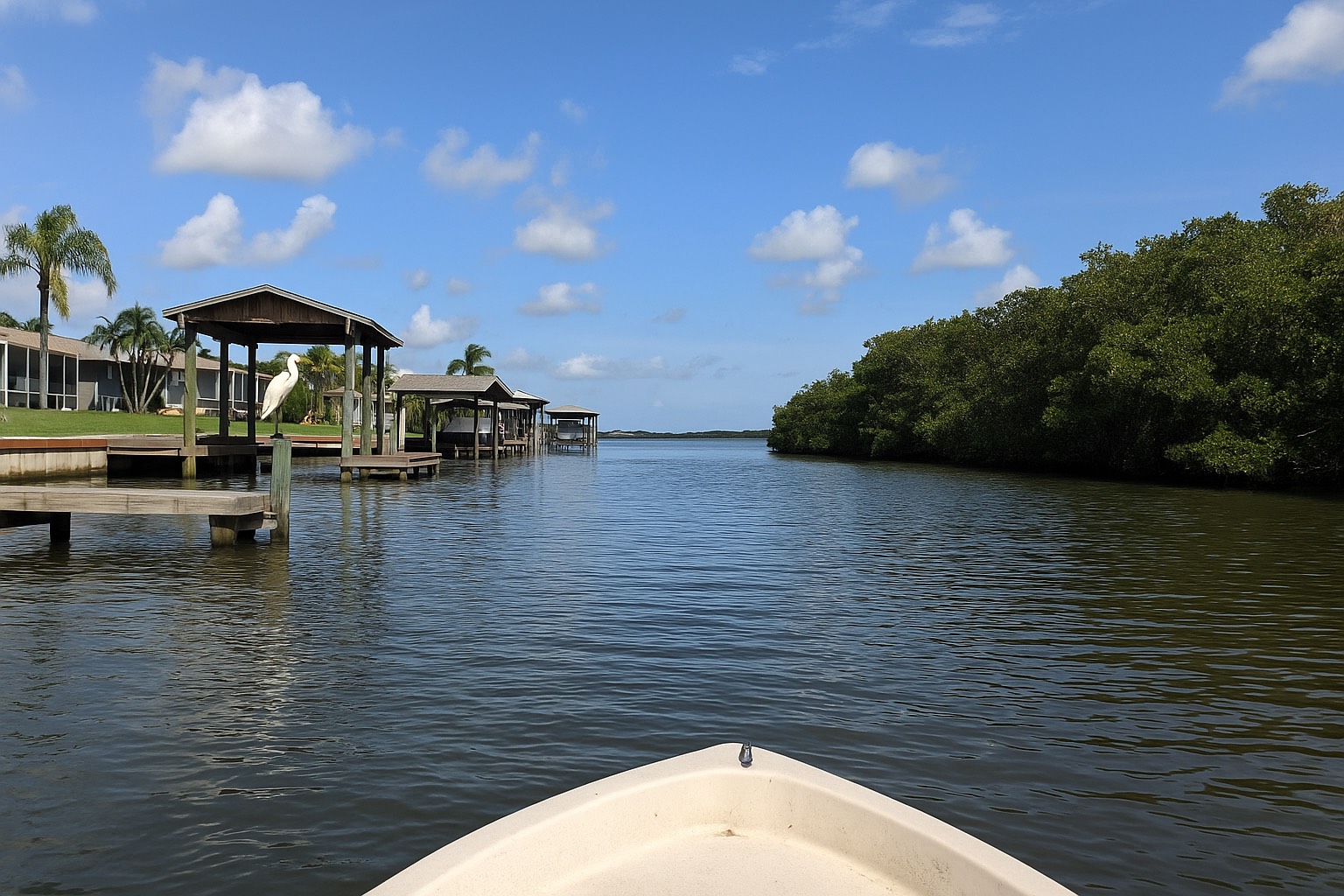
A Cape Canaveral condo fee is a budget line item you can read, and the budget you requested as document number two breaks it out. Typically it is carrying some mix of: the association's master insurance premium, the reserve contributions, management, common-area electric and water and sewer, landscaping, pest control, elevator service and inspection, pool maintenance, roof and exterior maintenance, and, on the river side of town, seawall, dock and boat-lift upkeep, which is a line I always read closely on Banana River buildings; check how it has moved across the last three adopted budgets.
What the fee is never carrying is your own coverage. This is the part I slow down on with first-time condo buyers, because assuming otherwise is expensive. The association's master policy insures the building and the common elements, and you pay your share of it inside the fee. Your HO-6 unit-owner policy covers your side of the line the declaration draws, interior finishes, cabinetry, flooring, belongings, liability, and loss assessment coverage that can absorb part of a levied assessment or a passed-through master deductible, up to the limit you buy. Where the master policy stops is written in the declaration, which is why the declaration is document number one and not document number five. The full comparison is in HO-6 versus the master policy.
Flood sits outside both. It is excluded from homeowners and HO-6 policies alike and is written separately, through the NFIP or a private flood insurer, and many associations carry a building flood policy on the structure while the owner still wants contents and gap coverage. Pull the parcel's zone and Base Flood Elevation at the FEMA Flood Map Service Center before you budget anything, and read how to read a Space Coast flood zone if the letters do not mean anything to you yet. The barrier-island version of this whole cost stack, worked through end to end one town south, is in the insurance and flood costs of Cocoa Beach condos, the structure of the problem is the same on both sides of the city line.
Two authorities are worth knowing by name while you are quoting. The Florida Office of Insurance Regulation regulates property coverage in the state and publishes who is writing it. Citizens Property Insurance is Florida's insurer of last resort and, on some older coastal buildings, the realistic market. Ask the association which carrier holds the master policy and ask for the declarations page. A building whose master policy moved to Citizens recently is telling you something about how the private market sees it.
The order I read them in, and the deadlines
Order matters because the cheap information comes first and the expensive information comes last, and each step can end the process before you spend on the next one. This is the sequence.
- Before the offer, free and public. Year built, square footage and sales history from the Brevard County Property Appraiser. Flood zone from the FEMA Flood Map Service Center. Number of stories, which you can count from the sidewalk. Five minutes, no cost, and it tells you whether the milestone and SIRS regime applies to this building at all.
- In the offer itself. Write the document delivery into the contract with a date attached, and make your inspection period long enough to read what arrives at reading speed. A standard-length inspection window is built for a house inspection, and a condo purchase is a document review on top of that. Ask for the six items by name.
- Day one of the inspection period: the declaration and the budget. The declaration tells you the rules you will be living under, including rental and pet and parking restrictions that no photograph discloses. The budget tells you what the fee funds and what percentage of it is reaching reserves.
- Day two: the SIRS and the milestone report. Read them together. The study says what the building needs; the inspection says what an engineer found. When those two documents disagree, ask why, in writing.
- Day three: the minutes. Twelve months of them, cover to cover. Slow reading, high yield. Assessments, litigation, insurance non-renewals and management changes all show up in the minutes before they show up anywhere else.
- Alongside all of it: the quotes. Get a licensed Florida agent working on your HO-6 and flood numbers while your insurance contingency is still alive, and get your lender's condo questionnaire moving early, a building's warrantability affects your financing, and that answer takes time to come back.
- Then the estoppel. The closing agent orders it and it confirms what this unit owes. It is a snapshot of the official position, which is exactly why it comes after the minutes rather than instead of them.
Two Florida timing rules are worth asking your closing agent or attorney about directly, since they interact with everything above. Chapter 718 gives condominium purchasers a document-delivery and cancellation framework, for resales, section 718.503, Florida Statutes, sets out what the seller must furnish and a short cancellation window that runs from receipt of those documents. And the estoppel certificate has its own statutory response deadline under section 718.116. Neither one replaces your inspection period. Both can save you if delivery drags. Confirm how they apply to your specific contract with a Florida attorney, because the interaction with the standard contract language is where people get it wrong.
If the numbers on a particular building do clear, run the whole carrying cost as one figure before you celebrate: mortgage plus fee plus HO-6 plus flood plus a monthly set-aside against future assessments. The payment calculator handles the first piece. The rest is arithmetic you do once and are glad you did. And if you are still deciding whether this stretch of the island is the right one at all, Cape Canaveral compared with Cocoa Beach and what living beside the cruise port is like are the two comparisons buyers ask me for most.
Frequently asked questions
Why is so much of Cape Canaveral condominiums rather than houses?
Cape Canaveral occupies a narrow stretch of barrier island with the Atlantic on one side and the Banana River on the other, Port Canaveral and the Cape Canaveral Space Force Station to the north, and the Cocoa Beach line to the south. There is very little land to expand into, so when housing was needed near the space program the build-out went multi-family and vertical rather than outward. Single-family homes exist in the city, but they are a small share of the inventory. You can confirm the year built and building size for any specific parcel free at the Brevard County Property Appraiser.
What documents should I request before buying a Cape Canaveral condo?
Six, in writing, during your inspection period: the declaration of condominium with the articles, bylaws, rules and amendments; the current adopted budget with the reserve schedule and current reserve balances; the Structural Integrity Reserve Study; the milestone inspection report along with any phase-two report and repair status; at least twelve months of board meeting minutes and recent meeting notices; and the estoppel certificate with the assessment and dues history for that specific unit. Every one of these already exists at the association, so a long delay in producing them is itself information worth writing down.
What is a Structural Integrity Reserve Study and why does it matter to a buyer?
A Structural Integrity Reserve Study, or SIRS, is a visual inspection-based study that identifies a building's structural components, including roof, load-bearing walls, floor, foundation, fireproofing and fire protection, plumbing, electrical, waterproofing and exterior painting, and windows and exterior doors, then assigns each a remaining useful life and a replacement cost and compares that to what the association has set aside. The gap between what the building will need and what it has funded is your special-assessment risk stated as a number. It matters more than the monthly fee, because a low fee and a well-maintained building are not the same thing.
Does my Cape Canaveral condo building need a milestone inspection?
The milestone inspection requirement applies to condominium and cooperative buildings three or more habitable stories in height. A building generally must complete its first milestone inspection at 30 years of age, except that a local enforcement agency may require the inspection at 25 years based on local circumstances, including proximity to salt water. Cape Canaveral is a barrier-island city between the Atlantic and the Banana River, so that earlier trigger is a live possibility here. Count the stories, get the year built from the Brevard County Property Appraiser, then ask the association and the City of Cape Canaveral building department for the report and its status.
What does a Cape Canaveral condo fee usually cover?
The budget you requested breaks it out line by line, and it typically carries some mix of the association's master insurance premium, reserve contributions, management, common-area electric and water and sewer, landscaping, pest control, elevator service and inspection, pool maintenance, and roof and exterior upkeep. On the Banana River side of town it also frequently carries seawall, dock and boat-lift maintenance, which is a line I always read closely, check how it has moved across the last three adopted budgets. What the fee never carries is your own unit-owner insurance or your flood policy. Read the actual adopted budget rather than accepting a summary of it.
Do I still need my own insurance if the association has a master policy?
Yes. The master policy insures the building and common elements and you pay your share of it inside the monthly fee, but it stops at a line drawn in the declaration, and everything on your side of that line is yours to insure with an HO-6 unit-owner policy. HO-6 covers interior finishes, belongings and liability, and it carries loss assessment coverage that can absorb part of a levied assessment or a passed-through master deductible up to the limit you buy. Flood sits outside both policies and must be written separately through the NFIP or a private insurer. Read the declaration so the two policies meet without a gap between them.
How do I find out whether a special assessment is coming?
Read the board meeting minutes, at least twelve months of them, cover to cover. An assessment that has been discussed and argued about for months but not yet formally levied will not appear on the estoppel certificate, because the estoppel reports the official position as of today. The minutes are where it lives first, alongside insurance non-renewals, litigation and management changes. Pair the minutes with the Structural Integrity Reserve Study and the milestone inspection report, since together they show what the building owes, what an engineer found, and what the board intends to do about it.
How long do I have to review the condo documents in Florida?
Your contract's inspection period is the main clock, and for a condominium purchase you should negotiate one long enough to read documents rather than just inspect a unit. Separately, Chapter 718 of the Florida Statutes sets out a document-delivery and cancellation framework for condominium purchasers, with section 718.503 covering what a seller must furnish on a resale and a short cancellation window running from receipt of those documents, and section 718.116 setting the response deadline for an estoppel certificate. Those statutory rights do not replace your inspection period. Ask a Florida real estate attorney or your closing agent how they apply to your specific contract.
Keep reading
Want the six documents pulled on a specific Cape Canaveral building?
Send me the address and I will start where the reading starts: year built and stories from the Property Appraiser, the flood zone, and then the declaration, budget, reserve study, milestone report, minutes and estoppel, in that order, inside your inspection period. I have served Space Coast clients since 2015 and I will give you the straight version, including the buildings I would pass on.
Data last verified: August 2026. Condominium reserve, milestone inspection, official-records and estoppel points summarized from Chapter 718, Florida Statutes (including sections 718.112, 718.116 and 718.503) and Florida's post-Surfside condominium legislation, beginning with SB 4-D (May 2022) and SB 154 (June 2023) and amended in subsequent legislative sessions; parcel facts from the Brevard County Property Appraiser; flood-zone facts from the FEMA Flood Map Service Center and the National Flood Insurance Program; insurance-market facts from the Florida Office of Insurance Regulation and Citizens Property Insurance Corporation; municipal permitting and enforcement from the City of Cape Canaveral. Statutes, local enforcement triggers, carrier availability and association budgets all change, confirm current specifics with a Florida community-association attorney, a licensed Florida insurance agent, and the association itself for your building.
Categories
- All Blogs (48)
- Cost of Living (3)
- Cost of Ownership (25)
- Decision Guide (9)
- Living in Cape Canaveral (8)
- Living in Cocoa Beach (5)
- Living in Melbourne (4)
- Living in Melbourne Beach (5)
- Living in Palm Bay (4)
- Living in Rockledge (3)
- Living in Satellite Beach (6)
- Living in Titusville (6)
- Living in Viera (4)
- Living on Merritt Island (4)
- When Buying (4)
- When Relocating (7)
Recent Posts