Insurance & Flood Costs for Cocoa Beach Condos & Oceanfront Homes
Insurance & Flood Costs for Cocoa Beach Condos & Oceanfront Homes
On the barrier island, the part of the budget that catches buyers off guard is the insurance and assessment stack behind the ocean view, which on some buildings can rival the mortgage payment itself.
Here is what the listing for that Cocoa Beach condo will not tell you: the mortgage may be the smallest of the recurring numbers you sign up for. Cocoa Beach sits on a barrier island, which means most of it falls in FEMA's higher-risk flood zones, carries more wind exposure than mainland Brevard, and — for condos — stacks several bills on top of each other. You are looking at the association's master policy (built into your monthly fee), your own unit-owner HO-6 policy, a separate flood policy, and, on an older building, the live possibility of a structural special assessment under Florida's post-Surfside reserve laws. Put together, on the barrier island the insurance-and-assessment stack can rival the mortgage payment. That is exactly why you price the whole stack before you fall in love with the view.
None of this makes a Cocoa Beach condo a bad buy. It makes it a knowable buy. The owners who are happiest out here are the ones who quoted every layer up front, read the building's reserve study, and understood which FEMA zone the property sits in before they waived a single contingency. Let's take the stack apart, layer by layer, with the real math and the authorities you can check yourself.
Why Cocoa Beach is its own insurance conversation
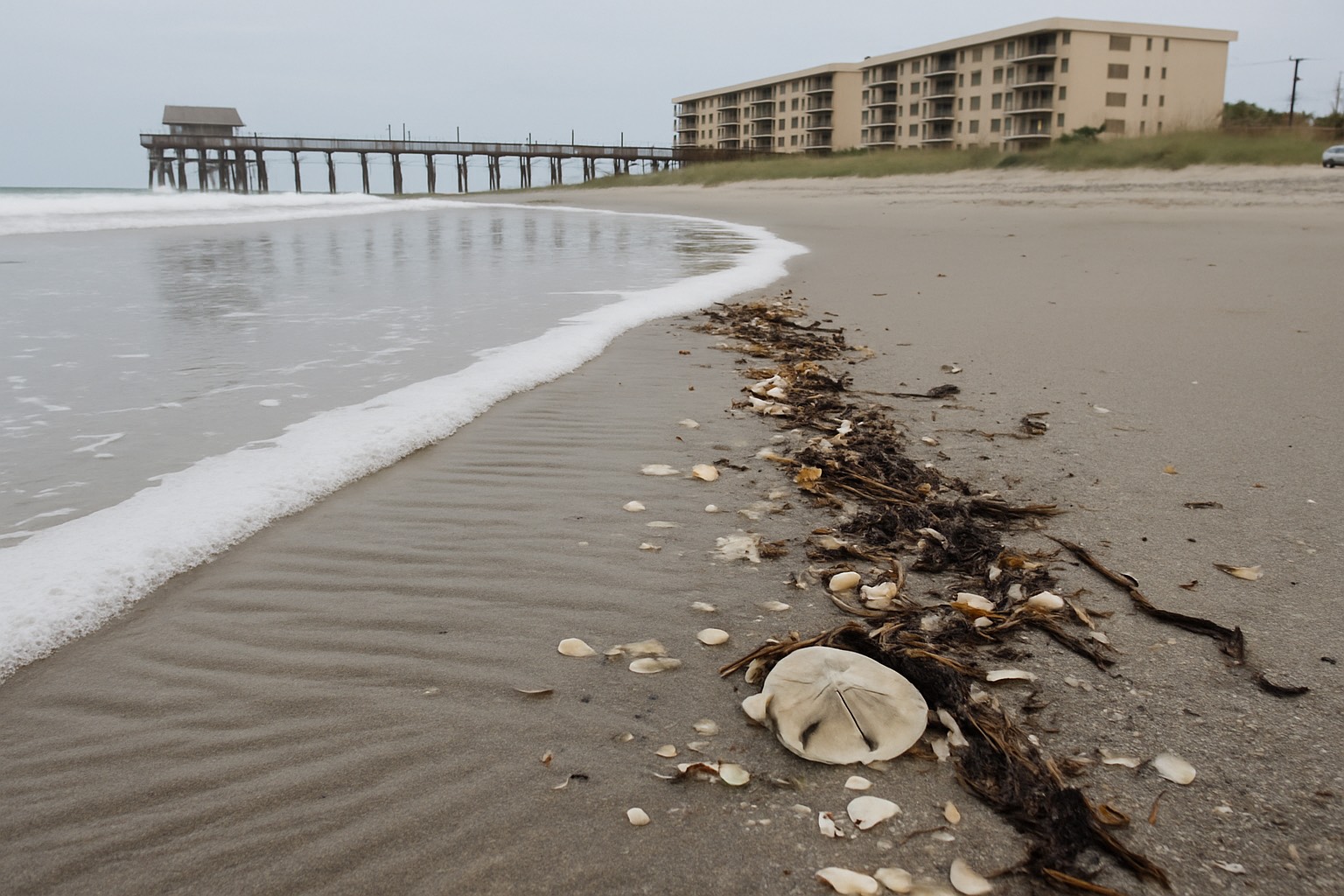
Cocoa Beach and neighboring Cape Canaveral sit on the barrier island — a narrow strip of sand between the Atlantic and the Banana River. Two facts about that geography drive everything on the insurance side. First, much of the island sits at low elevation right at the water, so many parcels fall into FEMA's high-risk flood zones (the "A" family, and the coastal "V" family closest to the ocean) rather than the lower-risk "X" zones common further inland — though the zone is always parcel-specific, so confirm each address. Second, an oceanfront or near-ocean structure carries more direct wind and storm-surge exposure than an equivalent home several miles onto the mainland. Insurers price risk, so both realities show up in the premium.
You can confirm exactly where any specific Cocoa Beach address falls by entering it at the FEMA Flood Map Service Center — the official source of record for a property's flood zone and Base Flood Elevation. I walk through reading those designations in detail in the Space Coast flood zones explained guide.
The one-line version
On the barrier island you are usually pricing four things at once: the building's master policy inside your fee, your own HO-6, a separate flood policy, and the risk of a structural special assessment on an older building. Quote all four before you commit.
The four layers of a Cocoa Beach condo's true cost
A single-family oceanfront home is simpler — it is your homeowners policy, your wind coverage and hurricane deductible, and your flood policy, the same three-policy structure I cover in the wind vs. flood insurance guide. A condo is where the stack gets layered, because you are buying a share of a whole building along with your unit. Here is what each layer is and who pays it.
| Layer | What it covers | Who carries it / how you pay |
|---|---|---|
| Association master policy | The building's structure, roof, and common elements — typically the exterior and everything "out to the walls" of your unit, depending on the declaration. | The condo association. You pay your share inside your monthly assessment (HOA dues), on terms the association controls. |
| Unit-owner HO-6 policy | The "interior" — your walls-in finishes, cabinetry, flooring, personal belongings, liability, and loss assessment coverage that can help with certain association shortfalls. | You, directly. Lenders generally require it, and the master policy's deductible and "where coverage ends" determine how much HO-6 you need. |
| Flood policy | Rising water and storm surge — excluded from every homeowners and HO-6 policy. A condo may carry an association (RCBAP) flood policy on the building; you may still want unit/contents flood coverage. | The association for the building structure; you for your contents and any gap. Through the federal NFIP or a private flood insurer. |
| Special-assessment risk | A one-time (or phased) charge, outside insurance entirely, to fund structural repairs or reserve shortfalls the building owes, now governed by Florida's post-Surfside laws. | You, as an owner, if the board levies one. The building's reserve study is the best early signal. |
Layer structure summarized from how Florida condominium master policies, unit-owner HO-6 coverage, and the NFIP interact, as of June 2026. The exact split between master policy and HO-6 is set by each building's declaration — read it for your specific unit.
Layer 1 & 2: the master policy and your HO-6 are two different bills
The most common condo surprise is assuming the association's insurance covers your unit completely. It usually does not. A master policy covers the building and common elements, but where its responsibility ends — at the bare walls, the studs, or the original finishes — is defined in the building's governing documents, and everything on your side of that line is yours to insure with an HO-6 unit-owner policy. Two pieces of the master policy directly affect what your HO-6 needs to do:
- The master deductible. If the building suffers covered damage, the association's deductible can be passed through to owners. HO-6 loss assessment coverage exists partly to absorb your share of that — but only up to the limit you buy, so the limit matters.
- The "walls-in" line. The further "out" the master policy stops, the more interior your HO-6 has to cover. Read the declaration so the two policies meet without a gap in the middle.
For how wind and the hurricane deductible sit inside all of this — and why a percentage-based hurricane deductible is the line item people skip — the wind vs. flood guide walks through it. The Florida Office of Insurance Regulation (FLOIR) is the authority on how property coverage is regulated in the state and which carriers are writing it.
Layer 3: flood is its own policy, and the island makes it likely
Flood damage — rising water, storm surge, the events a barrier island is most exposed to — is excluded from standard homeowners and HO-6 policies. It is insured separately, through the federal National Flood Insurance Program (NFIP / FloodSmart) or a private flood insurer. On Cocoa Beach, two things follow from the geography:
- A flood policy is more likely to be required. In FEMA's high-risk A and V zones, a federally backed mortgage generally triggers a mandatory flood policy. Because so many barrier-island parcels sit in those zones, "do I need flood?" is more often "yes" here than on the mainland.
- For condos, the building may carry flood too. Many condo associations hold a building flood policy (often an NFIP Residential Condominium Building Association Policy, or RCBAP) on the structure. That can cover the building shell, but you may still want a separate flood policy for your contents and any coverage gap. Ask what the association's flood policy covers before assuming you're protected.
One nuance even mainland-minded buyers miss: flooding happens outside the highest-risk zones too. The NFIP has historically reported that a meaningful share of its flood claims come from lower-risk areas. On a barrier island, carrying flood coverage is rarely the place to economize. Pull the property's exact zone at the FEMA Flood Map Service Center before you budget.
Layer 4: special assessments and SB 4-D on older oceanfront buildings
This is the layer that turns a manageable monthly fee into a real number, and it is the one most specific to Cocoa Beach's older oceanfront stock. When you buy a condo you buy a share of the whole building, so if the roof, the concrete, or the structure is aging and the association never set enough money aside, the repair cost becomes a special assessment — a one-time or phased charge split among owners. After the 2021 Surfside collapse, Florida law no longer lets older buildings quietly underfund those repairs.
Two statutes drive this, and every barrier-island condo buyer should now recognize them by name. SB 4-D (signed in a May 2022 special session) created two obligations for condominium and cooperative buildings three or more habitable stories tall: a recurring structural milestone inspection, and a Structural Integrity Reserve Study (SIRS). SB 154 (signed June 2023) refined that framework. Under the current rules, a building generally must complete its first milestone inspection at 30 years of age — but a local enforcement agency may require the inspection at 25 years based on local circumstances, including proximity to salt water. Cocoa Beach's oceanfront buildings are exactly the ones most likely to hit that earlier trigger.
The change that creates the bills: for the structural components the SIRS identifies, associations subject to the requirement generally can no longer vote to waive or reduce those reserves for budgets adopted on or after December 31, 2024 (subject to the statute's specific exceptions). For decades, many associations waived reserves to keep dues low; that option is gone for structural items, which is why some of the prettiest older oceanfront buildings are now facing catch-up costs. The amount depends entirely on the building, the scope of repairs, and how far behind its reserves were — never assume a figure, always read the specific building's numbers.
Don't skip the reserve study and the minutes
Before you commit to any Cocoa Beach condo, request the SIRS, the milestone inspection report (if due or done), the current budget with reserve balances, the last 12 months of board minutes, and the special-assessment history — ideally during your inspection period. An assessment that has been discussed for months but not yet voted on will not show on the estoppel certificate, but it will be sitting in the minutes. I cover exactly what to read in the Florida condo reserves and SB 4-D guide. On the insurance side, Citizens Property Insurance is the state's insurer of last resort when private coverage is hard to find; for the condo-association rules themselves, a Florida community-association attorney can review the documents and the governing statute.
Single-family oceanfront vs. a condo: how the stack differs
If you are weighing an oceanfront house against a condo, the two cost structures are built differently from each other. A single-family oceanfront home gives you one set of policies you control directly — homeowners with its hurricane deductible, plus your own flood policy — and no association assessment risk, but you also carry the entire roof, structure, and storm exposure yourself. A condo spreads the building's cost across all owners (often making the individual insurance pieces feel smaller) but adds the master-policy share inside your fee and the special-assessment risk on top. Neither is automatically cheaper. The right comparison is the total monthly carrying cost — fee plus HO-6 plus flood plus a realistic reserve for assessments — against the house's homeowners-plus-flood-plus-maintenance number.
Pricing the whole stack before you fall in love
When we tour Cocoa Beach condos and oceanfront homes together, I price the full stack on each one early — the FEMA flood zone, the likely wind market, what the master policy covers versus what your HO-6 has to, and what the building's reserve study and minutes say about assessment risk. That way the real carrying cost is part of the decision from the start. It's the difference between buying the view and buying the building.
How to check the real number for your specific Cocoa Beach property
Insurance and assessment exposure are set address by address on the barrier island — two units in the same building, or two houses on the same street, can carry very different numbers. Here is the order I walk buyers through:
- Pull the flood zone first. Enter the address at the FEMA Flood Map Service Center to see the zone and Base Flood Elevation, and whether a flood policy will be required.
- For a condo, request the building documents. The SIRS, milestone inspection report, current budget and reserve balances, recent board minutes, and the assessment history — in writing, during your inspection period.
- Get real insurance quotes early. Ask a licensed Florida agent for the HO-6 (with the hurricane deductible spelled out) and a flood quote, and ask what the association's master and flood policies already cover. Quote while your insurance contingency is still in place.
- Check the carrier landscape. Use FLOIR and Citizens Property Insurance to understand who is writing coverage in your area and whether Citizens is the likely market for the building or home.
- Add it up as one number. Fee plus HO-6 plus flood plus a sensible monthly set-aside for future assessments is your true carrying cost — budget against that full figure.
Frequently asked questions
Why is insurance so expensive on Cocoa Beach condos and oceanfront homes?
Cocoa Beach sits on a barrier island, where much of the land falls into FEMA's higher-risk flood zones and structures carry more direct wind and storm-surge exposure than equivalent homes on the mainland. Insurers price risk, so both realities raise premiums. For condos, you are also paying a share of the building's master policy inside your monthly fee, your own HO-6 unit policy, and often a separate flood policy, which is why the combined insurance and assessment stack on the barrier island can rival the mortgage payment itself.
What is the difference between the condo master policy and my HO-6 policy?
The association's master policy covers the building structure and common elements, and you pay your share of it inside your monthly assessment rather than as a separate bill. Your HO-6 is the unit-owner policy you buy directly, covering your interior finishes, belongings, liability, and loss assessment coverage that can help with certain association shortfalls. Where the master policy stops, the studs, the bare walls, or the original finishes, is defined in the building's declaration, and everything on your side of that line is what your HO-6 needs to cover. Read the declaration so the two policies meet without a gap.
Do I need flood insurance for a Cocoa Beach condo?
Very likely. Because much of the barrier island sits in FEMA's high-risk A and V zones, a federally backed mortgage generally triggers a mandatory flood policy. Many condo associations also carry a building flood policy on the structure, often an NFIP Residential Condominium Building Association Policy, but you may still want a separate flood policy for your contents and any coverage gap. Flood is excluded from standard homeowners and HO-6 policies, so it is always its own policy. Confirm the exact zone at the FEMA Flood Map Service Center and ask what the association's flood policy already covers.
What is a special assessment and how likely is one on an older oceanfront building?
A special assessment is a one-time or phased charge the condo board levies on owners to fund structural repairs or reserve shortfalls the building owes. Older oceanfront buildings on Cocoa Beach face a higher likelihood because salt air and storm exposure wear concrete, rebar, and roofs faster, many coasted on waived reserves for years, and Florida's post-Surfside laws now require those reserves to be funded. The amount depends entirely on the building, the scope of repairs, and how far behind its reserves were, so never assume a figure and always read the specific building's numbers.
How do SB 4-D and SB 154 affect buying a condo in Cocoa Beach?
SB 4-D, signed in May 2022, and SB 154, signed in June 2023, require condominium and cooperative buildings three or more habitable stories tall to complete recurring structural milestone inspections and a Structural Integrity Reserve Study, and they generally bar associations from voting to waive the structural reserves the study identifies for budgets adopted on or after December 31, 2024. A building generally must complete its first milestone inspection at 30 years of age, but a local agency may require it at 25 years based on local circumstances such as proximity to salt water, which Cocoa Beach's oceanfront buildings often have. For a buyer, the reserve study and inspection report are the best signals of future assessment risk.
Is a single-family oceanfront home cheaper to insure than a condo?
Not automatically. A single-family oceanfront home gives you one set of policies you control directly, homeowners with its hurricane deductible plus your own flood policy, and no association assessment risk, but you also carry the entire roof, structure, and storm exposure yourself. A condo spreads the building's cost across all owners, which can make the individual insurance pieces feel smaller, but adds your master-policy share inside the fee and the special-assessment risk on top. The right comparison is the total monthly carrying cost of each option, added up in full.
How do I find out the flood zone and insurance cost for a specific Cocoa Beach address?
Start by entering the address at the FEMA Flood Map Service Center to see the flood zone and Base Flood Elevation and whether a flood policy will be required. Then ask a licensed Florida insurance agent for an HO-6 quote with the hurricane deductible spelled out and a flood quote, and for a condo, request what the association's master and flood policies cover. Use the Florida Office of Insurance Regulation and Citizens Property Insurance to understand the carrier landscape. Do all of this while your insurance contingency is still in place.
What documents should I review before buying a Cocoa Beach condo?
Request the Structural Integrity Reserve Study, the milestone inspection report if it is due or done, the current budget with reserve balances, the last 12 months of board meeting minutes, and the special-assessment and dues history, in writing and during your inspection period so you can walk away if the numbers do not work. The minutes matter most because an assessment that has been discussed but not yet voted on will not appear on the estoppel certificate but will be recorded there. When in doubt, have a Florida community-association attorney or a CPA familiar with condo budgets review the documents.
Keep reading
Want the real cost on a specific Cocoa Beach condo?
Before you fall in love with the ocean view, let's price the whole stack — flood zone, wind market, what the master policy covers versus your HO-6, and what the building's reserve study says about assessment risk. I have served Space Coast clients since 2015 and I'll give you the straight version.
Data last verified: June 2026. Flood-zone, insurance, and condo-reserve points summarized from the FEMA Flood Map Service Center, the Florida Office of Insurance Regulation (FLOIR), Citizens Property Insurance Corporation, the National Flood Insurance Program (NFIP / FloodSmart), and Florida condominium law (SB 4-D and SB 154) as of June 2026. Zones, rates, carrier availability, and statutory requirements change — confirm current specifics with a licensed Florida insurance agent, a community-association attorney, and the relevant authority for your property.
Categories
- All Blogs (48)
- Cost of Living (3)
- Cost of Ownership (25)
- Decision Guide (9)
- Living in Cape Canaveral (8)
- Living in Cocoa Beach (5)
- Living in Melbourne (4)
- Living in Melbourne Beach (5)
- Living in Palm Bay (4)
- Living in Rockledge (3)
- Living in Satellite Beach (6)
- Living in Titusville (6)
- Living in Viera (4)
- Living on Merritt Island (4)
- When Buying (4)
- When Relocating (7)
Recent Posts